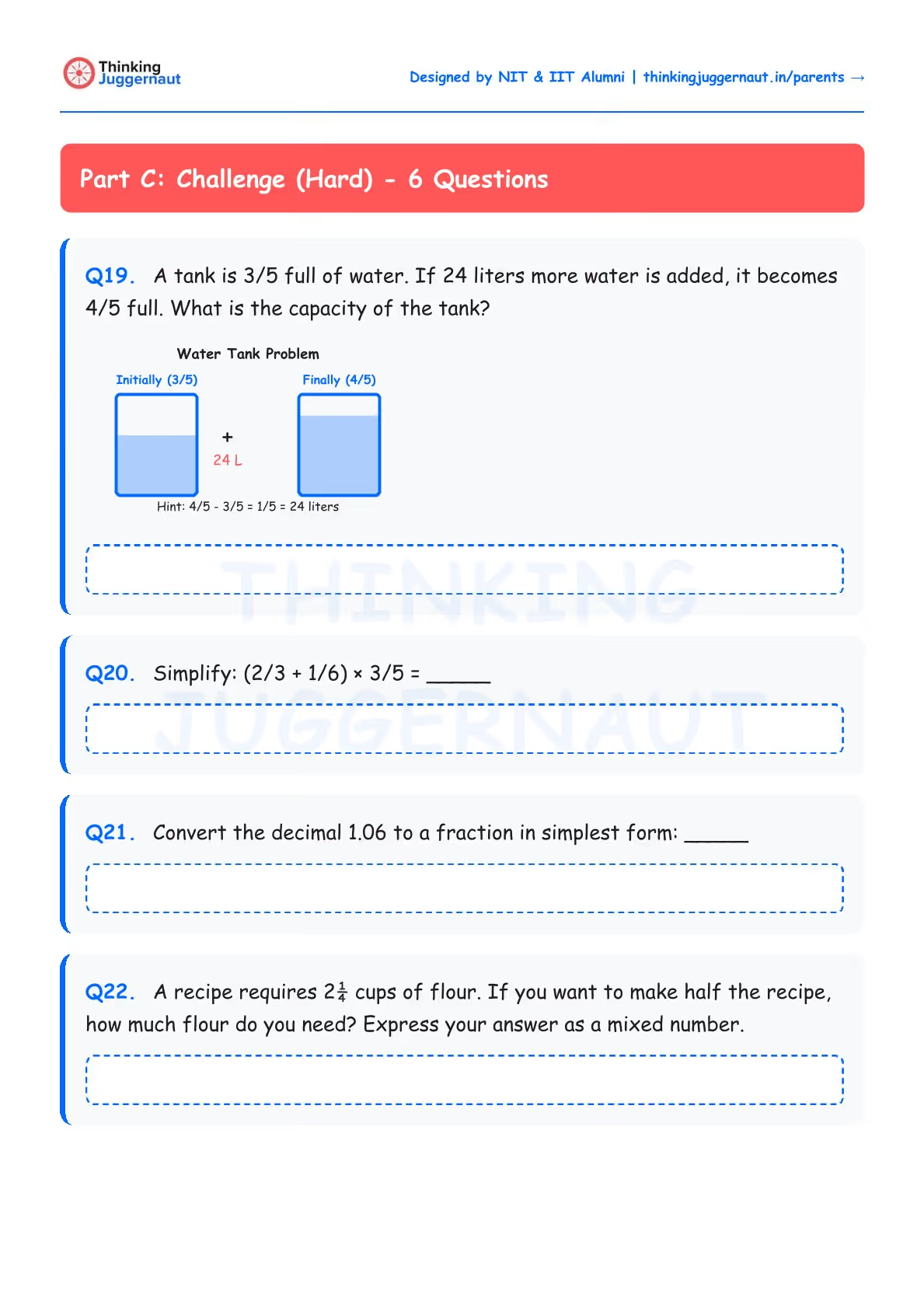
Download this free Class 6 fractions and decimals worksheet with complete answers. Contains 24 carefully structured problems covering fraction-to-decimal conversion, decimal-to-fraction conversion, operations with fractions, comparing fractions and decimals, word problems, and advanced challenges. Includes visual aids, step-by-step solutions, and scoring rubrics.
Understanding Fractions and Decimals
What are Fractions?
A fraction represents parts of a whole. The top number (numerator) shows how many parts you have, and the bottom number (denominator) shows how many equal parts make one whole.
Types of Fractions:
Proper Fractions: Numerator is smaller than denominator (3/4, 2/5). The value is less than 1.
Improper Fractions: Numerator is equal to or larger than denominator (7/4, 5/3). The value is 1 or greater.
Mixed Numbers: A whole number plus a fraction (2⅓, 1¾). Represents values greater than 1.
What are Decimals?
A decimal is another way to write fractions, especially when the denominator is 10, 100, 1000, or other powers of 10. The decimal point separates the whole number from the fractional part.
Place Value in Decimals:
First place after decimal = tenths (0.5 = 5/10)
Second place = hundredths (0.25 = 25/100)
Third place = thousandths (0.125 = 125/1000)
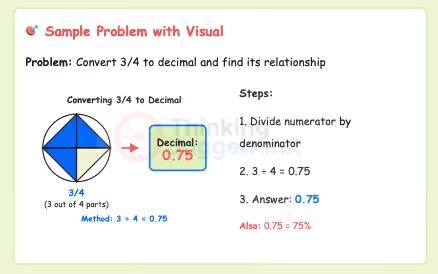
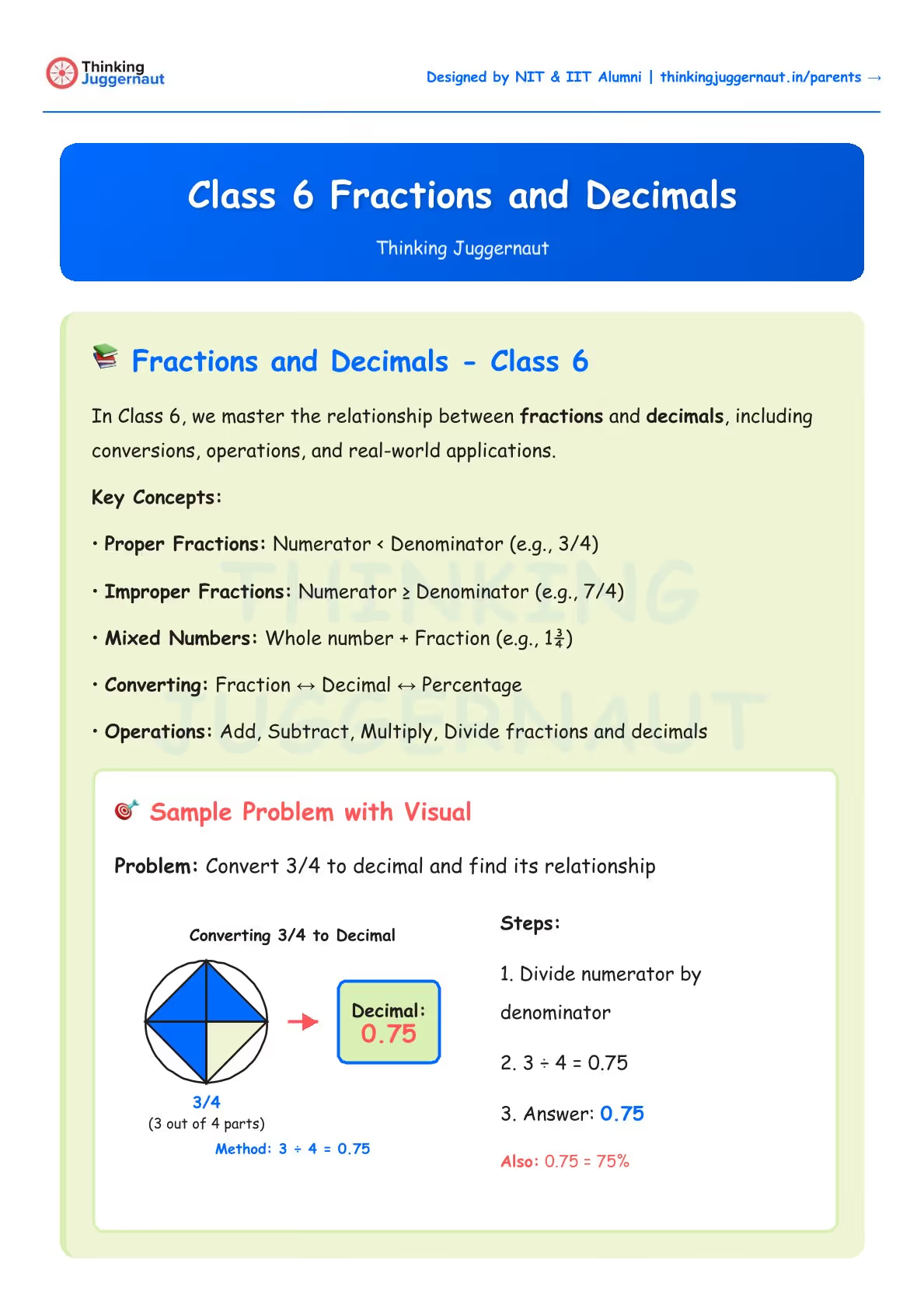
Key Relationship: 3/4 = 0.75 (divide numerator by denominator)
Converting Between Fractions and Decimals:
Fraction to Decimal: Divide the numerator by the denominator
Example: 3/4 = 3 ÷ 4 = 0.75
Decimal to Fraction: Write the decimal as a fraction with denominator as power of 10, then simplify
Example: 0.4 = 4/10 = 2/5 (simplified)
Operations with Fractions:
Adding/Subtracting: Must have common denominators
1/4 + 1/2 → Convert to 1/4 + 2/4 = 3/4
Multiplying: Multiply numerators together and denominators together
2/3 × 3/5 = 6/15 = 2/5 (simplified)
Dividing: Multiply by the reciprocal (flip the second fraction)
3/4 ÷ 1/2 = 3/4 × 2/1 = 6/4 = 3/2
Solved Example: Converting Between Forms
Problem: Convert 3/4 to a decimal and find what percentage it represents.
Solution:
Step 1: Divide the numerator by denominator: 3 ÷ 4 = 0.75
Step 2: Convert to percentage: 0.75 × 100 = 75%
Answer: 3/4 = 0.75 = 75%
Worksheet Problem Types
This PDF includes varied question formats:
Basic Conversions: Convert 1/2 to decimal form
Simplification: Reduce 8/12 to simplest form
Operations with Unlike Denominators: Add 2/3 + 1/4 using common denominators
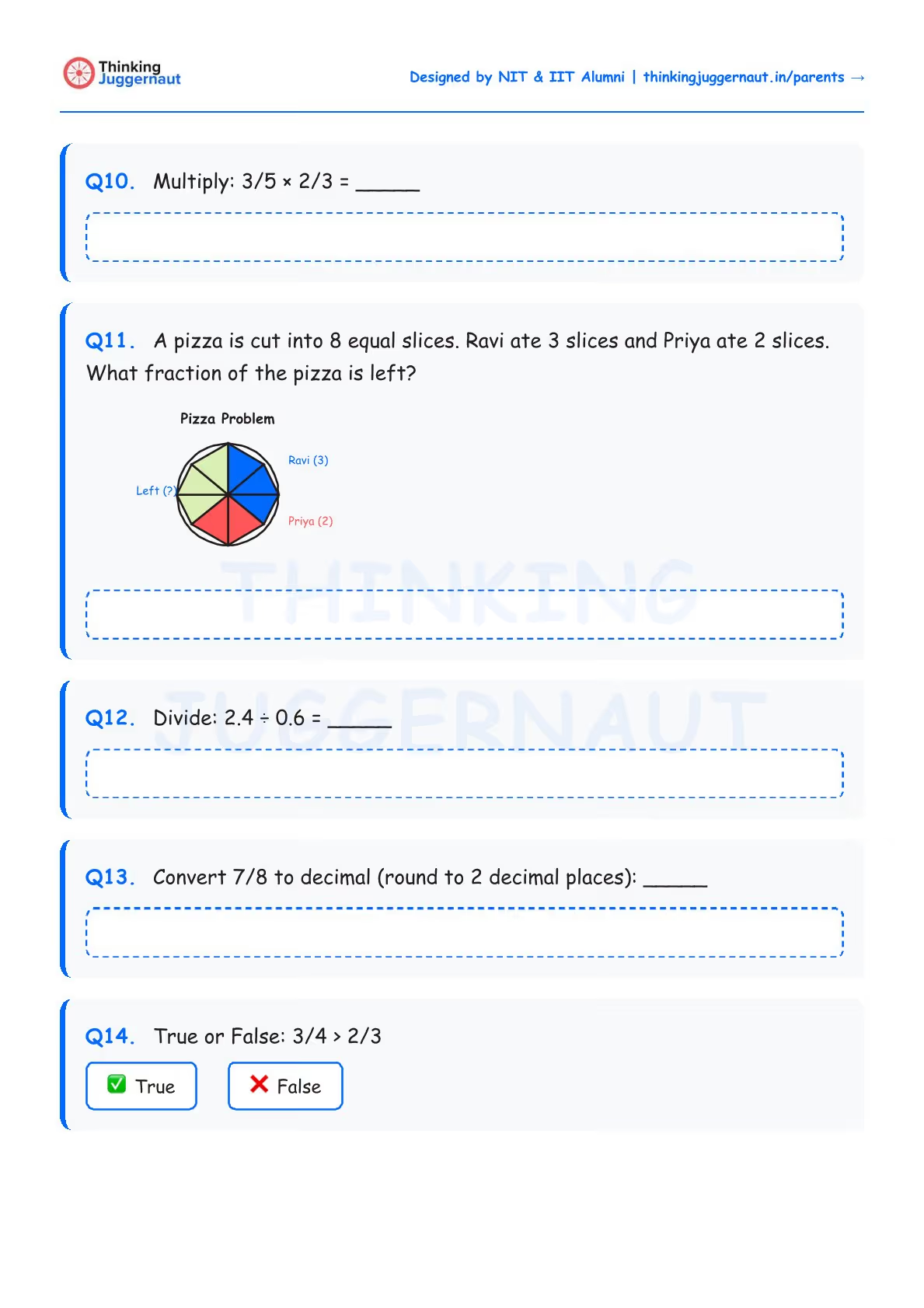
Word Problems: A pizza cut into 8 slices - if 5 are eaten, what fraction remains?
Decimal Operations: Divide 2.4 ÷ 0.6
Mixed Number Conversions: Change 2⅓ to an improper fraction
Comparison Tasks: Arrange 0.7, 3/4, 0.65, 4/5 in order
Challenge Problems: Convert 1.06 to a fraction in simplest form
Common Mistakes & Learning Tips
Frequent Errors to Avoid:
Wrong Denominator in Addition: Students often add denominators directly (1/4 + 1/3 ≠ 2/7). Always find a common denominator first.
Decimal Place Confusion: Mistaking 0.6 for 0.06. Remember: 0.6 is ten times larger than 0.06.
Improper Conversion: When converting mixed numbers like 2⅓, forgetting the formula: (whole × denominator) + numerator.
Division Errors: Dividing fractions without flipping the second fraction (not using the reciprocal).
Forgetting to Simplify: Leaving answers like 4/8 instead of simplifying to 1/2.
5 Essential Tips for Mastery:
Master Common Equivalents: Memorize key conversions like 1/2 = 0.5, 1/4 = 0.25, 3/4 = 0.75, 1/5 = 0.2, 1/10 = 0.1. This speeds up problem-solving significantly.
LCD Method: When adding or subtracting fractions, always find the Least Common Denominator (LCD). For 2/3 + 1/4, the LCD is 12, so convert to 8/12 + 3/12 = 11/12.
Visualize Fractions: Draw circles or rectangles divided into parts. Seeing 3 out of 4 shaded parts makes 3/4 clearer and helps understand equivalence.
Simplify Last: Complete all operations first, then simplify your final answer to lowest terms by finding the GCD (Greatest Common Divisor).
Cross-Multiply to Compare: To check if 3/4 > 2/3, cross-multiply: 3×3=9 vs 4×2=8. Since 9>8, yes, 3/4 is greater.
Assessment Guide
Total Questions: 24 | Total Marks: 24
Score: 20–24 (Excellent! 🌟)
Mastery Level: You've mastered fractions and decimals
Next Step: Try advanced topics like ratios, proportions, or Class 7 concepts
Score: 15–19 (Very Good! ⭐)
Strong Understanding: Solid grasp with minor gaps
Next Step: Review challenging problems and practice operations with unlike denominators
Score: 10–14 (Good Progress! ✓)
Building Foundation: Core concepts understood, needs practice
Next Step: Focus on common denominators and decimal place values
Score: Below 10 (Keep Practicing! 💪)
Developing Skills: More practice needed on fundamentals
Next Step: Review basic fraction concepts, practice conversions daily, use visual aids
Ready to Make Maths Hands-On?
Worksheets build practice. The Applied Maths Project Kit builds understanding covering the same concepts your child is practising here. A hands-on math kit inspired by NEP 2020’s vision of learning mathematics as thinking, connecting, and applying, not just solving equations.