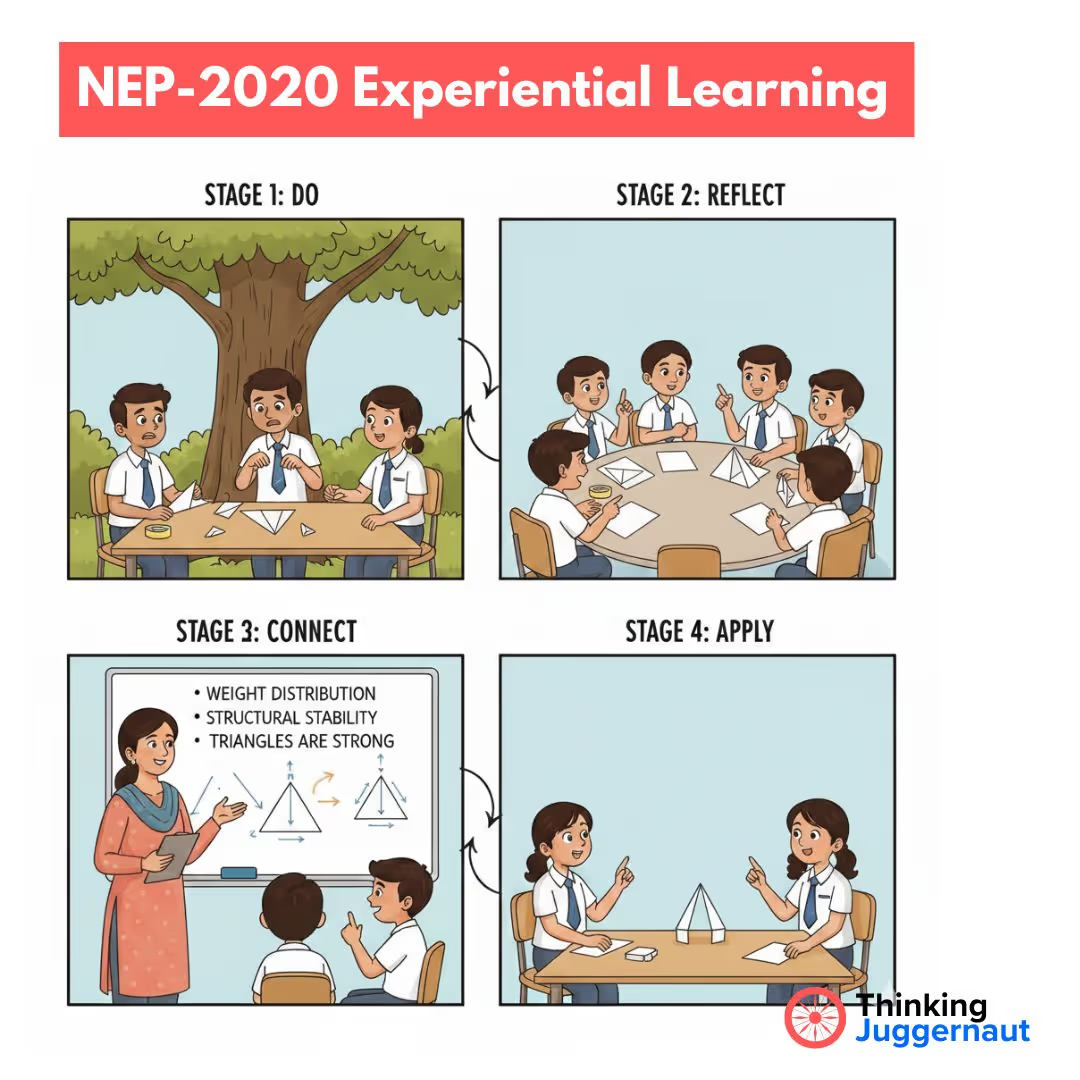
"In all stages, experiential learning will be adopted, including hands-on learning, arts-integrated and sports-integrated education... as standard pedagogy within each subject."
This is NEP 2020's clear directive. Not a suggestion—a requirement.
Activity ≠ experiential learning.
This guide shows what NEP 2020 actually means by experiential learning, why most hands-on activities fail, and how to implement it correctly in Indian classrooms.
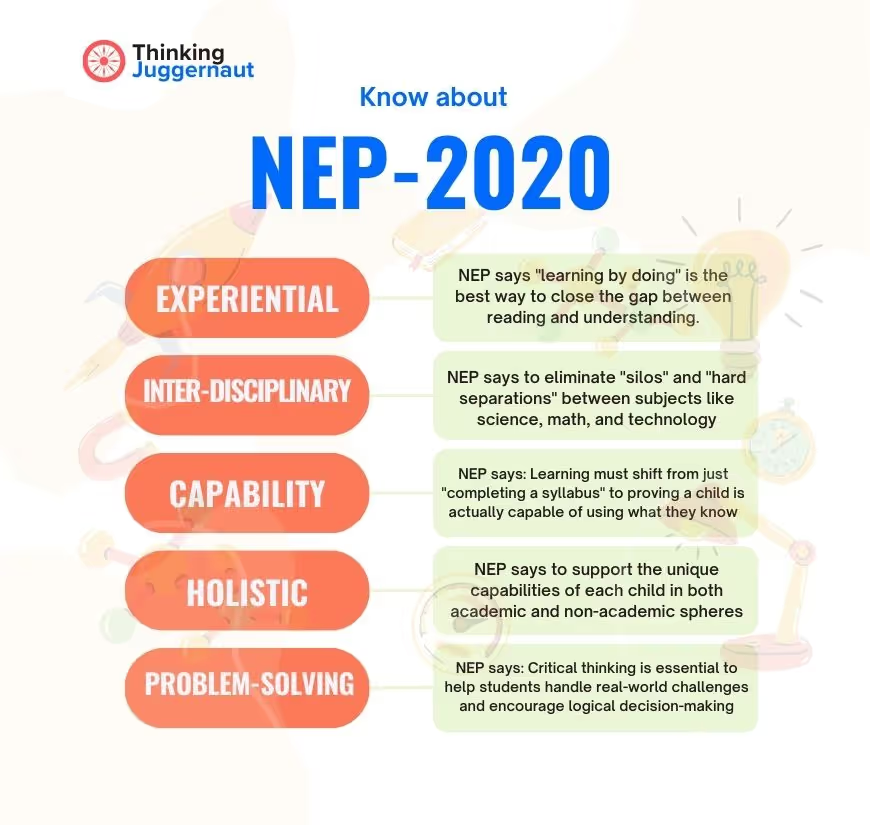
NEP 2020 emphasizes that "pedagogy must evolve to make education more experiential, holistic, integrated, inquiry-driven, discovery-oriented, learner-centred, discussion-based, flexible, and enjoyable."
The policy's vision is clear:
Why this matters:
Research shows experiential learning leads to high retention rates, improved problem-solving skills, and overall improvement in academic performance.
Scenario 1: Activity Without Learning
Teacher: "Today we'll learn about plants. Plant these seeds."
Students plant seeds enthusiastically.
Bell rings.
Next class: Different topic.
What happened: Fun activity. Zero learning retained.
Scenario 2: True Experiential Learning (NEP 2020 Way)
Teacher: "Can plants grow without soil?"
Students hypothesize → Set up experiments (soil, water, sand) → Observe for 2 weeks → Measure and record data → Analyze results → Connect to photosynthesis concepts → Design new experiments
What happened: Deep understanding through the complete learning cycle.
The difference? The second follows what educational researcher David Kolb identified as the experiential learning cycle—the foundation NEP 2020 builds on.
NEP 2020's experiential learning isn't random activities. It's a structured process:
Students actively engage with a real problem or hands-on activity.
Example: Build a paper bridge using only 10 sheets and tape. Must hold 500g weight.
This is the stage most teachers skip—and why learning fails.
Ask:
Students discuss, compare, identify patterns.
Link observations to concepts and theory.
Now introduce the science:
Theory makes sense because they've experienced the problem.
Use new knowledge in different situations.
Challenge: "Build a stronger bridge using these principles. What if you only had 5 sheets?"
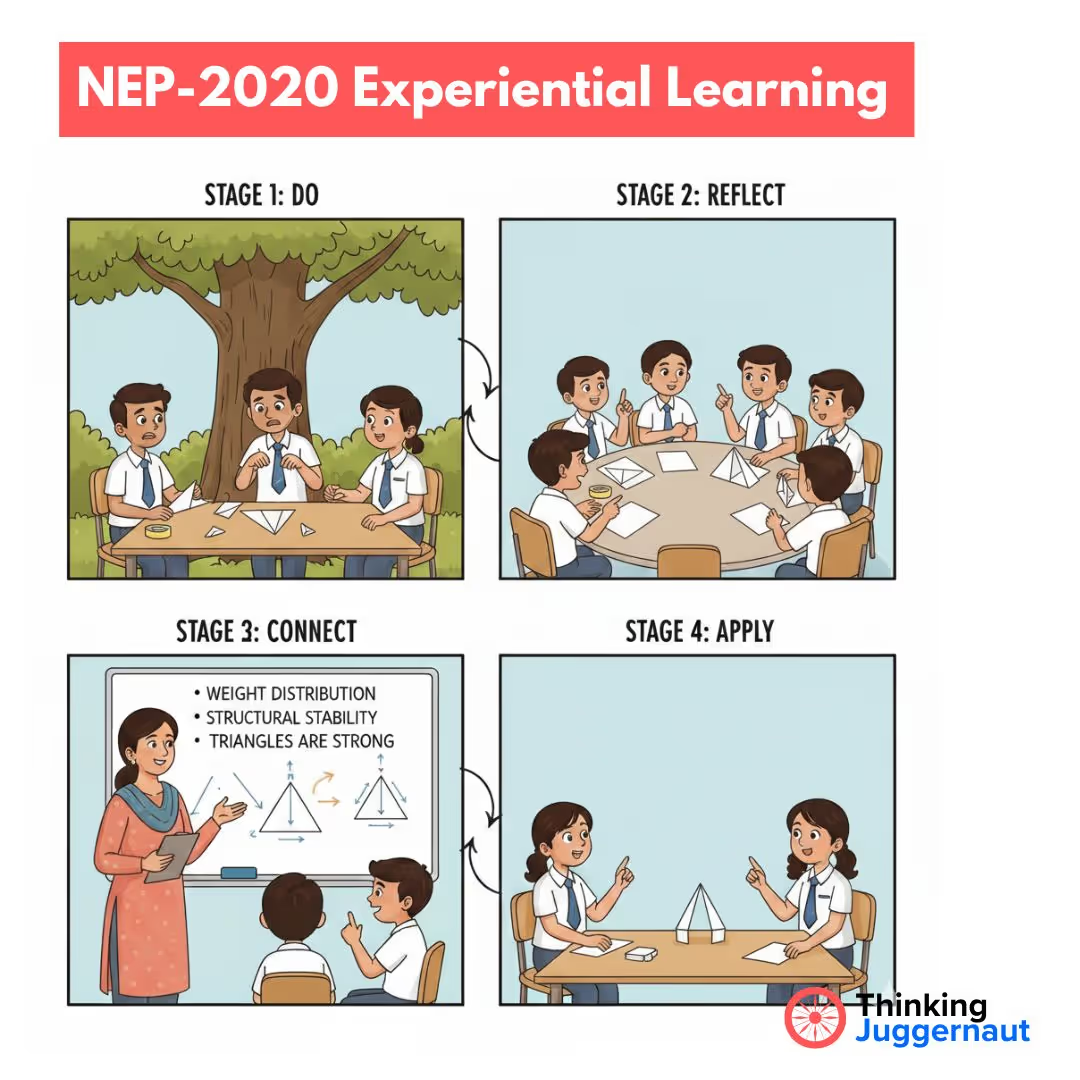
This 4-stage cycle is what separates NEP 2020's experiential learning from simple activities.
You can find some examples of NEP-aligned hands on activities here
Teachers rush to the next topic without processing.
Fix: Build 10-15 minutes for discussion after every activity. The reflection IS the learning.
Fun activity with no specific concept targeted.
Fix: Before any activity, ask: "What will students understand better after this?"
Activity feels separate from textbook.
Fix: Explicitly link to syllabus. "Today's experiment connects to Chapter 4: Motion and Energy."
Build gradually. One successful experiential lesson beats five rushed activities.
Want to bring NEP-aligned hands on learning to your school linked to curriculum without the planning headache? Contact us to discuss how our kits can work for your students.
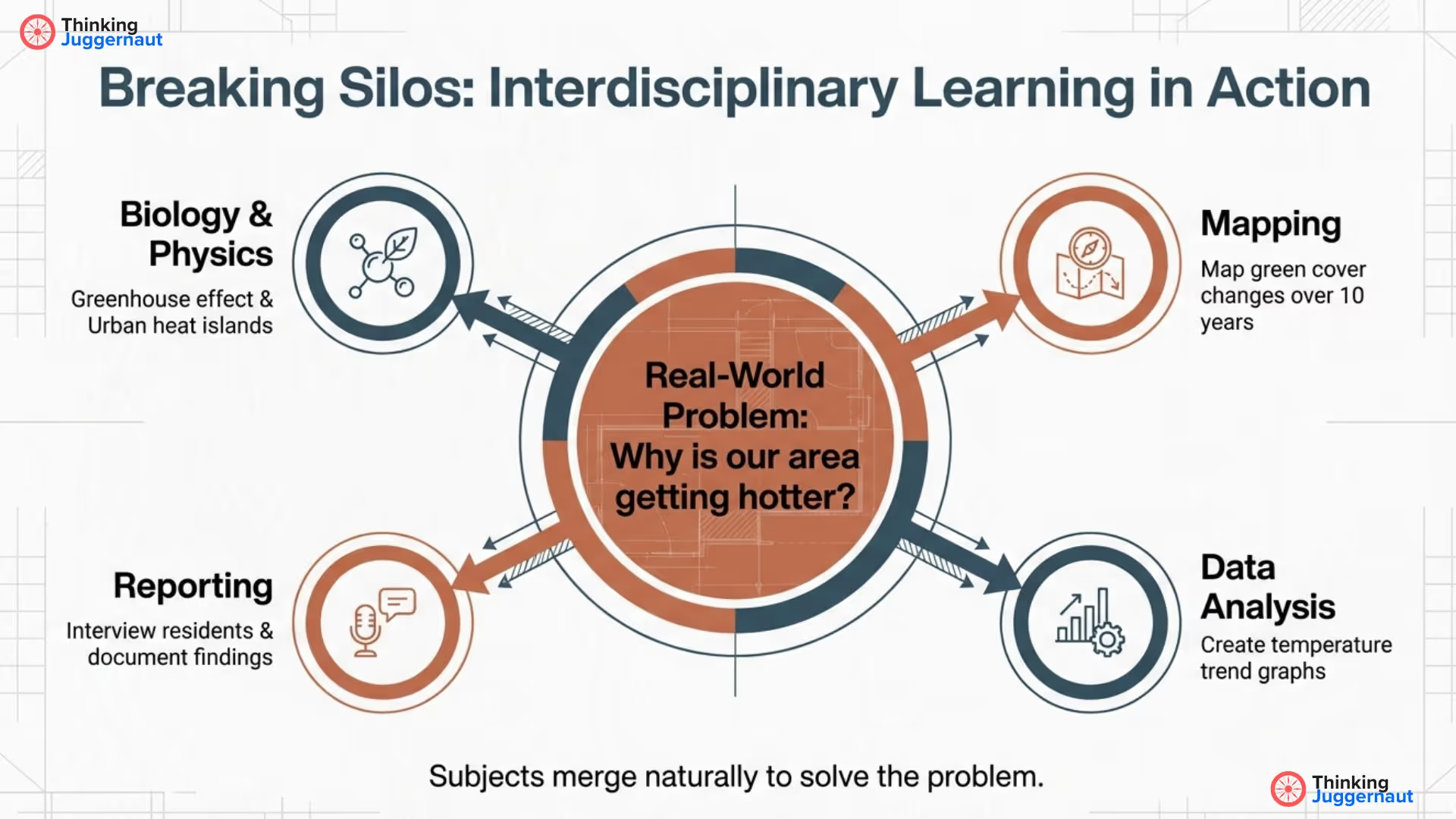
NEP 2020 seeks to develop learners who can "think critically and solve problems, be creative and multidisciplinary, innovate, adapt, and absorb new material in novel and changing fields."
Experiential learning builds these exact capabilities:
Critical thinking: Students question, analyze, evaluate—not just accept
Problem-solving: They tackle messy, real problems with multiple approaches
Creativity: Open-ended experiments allow innovative solutions
Adaptability: Learning how to learn, not just what to learn
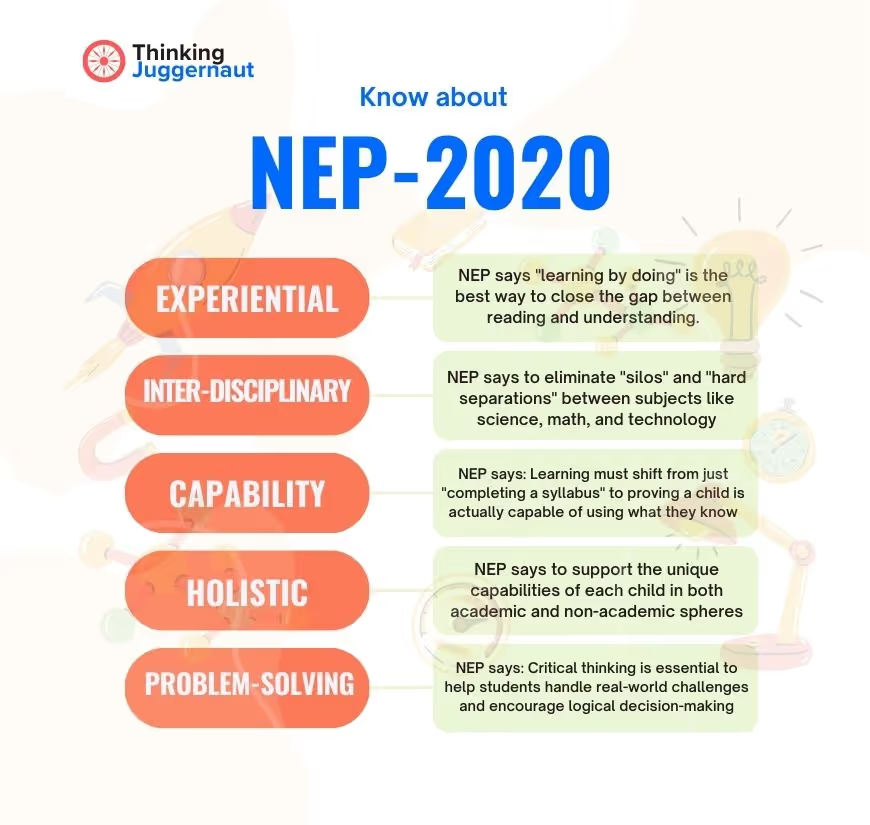
When students experience concepts rather than just reading about them, understanding becomes permanent.
Official Government Resources:
Research & Evidence:
Ready-to-Implement Solution:
The biggest challenge schools face: sourcing materials, designing experiments, coordinating subjects, training teachers.
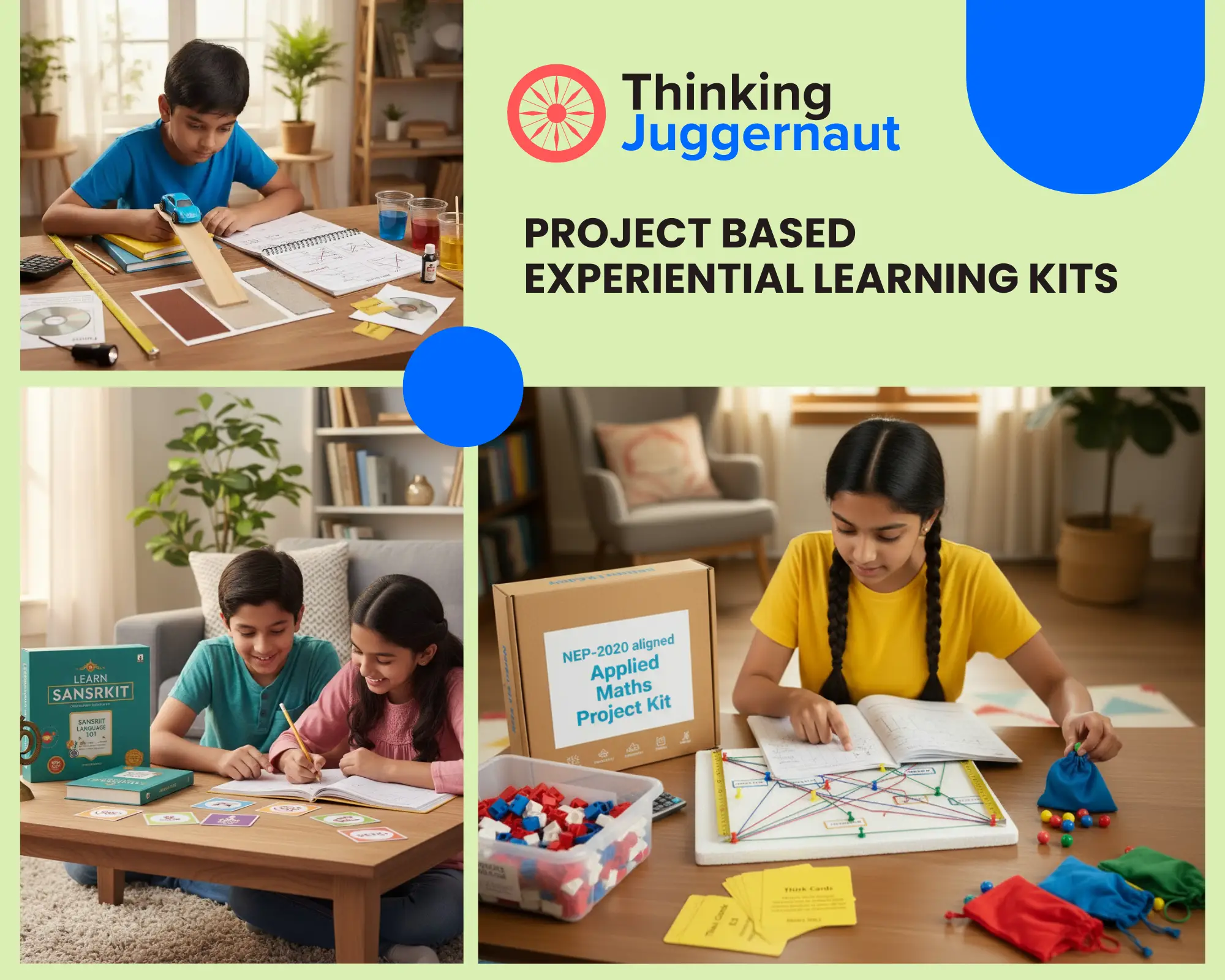
Thinking Juggernaut hands on kits was created specifically for NEP 2020 implementation:
NEP 2020's call for experiential learning isn't about adding "fun" to classes.
When education becomes "experiential, holistic, integrated, inquiry-driven, discovery-oriented, learner-centred, and enjoyable," students don't just pass exams. They build capabilities for life.
That's the NEP 2020 vision. And it's achievable—starting with one well-designed experiential activity at a time.
How is NEP 2020 experiential learning different from regular activities?
Regular activities are add-ons. NEP 2020's experiential learning is the PRIMARY method of teaching. It's not "let's do an activity today"—it's "let's discover this concept through experience, then formalize it." The 4-stage cycle (do, reflect, connect, apply) ensures genuine learning, not just engagement.
We don't have resources for elaborate experiments. Can we still implement NEP 2020?
Yes. Many effective experiential activities use simple materials: sticks, water, household items. The ramp experiment needs books and a plank. Plant experiments need seeds and pots. Design matters more than budget. However, ready-made kits save significant teacher time and ensure quality.
Will covering less content through experiential learning affect exam performance?
Research shows the opposite. Students who learn fewer topics deeply through experiential methods perform BETTER in exams than those who superficially cover more content. Deep understanding transfers to test situations better than memorization.
How do we train teachers for experiential learning?
Start small with teacher communities of practice. One teacher tries an experiential lesson, shares results. Others adapt it. NEP 2020 emphasizes continuous professional development. Schools can also partner with organizations providing experiential learning materials and training.
Almost there!
We will confirm your order on WhatsApp
Order placed!
Thank you! You will receive a WhatsApp confirmation shortly.


![[background image] electronics workbench](https://cdn.prod.website-files.com/6867e17b7728d4dad1984de4/6971adf677d574c530eb0b3a_Critical%20Thinking%20TJ.avif)
![[digital project] image of past client project on a magazine page](https://cdn.prod.website-files.com/6867e17b7728d4dad1984de4/6972ee0b013b773cda7eb984_13.avif)
![[digital project] image of past client project on a magazine page](https://cdn.prod.website-files.com/6867e17b7728d4dad1984de4/6971ec2d29d12c20984b2c4e_Gemini_Generated_Image_v2dmwrv2dmwrv2dm.avif)