National Education Policy 2020, NEP-2020, is India's new education roadmap that will impact over 24.8 crore students across the country. NEP 2020 isn't about making school harder or easier. It's about making it relevant for today's age. The last major policy was written in 1986—before the internet, smartphones, or AI existed.
This new policy asks a fundamental question: Are we teaching children to pass exams, or preparing them to solve real problems?
The answer shapes everything that follows.
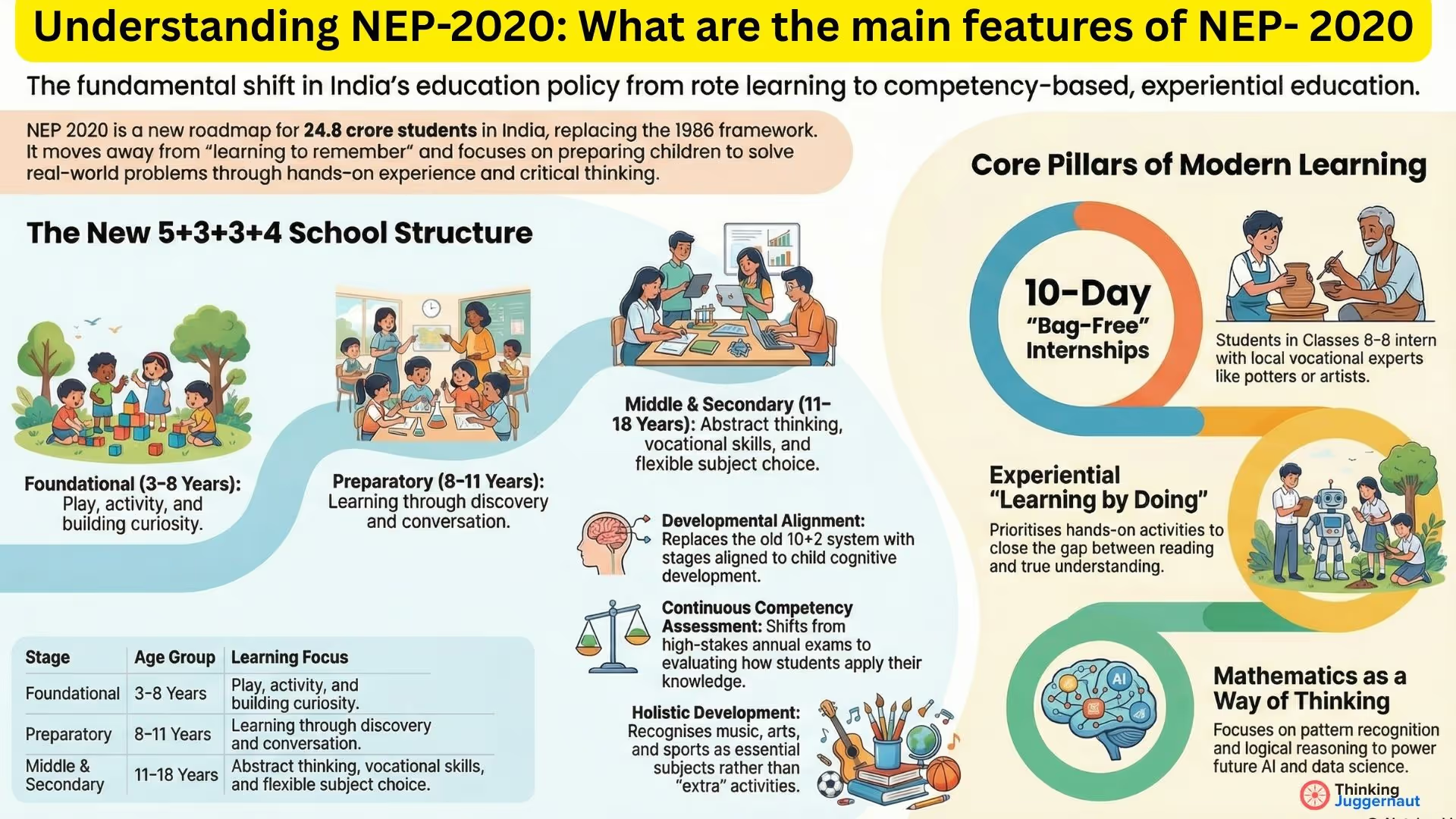
Let us look at the new 5+3+3+4 school structure before we dive deep. If you already know them, skip directly to the main features of NEP-2020.
Forget the old 10+2 system. NEP introduces a structure based on how children actually develop, aligning with established principles of cognitive development.
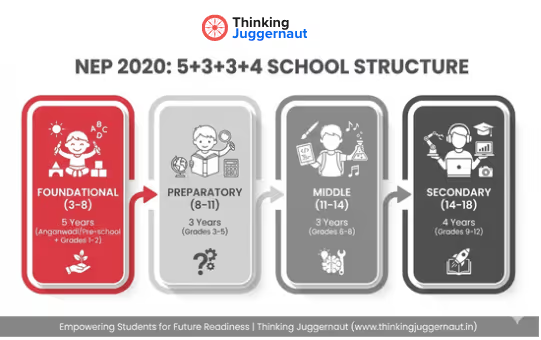
Notice something? No child sits still memorising facts at age 5. That's because young brains learn best through play, not rote repetition.
NEP 2020 aims to make learning more experiential, skill-based, flexible, inclusive, and future-oriented. It’s about helping children understand, apply, and create — not just memorise. The policy envisions classrooms that nurture curiosity, critical thinking, and confidence — so every child learns how to learn, not just what to learn.
It prepares children not just for exams, but for life — exactly the philosophy we follow at Thinking Juggernaut, where every kit transforms classroom concepts into real, hands-on experiences. When children build, test, and explore with our kits, they aren’t just studying; they’re discovering how ideas connect to the world around them — the true spirit of NEP 2020 in action.
Let us look at the main features now, one by one
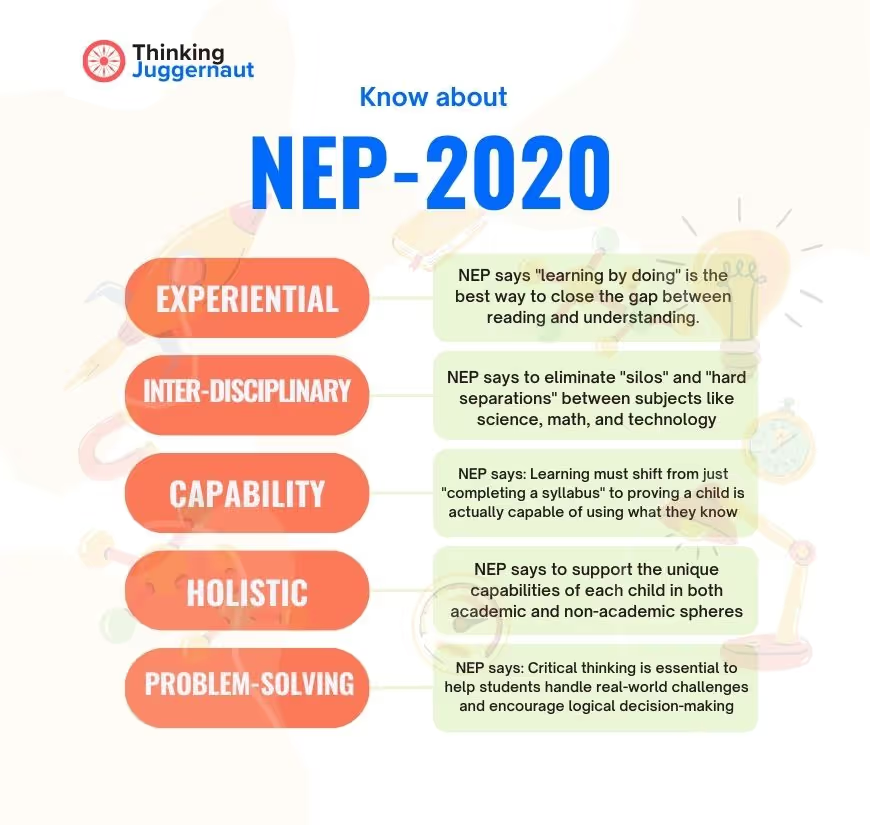
NEP says "learning by doing" is the best way to close the gap between reading and understanding. Research shows that experiential learning can lead to high retention rates, problem-solving skills, and overall improvement in academic performance. NEP 2020 moves away from "completing the syllabus" and focuses on Competency (proving you actually know how to use what you learned).
Contrast these 2 examples
Which child will remember photosynthesis five years later?
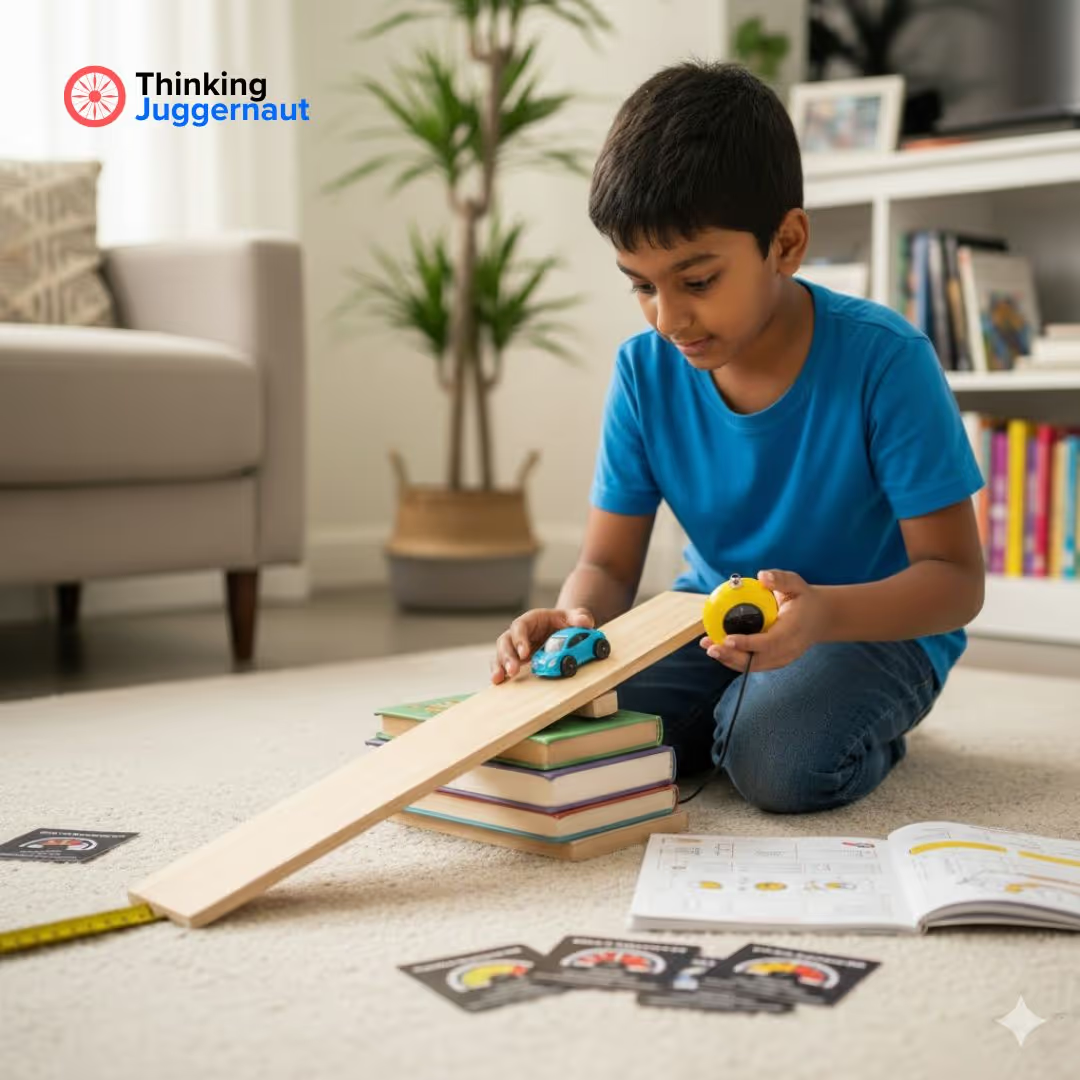
That hands-on moment builds confidence — and deep understanding that no textbook paragraph ever can. At Thinking Juggernaut, our kits bring this alive with activities like Soil & Plant Growth – Mini Germination Lab and more.
Children should see, touch, build, and test ideas — not just read about them.
Life doesn't come in separate subjects. So why should learning?
NEP says that schools must remove “hard separations” between subjects. In real life, science, math, art, technology, and different subjects are not separate. They come together naturally.
Contrast these 2 examples
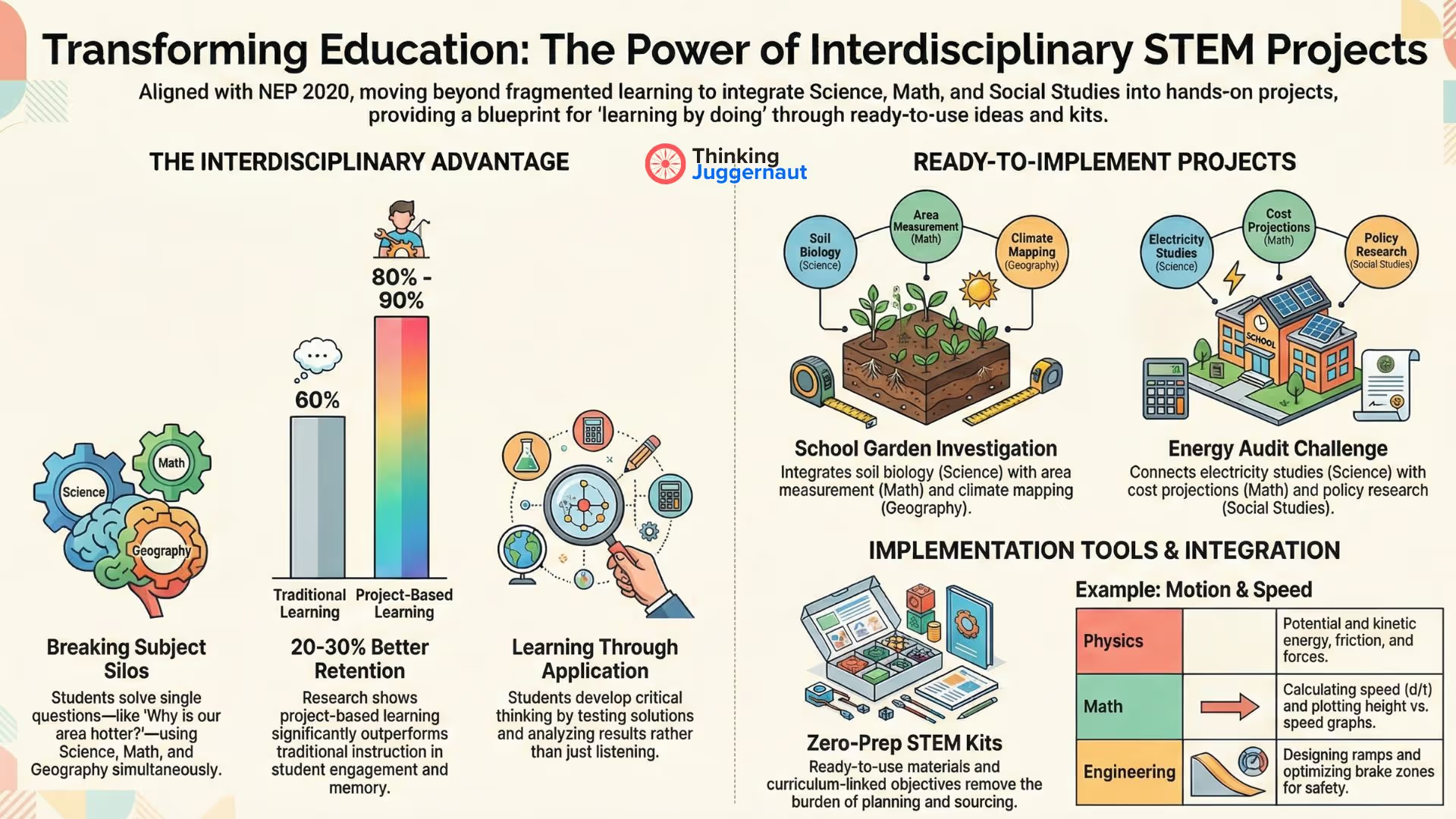
Learning becomes connected. Subjects stop feeling like separate boxes — they start working together to help you make sense of the world.
Our Interdisciplinary STEM Kits are designed around this, bringing NEP’s idea of “experiential learning within each subject, and explorations of relations among subjects” to life.
Completing a syllabus means nothing if a child can't apply it. Contrast these two situations
The goal is not to finish the syllabus, but to ensure children can use what they know. CBSE is leading the way with holistic progress cards and competency-based assessments that evaluate whether students can apply knowledge, not just recall it.
Not every child will become an engineer. And that's perfect. NEP recognises that children have different strengths—academic, creative, physical, and emotional. This means music, art, sports, coding, and crafts are not “extra,” they’re essential.
Example: A child who struggles with algebra might excel at coding, music composition, or designing solutions to community problems. All are valuable.
NEP emphasises that problem-solving and critical thinking are central to learning. In a world full of information, children must learn to question, evaluate, and reason.
It’s not about finding one correct answer, but about learning how to think.
Today's children will work in jobs that don't exist yet. They'll face problems we haven't imagined.
In our AI Literacy Kit, we discuss whether an AI answer can be biased. Simply put, AI learns from examples. If those examples are limited or unbalanced, the AI learns incorrectly!
When a child understands the "Why" behind a tool like Artificial Intelligence, it helps them question and learn how to think for every situation.
Not everyone needs calculus. But everyone needs to know how things work.
NEP introduces vocational training from Class 6 — carpentry, coding, farming, financial literacy, electric work, metalwork, gardening, and pottery making.
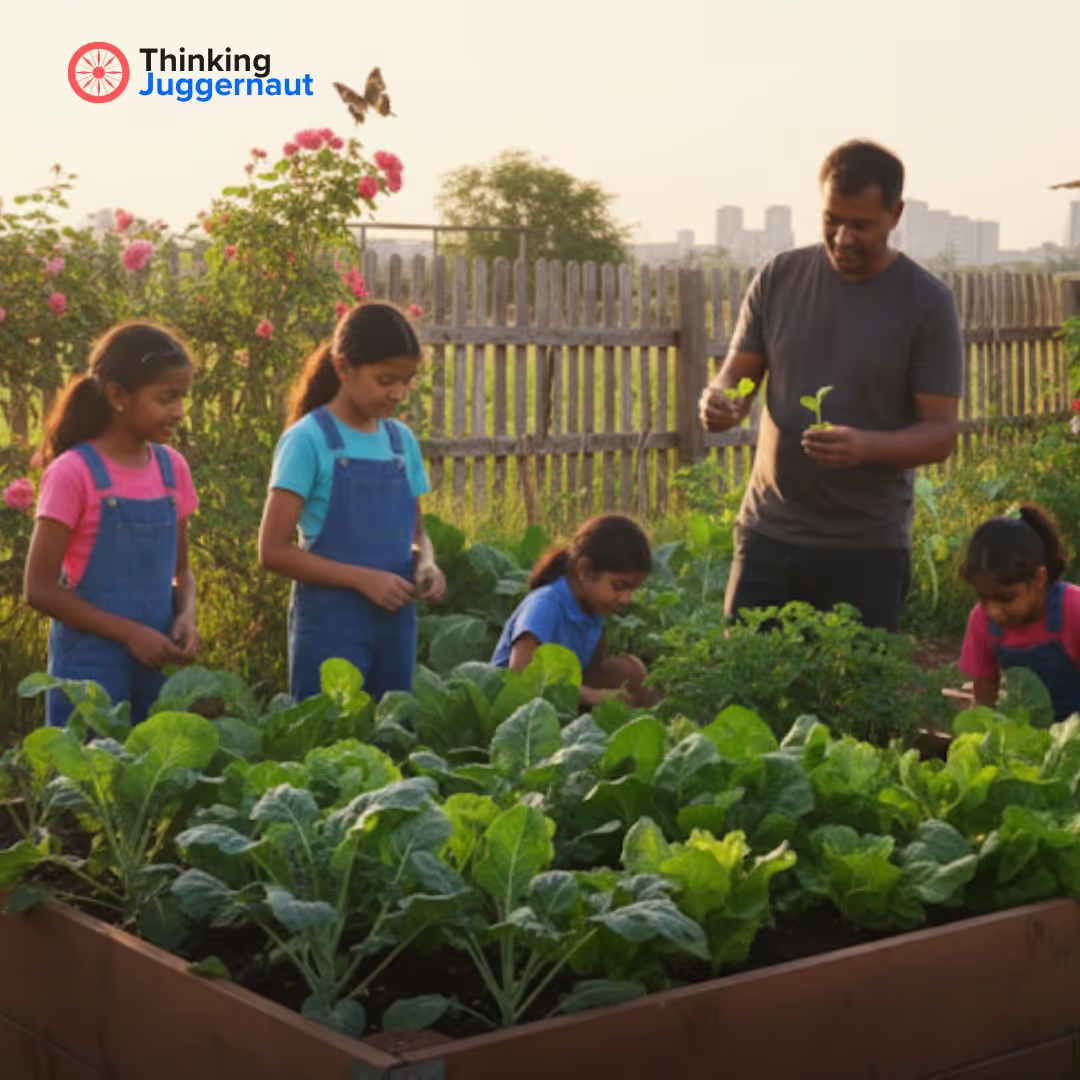
One of the most innovative features of NEP 2020 is the 10-day bag-free period for students in Classes 6-8. During this time, students intern with local vocational experts such as carpenters, gardeners, potters, artists, and other craftspeople. This hands-on exposure helps students.
Why this matters: A child who learns to fix a bicycle, code a simple app, or manage a budget isn't just gaining skills. They're gaining confidence. They see themselves as capable.
Language is the foundation of understanding. NEP encourages using the mother tongue as the medium of instruction in early years, because children think and learn best in the language they are most comfortable with
It also emphasises multilingualism and strong communication skills.
NEP 2020 places special emphasis on mathematics, recognising its critical role in shaping India’s future:
“Mathematics and mathematical thinking will be very important for India’s future and leadership in fields like AI, machine learning, and data science.”
Mathematics teaches essential skills:
Math also powers other subjects:
At Thinking Juggernaut, our hands-on Applied Math Kits embody NEP 2020’s vision: learning math as thinking, connecting, and applying—not just solving equations. The kits build real confidence by helping children gain clarity, strengthen problem-solving skills, and reduce math anxiety over time.

Children even tackle early optimization challenges, such as the Travelling Salesman Problem, where they plan delivery routes, compare paths, and find the shortest route—laying the foundation for critical decision-making skills.
Mathematics is more than numbers—it is a way of thinking. It trains the mind to reason, spot patterns, and think logically.
Traditional exams often test memory more than understanding. NEP proposes a shift to competency-based assessment — evaluating whether a student can apply knowledge, not just recall it.
For example, instead of asking, “What is a lever?” a teacher might ask, “Can you show how a lever helps you lift a heavier object?”
But here's the challenge: This is hard to do at scale. How do you assess 1,000 students' critical thinking? It's easier to give them 50 multiple-choice questions. That's why implementation will take time.
This approach takes time and effort to scale — teachers need training, and schools need resources — but it's essential if we want children to truly understand what they learn.
When I was a student, I could memorise well — and that helped in exams. But years later, I realised I had only “learned to remember.”
It was when I started applying ideas — building, experimenting, combining subjects — that I began to really understand.
That’s the difference between knowing and thinking.
At Thinking Juggernaut, we've built our kits on these exact principles because we've seen how powerful they are. We believe that critical thinking, problem-solving, and decision-making are the real superpowers of tomorrow. Every child deserves a chance to build them early.
The policy is being implemented in phases, with full implementation expected by 2030-2035. CBSE and most state boards are gradually implementing NEP guidelines.
Over 24.8 crore students across 14.72 lakh schools with 98 lakh teachers are part of India's school education system.
All CBSE and most state board schools are gradually implementing NEP guidelines. Check with your school about their specific implementation timeline.
The focus shifts from annual high-stakes exams to continuous competency-based assessment. Board exams will test application and understanding, not just memorisation.
Students in Classes 6-8 will spend 10 days interning with local vocational experts like carpenters, potters, gardeners, and artists to gain hands-on exposure to various crafts and skills.
![[background image] electronics workbench](https://cdn.prod.website-files.com/6867e17b7728d4dad1984de4/6971df3fc68f17192e35e18a_NEP%202020%20Experiential%20Learning.avif)
![[digital project] image of past client project on a magazine page](https://cdn.prod.website-files.com/6867e17b7728d4dad1984de4/6972ee0bf80a40e0e1fc016a_15.avif)
![[digital project] image of past client project on a magazine page](https://cdn.prod.website-files.com/6867e17b7728d4dad1984de4/6971ec2d29d12c20984b2c4e_Gemini_Generated_Image_v2dmwrv2dmwrv2dm.avif)
Almost there!
We will confirm your order on WhatsApp
Order placed!
Thank you! You will receive a WhatsApp confirmation shortly.
Latest CBSE & NEP 2020 news, updates, and hands-on classroom activity ideas — straight to your inbox.
No spam, ever. Unsubscribe anytime.
Watch your inbox for the next edition of the Thinking Juggernaut Weekly.