Advanced word problem worksheet for Class 4 with 16 challenging questions. Master addition, subtraction, multiplication, and division with larger numbers. Includes multi-step problems and complete answer key.
Word problems are where maths gets real.Not "solve 1248 ÷ 24" — but "a factory makes 1,248 pencils a day, packs them 24 to a box, ships 35 boxes — how many are left?" Same calculation, completely different demand.
The student now has to read, decide what to do, do it in the right order, and check whether the answer makes sense. That is exactly what this Class 4 worksheet trains — 16 multi-step problems across all four operations, each one set in a context a child can picture. Answer key included, free to download below.
Class 4 Word Problems Worksheet — Free PDF with Answer Key
This worksheet covers:
16 questions | Printable, A4 size | No sign-up needed
Addition: Combining amounts, "total", "altogether", "sum", "in all"
Subtraction: Taking away, "difference", "left", "remaining", "how many more"
Multiplication: Equal groups, "each", "per", "times", "product"
Division: Sharing equally, "divide", "distribute", "each group gets", "quotient"
For Multi-Step Problems: Break the problem into smaller steps. Do multiplication/division first, then addition/subtraction (unless there are brackets).
Problem: A factory produces 1,248 pencils every day. They pack 24 pencils in each box. If 35 boxes are shipped to stores, how many boxes are left in the factory?
Solution:
Step 1: 1248 ÷ 24 = 52 boxes (total boxes made)
Step 2: 52 - 35 = 17 boxes (boxes remaining)
Answer: 17 boxes left
Keywords: "pack 24 each" = divide, "shipped" = subtract
A bookstore has 1,245 books in Hindi and 1,387 books in English. How many books are there in total?
A factory produces 145 toys every hour. How many toys will it produce in 12 hours?
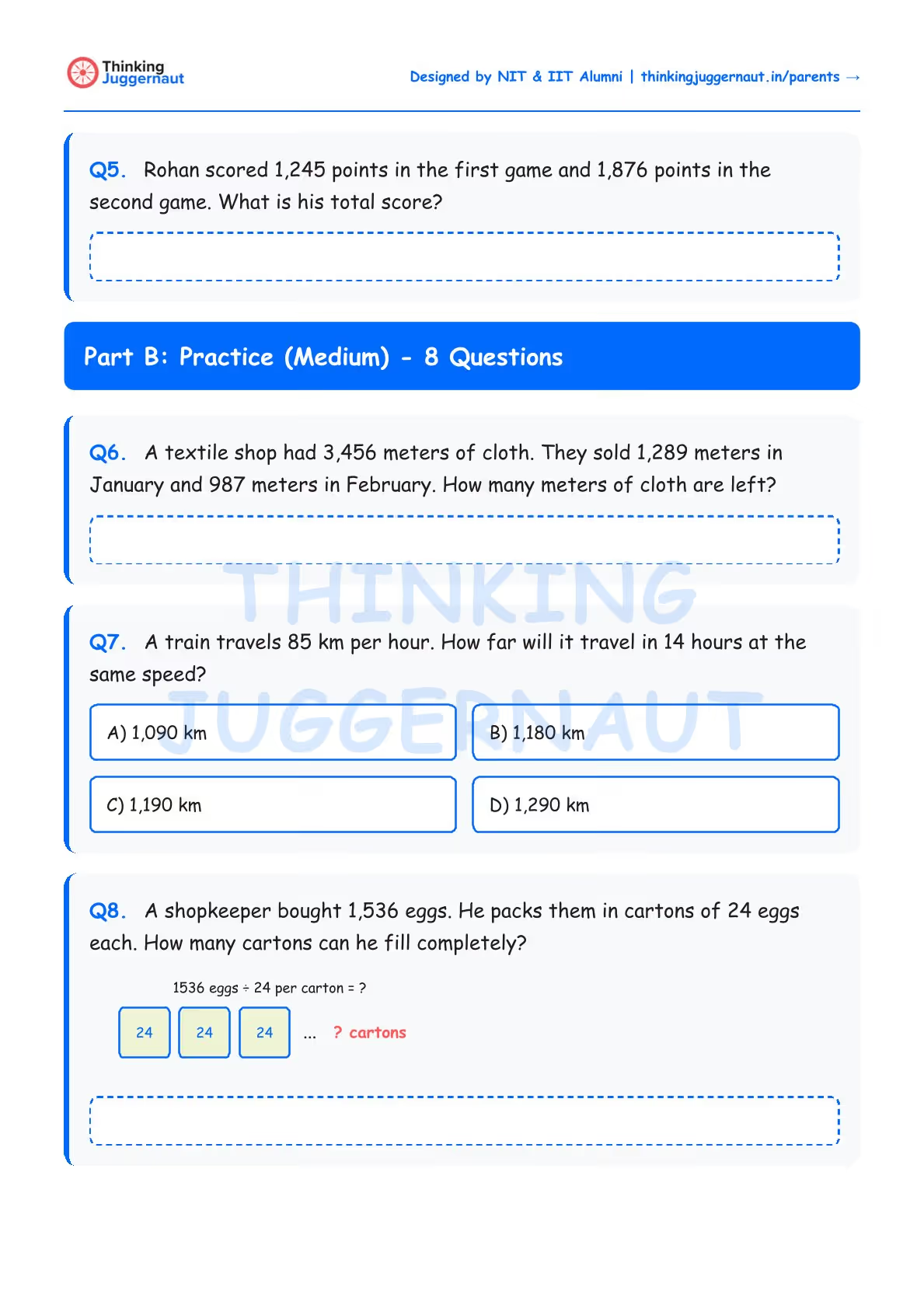
A textile shop had 3,456 meters of cloth. They sold 1,289 meters in January and 987 meters in February. How many meters of cloth are left?
In a school, there are 456 students in Class 4A and 524 students in Class 4B. If they are divided equally into 14 groups for a sports event, how many students will be in each group?
A factory produces 1,875 chocolates per day. They pack 25 chocolates in each box. If 48 boxes are shipped to stores on Monday, how many boxes are left in the factory?
A bookstore had 3,456 books. On Monday, they sold 876 books. On Tuesday, they received a new shipment of 45 cartons with 48 books in each carton. How many books does the bookstore have now?
14-16 correct: Excellent! You've mastered all operations with larger numbers. Ready for Class 5 challenges!
11-13 correct: Very Good! Focus on multi-step problems in Part C. Remember: Do operations in order - multiply/divide first, then add/subtract.
7-10 correct: Good Progress! Work on breaking problems into clear steps, writing each calculation separately, and checking if answer makes sense.
Below 7: Keep Practicing! Review basic operations with 3-digit numbers first. Practice identifying keywords. Use number line or drawings to visualize problems.
Read carefully and identify all the operations needed
Write down each step separately before solving
Do multiplication/division before addition/subtraction
Check if your answer is reasonable in the context of the problem
Look for keywords: "total" = add, "remaining" = subtract, "each" = multiply or divide
For problems with large numbers, estimate the answer first to verify your calculation
How is this different from a regular Class 4 maths worksheet?
Regular worksheets give you the operation — "solve 456 × 12." Word problem worksheets make you decide the operation yourself based on what the problem is describing. That is a harder and more exam-relevant skill.
My child can solve sums but freezes on word problems. What should I do?
This is very common. The gap is usually in reading strategy, not maths ability. Start by having them read the problem aloud, then ask "what are we trying to find?" before touching the numbers. That single habit closes most of the gap.
What level of difficulty should I expect?
The worksheet is structured in three parts — easy warm-up problems using a single operation, medium problems with slightly larger numbers, and multi-step challenge problems that require two operations to solve.
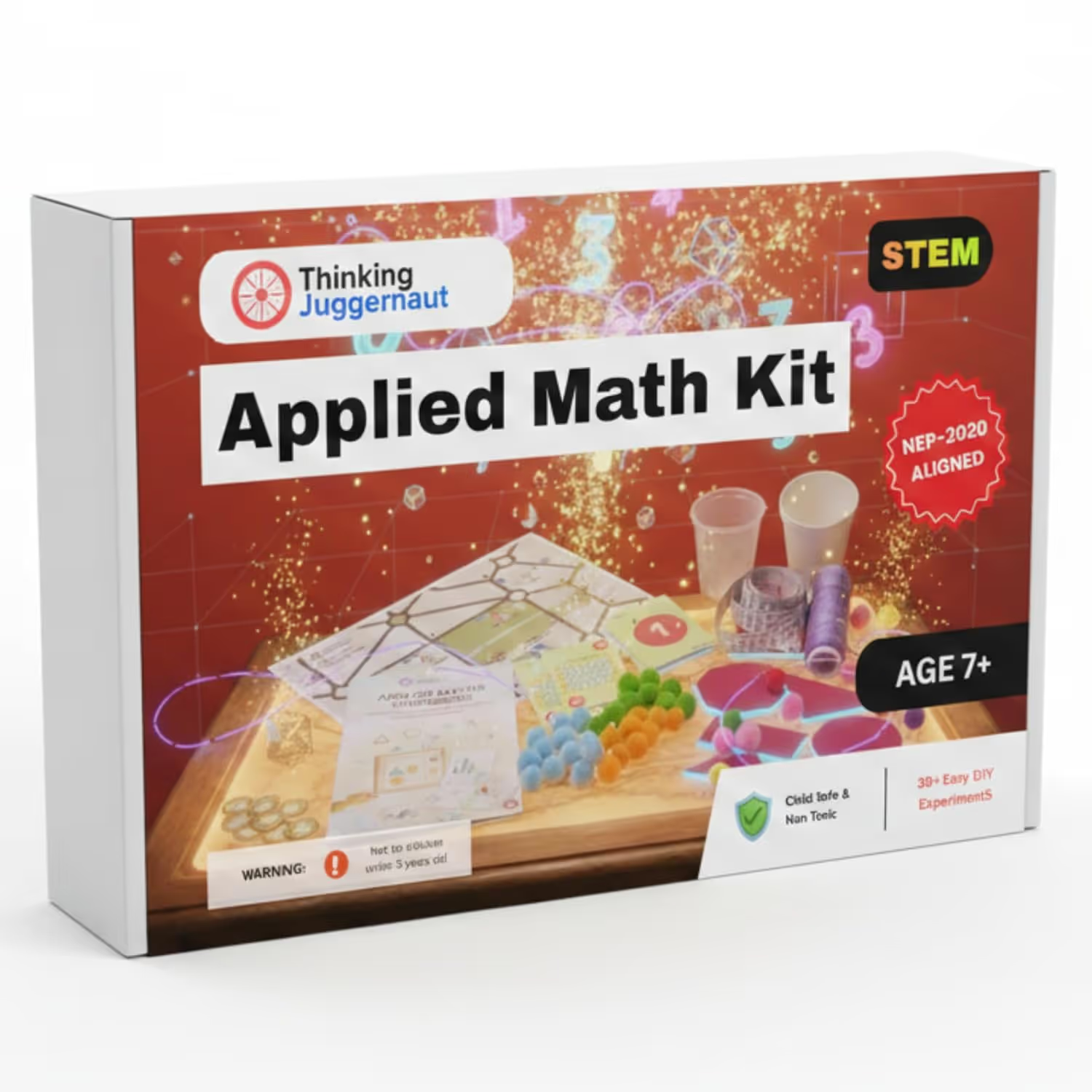
Worksheets build practice. The Applied Maths Project Kit builds understanding — 30 real-world math activities covering the same concepts your child is practising here, from multiplication and grouping to measurement and data.
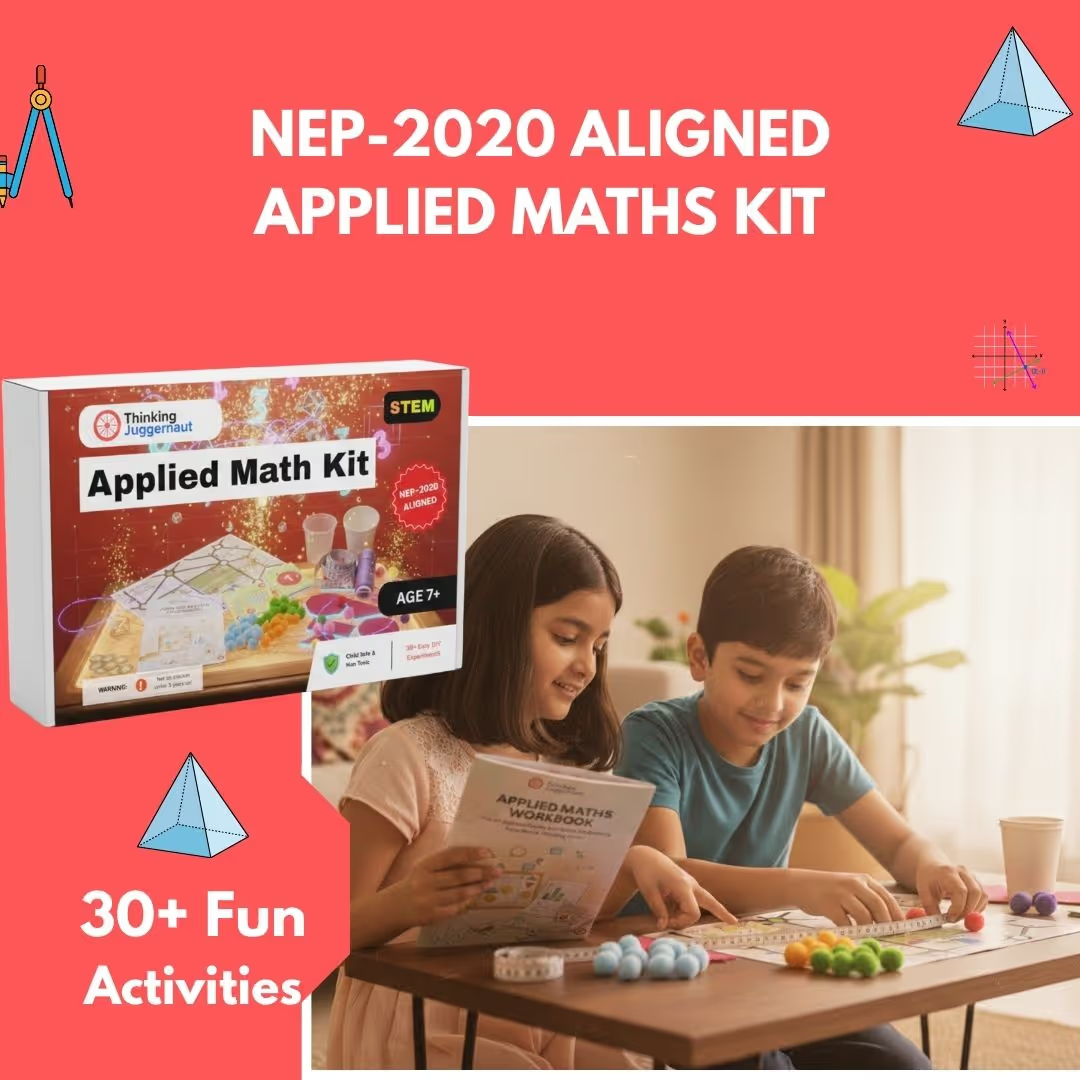
Designed by IIT & NIT Alumni · NEP-2020 aligned · Trusted by parents across India
Not in Class 4?
Visit our Main Math Worksheet Hub to explore all printable worksheets from Class 2 to Class 8.
Almost there!
We will confirm your order on WhatsApp
Order placed!
Thank you! You will receive a WhatsApp confirmation shortly.