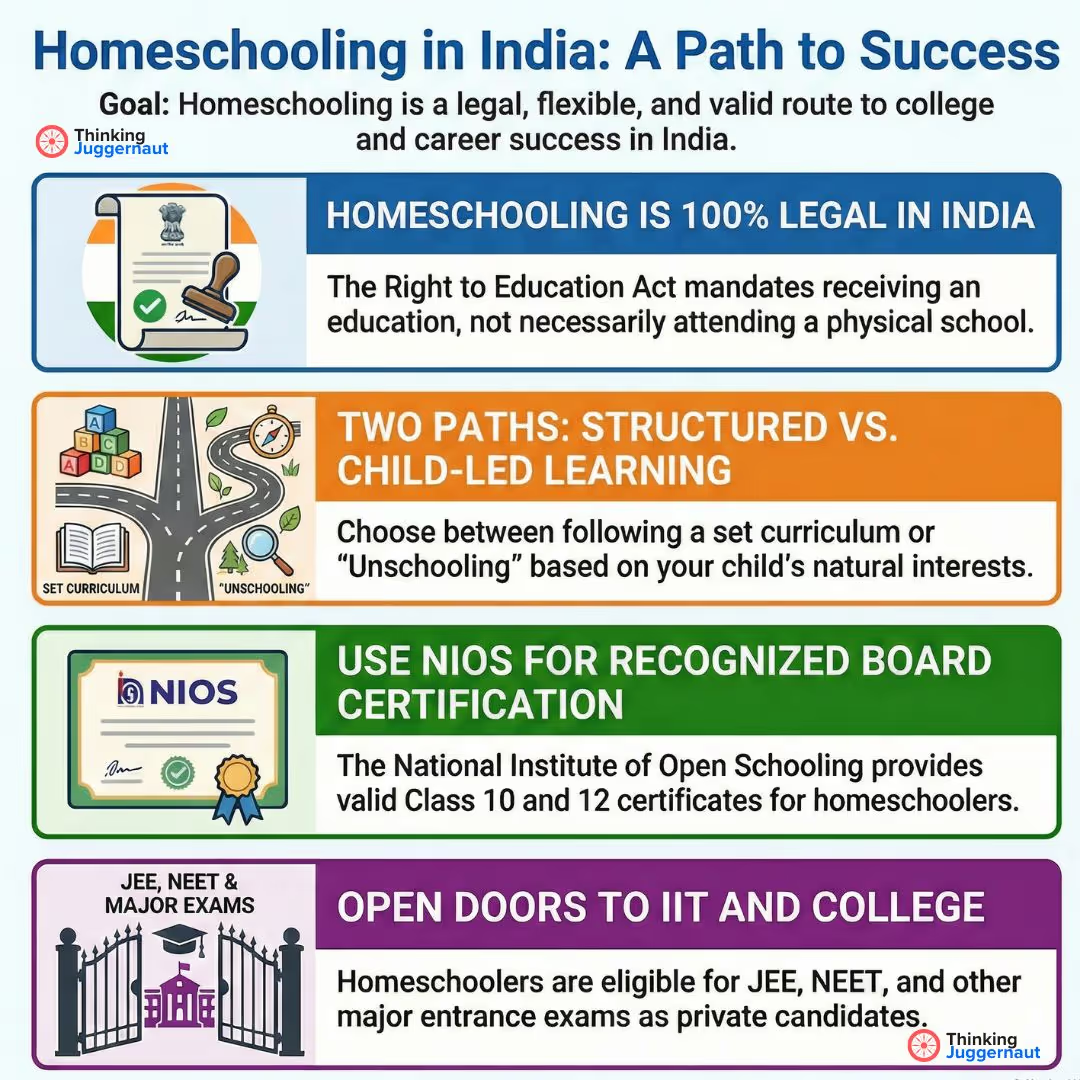
Homeschooling means parents take primary responsibility for their child's education—instead of sending them to a traditional school.
But here's what it's NOT:
Think of it this way: There are many routes to the same destination.
Neither route is "better." They're just different ways to reach the same goal: raising educated, capable adults.
Download free age-wise detailed homeschooling guide here
A child attends school 6-7 hours daily, follows a fixed timetable, learns the same curriculum as 40 other children at the same pace, and is assessed through standardized tests.
A child learns at home (or libraries, museums, parks, workshops) at their own pace. The schedule is flexible. The curriculum matches their learning style and interests. Parents guide, but learning happens everywhere—through projects, conversations, experiments, and real-life experiences.
Learning doesn't stop. It just looks different.
Many people use "homeschooling" and "unschooling" interchangeably, but they're actually quite different approaches.
What it is: Parents follow a planned curriculum—could be NCERT, IGCSE, or a custom mix—but teach it at home instead of school.
What it looks like:
Who it works for:
What it is: Learning happens naturally through the child's interests, questions, and real-life experiences. No formal curriculum, no "school" hours.
What it looks like:
Example day (10-year-old):
There's no "math hour" or "science class"—but math and science happen constantly through living.
Who it works for:
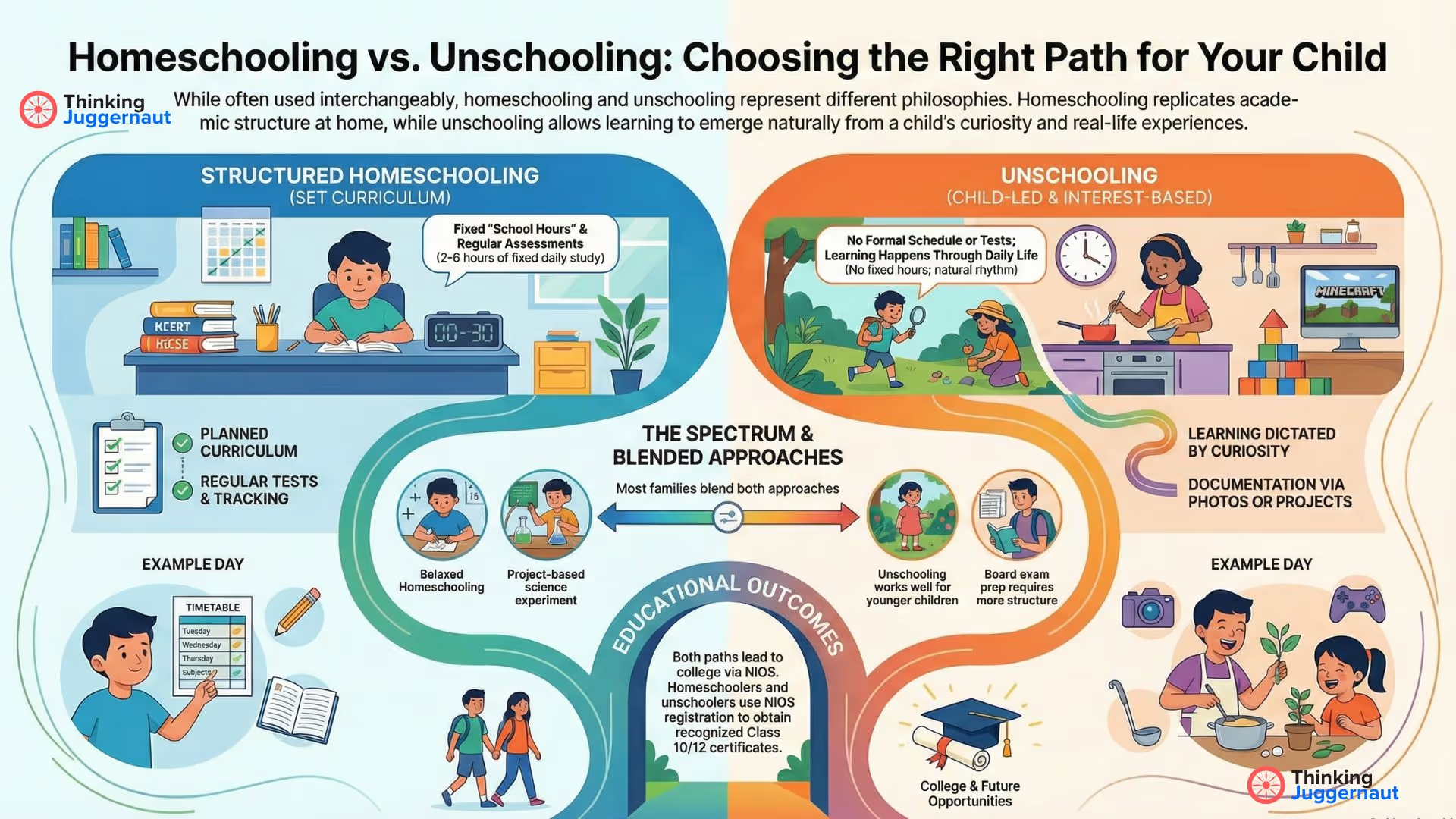
Most families don't do pure homeschooling OR pure unschooling. They blend:
"Relaxed Homeschooling":
"Flexible Homeschooling":
Yes. Here's the reality:
Ages 3-10: Full unschooling works beautifully. Children learn through play, exploration, questions.
Ages 11-14: Many unschoolers start adding some structure—math practice, writing assignments—while keeping the child-led philosophy.
Ages 15-18: Most unschoolers who want to pursue college either:
The key insight: Unschooling doesn't mean "never learning formally." It means learning formally when it serves a purpose the child understands (like getting into college), not because someone imposed it.
Yes. Homeschooling is legal in India.
But there's nuance to understand.
The Right to Education Act, 2009 makes elementary education (ages 6-14) compulsory. But it does NOT mandate where this education must happen.
The Act states children must receive education—not necessarily in a government-recognized school.
Here's what this means practically:
India doesn't have explicit homeschooling legislation. This creates both freedom and uncertainty:
Freedom: No mandatory curriculum, no inspections, no standardized testing (until boards)
Uncertainty: Schools may not easily re-admit homeschooled children; some authorities may question your decision
While there's no national homeschooling law, some states are more accommodating than others. Karnataka, Maharashtra, Delhi, and Tamil Nadu have growing homeschooling communities with minimal interference.
If authorities question you, here's what helps:
Parents have successfully homeschooled across India without legal issues, but being prepared with documentation is wise.
Official Resource: Visit NIOS.ac.in for recognized board certification options for homeschoolers and here is a guide for homeschooling with NIOS by Dr.Senthil
When I speak to homeschooling families, the reasons are deeply personal—but patterns emerge.

Traditional School:
A bright child who understands fractions in 2 days must still sit through 3 weeks of lessons. Or a child who needs extra time with division is rushed ahead before they're ready.
Homeschooling:
Learning moves at the child's pace. A 7-year-old might be doing Class 5 math but Class 2 reading—and that's perfectly fine.
Some children struggle in traditional schools—not because they can't learn, but because the environment doesn't suit them:
Parents want control over what and how their child learns:
"My daughter was in Class 3, coming home exhausted every day. She loved learning but hated school. We tried homeschooling for one year—just to see. That was 4 years ago. She's thriving. She finishes her academics in 3-4 hours and spends afternoons on robotics, dance, and playing with neighborhood kids. She's curious again."

I know several families who chose to homeschool so their children could pursue chess full-time. These weren’t casual players — they trained 6–8 hours a day, played in state and national tournaments, and dreamt of becoming Grandmasters.
Most of them didn’t end up as chess champions.
But what they gained was far greater — discipline, focus, resilience, and a sense of purpose that shaped everything they’ve done since.
At age 10, Rohan showed promise in chess. His parents withdrew him from Class 5 to focus fully on training. For 5 years, his life was chess tournaments, coaching sessions, and online games.
By age 15, reality set in: He was good, but not championship-level. Not Grandmaster material.
His parents panicked. "He's missed 5 years of school. What now?"
Here's what actually happened:
Year 1 (Age 15):
Year 2-3 (Age 16-17):
Year 4 (Age 18):
Today (Age 24):
The kids who focused on chess (or music, or sports) instead of school were NOT ruined.
They learned:
And when they needed to, they wrote board exams (NIOS), appeared for entrance tests, and got into colleges.
The real lesson: Alternative paths—whether it's chess, homeschooling, or anything else—don't close doors. They just open different ones.
The key was:
This is what homeschooling (or any alternative education) looks like at its best: pursuing what matters to the child, while still keeping doors open for the future.
Homeschooling isn't one-size-fits-all. Here are the main approaches:
Most families blend approaches. You might use NCERT books for core subjects but follow unschooling principles for everything else.
Let's be clear-eyed about both.
Neither is perfect. The question is: Which trade-offs can your family handle?
Reality: Socialization ≠ Sitting in a classroom with 40 same-age kids.
Homeschooled children often have richer social experiences:
Remember the chess players? They had social lives through:
Research shows homeschooled children perform as well or better on social skills assessments compared to traditionally schooled peers.
The key: Parents must be intentional about creating social opportunities.
Reality: You need to be a facilitator, not an expert in every subject.
Most homeschooling parents aren't teachers. They're curious, resourceful, and willing to learn.
Reality: Many top universities worldwide accept homeschooled students—including IITs.
The chess players I mentioned? They all got into colleges. Some engineering, some design, one even became a lawyer.
Reality: Homeschooling can be done on any budget.
Expensive online schools exist—but so do budget-friendly approaches.
Reality: It's legal—just unregulated.
As we covered earlier, there's no law against homeschooling. Parents have constitutional rights to choose their child's education.
Here are real (anonymized) conversations from Indian homeschooling communities:
Parent (Ananya from Mumbai): "My 8-year-old hates math worksheets. She just shuts down. How do I teach her without tears?"
Response (Experienced Homeschooler): "Stop the worksheets for now. Math is everywhere—cooking (measurements), shopping (money), building blocks (geometry). Let her discover numbers naturally first."
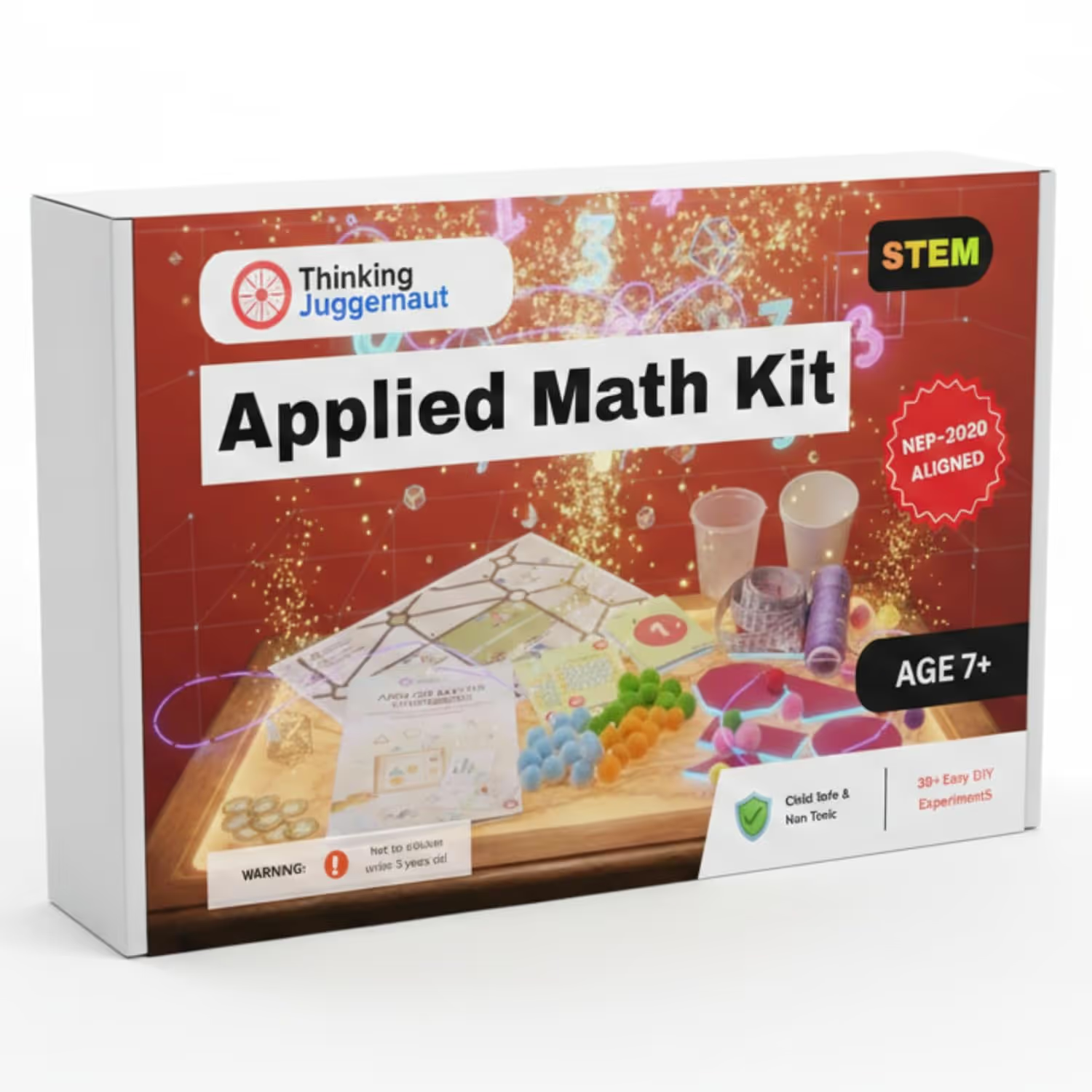
Follow-up: "If the goal is concepts and application, one of the best ways is developing an interest and number sense. I'd suggest trying Thinking Juggernaut Applied Math Kits for hands-on learning. They have activities with kit materials to teach number sense, spatial thinking, addition, multiplication. Once the interest develops, the traditional way becomes much easier, and mental math develops naturally instead of being forced."
Parent (Rajesh from Bangalore): "Everyone keeps asking about socialization. My son has friends in the neighborhood and attends cricket coaching 4 days a week. But relatives say he needs 'school friends'. Feeling pressured."
Response 1: "School friends = 40 kids born in the same year as you, living in the same area, forced to sit together. That's not how real life works. Your son is getting better socialization."
Response 2: "Ask your relatives: 'How many school friends do YOU still meet regularly?' Most adults' closest friends are from college, work, or hobbies—not school."
Parent (Deepa from Delhi): "We're considering homeschooling for Classes 6-8, then putting our daughter back in school for 9-10 so the board exam process is smooth. Is this common?"
Response: "Yes, hybrid/flexi-schooling is becoming popular. But check with schools in advance—re-admission policies vary. Some require entrance tests. Also, if you register with NIOS for Class 10, you don't need to go back to school at all. Many homeschoolers do NIOS for 10th and 12th, then appear for JEE/NEET as private candidates."
Parent (Vikram from Pune): "Started homeschooling 3 weeks ago. Bought 15 different workbooks, subscribed to 4 online platforms, joined 2 co-ops. My daughter is more stressed now than in school. What am I doing wrong?"
Response: "You're doing too much. The first rule of homeschooling: LESS IS MORE. Pick 1 math resource, 1 language program, and lots of free play/reading time. That's it for the first 3 months. You can always add more later."
Parent (Sneha from Hyderabad): "Both my husband and I work full-time. Can we still homeschool?"
Response 1: "Tough but possible. Options: online school (structured classes while you work), hire a tutor for 2-3 hours daily, have grandparents help, or one parent shift to freelance/part-time."
Response 2: "Honestly, if both parents are working 9-to-6 jobs with no flexibility, homeschooling will be very hard. Maybe consider hybrid/flexi-schooling instead?"
These conversations reveal the real homeschooling journey—messy, uncertain, but deeply rewarding.
Every age and stage has different needs. Here's a brief overview—we'll publish detailed guides for each soon.

What they need:
What they DON'T need:
Homeschooling approach: Mostly unschooling works beautifully at this age. Focus on:
Resources:
Detailed guide on: "Homeschooling Ages 3-6: The Play Years" Get the free guide now.
What they need:
What they DON'T need yet:
Homeschooling approach: 2-3 hours of structured academics (reading, writing, math) + rest of the day for projects, play, exploration.
Sample Daily Rhythm:
Resources:
Detailed guide on: "Homeschooling Classes 1-5: Building Strong Foundations" Get the free guide now.
What they need:
What changes from earlier years:
Homeschooling approach: Mix of parent-guided academics and self-directed projects.
Key subjects to focus on:
Board exam note: This is a good time to decide: Will you do NIOS for Class 10, or continue homeschooling through Class 8 and then join a school for 9-10?
Resources:
Detailed guide on: "Homeschooling Classes 6-8: The Transition Years" Get the free detailed guide now.
What they need:
Reality check: This is when homeschooling gets more structured. You're preparing for Class 10 boards (usually NIOS for homeschoolers).
Homeschooling approach: 4-6 hours of focused study daily, following NIOS syllabus.
NIOS (National Institute of Open Schooling):
Resources:
What they need:
Reality check: This is the hardest stage to START homeschooling. If your child is already in Class 11-12 in school, continuing might be easier unless there's a strong reason to switch.
Homeschooling approach: Highly focused on end goal:
The entrance exam reality:
Want personalized guidance for your child's specific age/class? Take our Readiness Assessment
Not sure if homeschooling is right for you? Take our 5-minute interactive assessment to get:
If you've decided to try homeschooling, here's a step-by-step roadmap:
Give your child—and yourself—time to decompress.
Choose your homeschooling style:
There's no "right" answer—pick what aligns with your values and your child's needs.
Get the age-wise guide now for what each stage needs.
For Class 10 and 12 board exams, the National Institute of Open Schooling (NIOS) is your primary option.
2025-2026 Update: NIOS now offers exam cycles twice per year (April-May and October-November), providing more flexibility.
Key points:
Sample Daily Routine (Class 3-5):
The goal isn't rigidity—it's rhythm.
Join local homeschooling groups:
City guides coming soon:
Unlike schools, you won't have report cards. Instead, maintain a learning portfolio:
This serves as both record-keeping and encouragement (you'll be amazed how much they learn!).
Yes. Through NIOS (National Institute of Open Schooling) for Class 10 and 12. Also Cambridge IGCSE, IB, or other international boards. NIOS is recognized nationwide and accepted for all entrance exams.
If withdrawing from school, request a Transfer Certificate. If your child never attended formal school, you don't need a TC for NIOS registration.
Yes, but re-admission depends on the school's policies. Some schools require entrance tests. Private schools generally have more flexibility than government schools. Maintain documentation of your child's learning to demonstrate progress.
It varies widely:
Budget: ₹10,000-₹20,000/year
Moderate: ₹50,000-₹1,00,000/year
Premium: ₹2,00,000-₹5,00,000/year
Compare to school fees: ₹50,000-₹5,00,000/year. Homeschooling can be significantly cheaper OR more expensive, depending on your choices.
Probably not at first. Expect questions and skepticism. By Year 2-3, when your child is thriving, skeptics often become supporters.
No. Flexibility is one of homeschooling's biggest advantages. However, some routine helps. Most families use a natural daily rhythm rather than strict schedules.
You don't need to know everything:
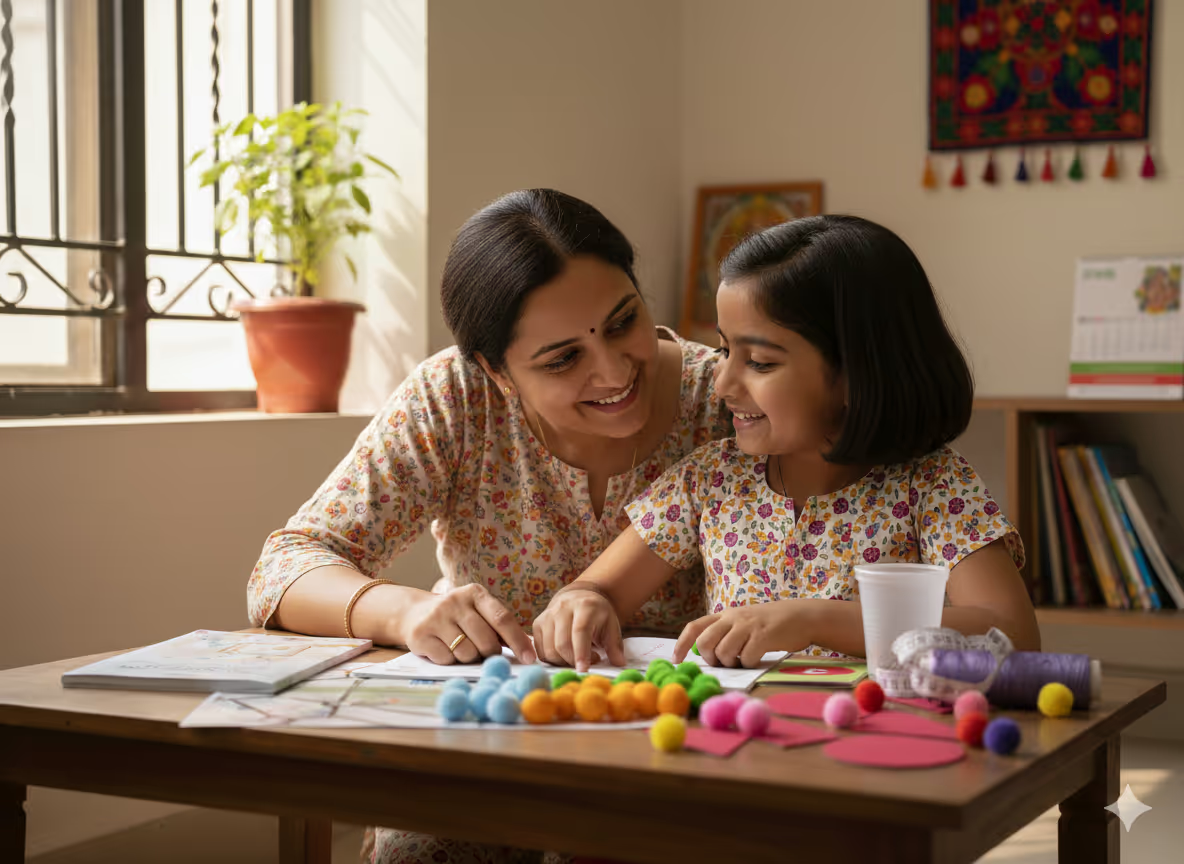
For math specifically: Hands-on kits teach concepts visually—you don't need to be an expert.
Options:
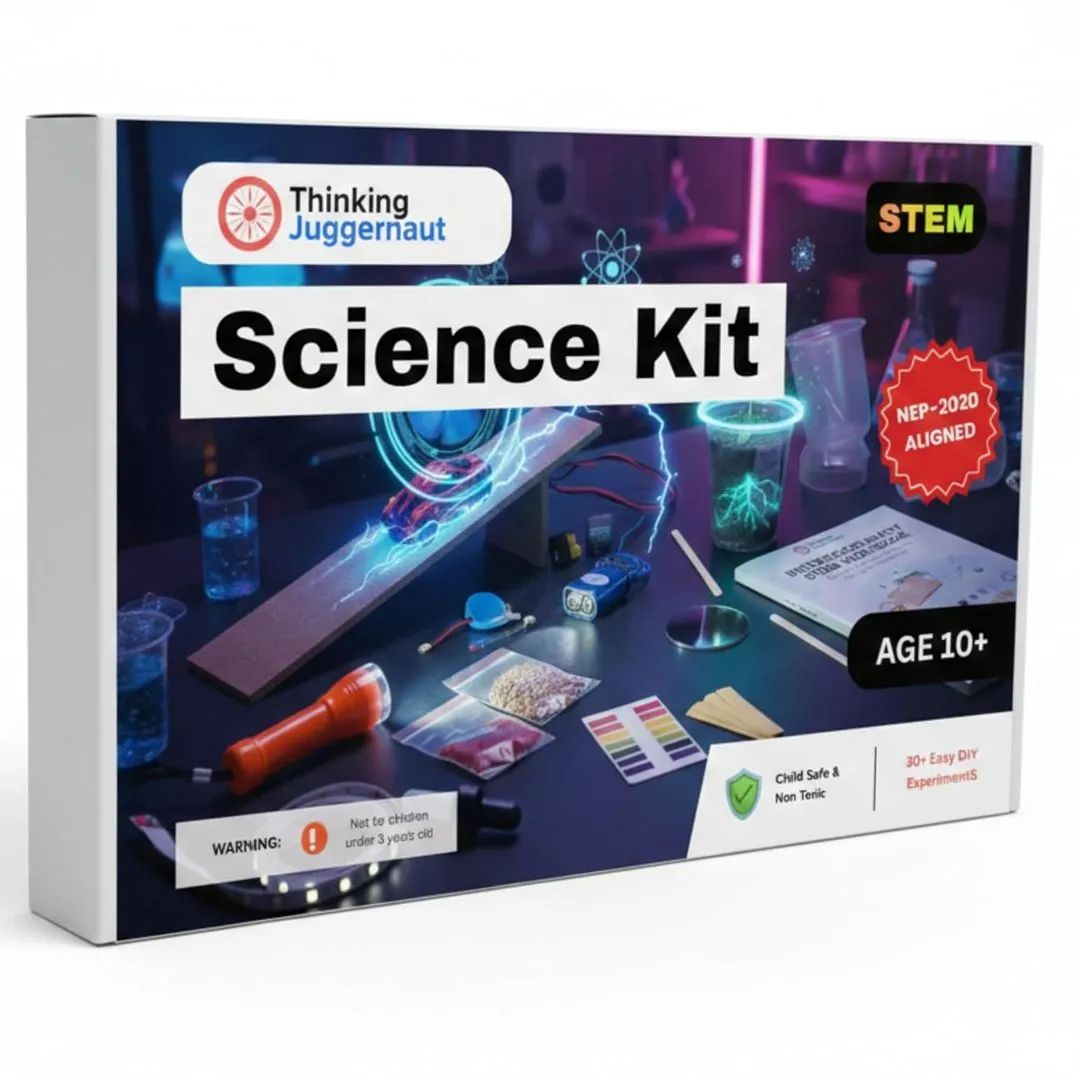
Reality: A motivated homeschooler doing experiments at home often gets MORE hands-on experience than school students with one supervised lab per month.
It's challenging if both work 9-6 with no flexibility.
Possible options:
Homeschooling can be especially beneficial for neurodivergent children:
Advantages:
Considerations:
Many parents find homeschooling EASIER with neuro-divergent children because they can design the environment around the child's needs.
It requires intentional effort but can be richer than school:
What homeschoolers do:
Key difference: Multi-age friendships (like real life) instead of age-segregated (like school).
Block out 3-4 afternoons/week for social activities.
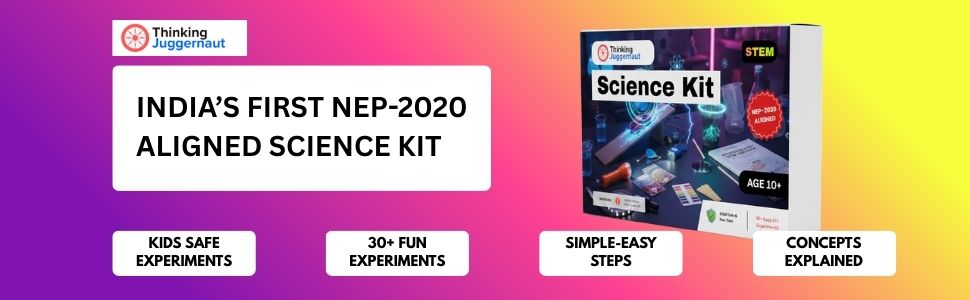
This is where homeschooling really shines—learning by DOING: You can take help of Thinking Juggernaut Hands-on learning kits.
These kits align with NEP 2020's vision of experiential learning—exactly what homeschooling enables.
Homeschooling isn't better or worse than traditional school.
It's different.
The question is: Which system works for YOUR family's needs, values, and capacity?
Think of it simply: Both routes can lead to the same destination—educated, capable adults. The journey looks different.
Some families thrive with the structure and community of traditional school. Others thrive with the flexibility and customization of homeschooling.
Neither is "right" or "wrong." What matters is making the choice intentionally.
If you're still unsure, take our 5-minute Readiness Assessment for personalized guidance.
You don't have to commit forever on Day 1.
Try it for 6 months or 1 year. See what happens.
The goal isn't to escape school. It's to find where your child thrives—curious, confident, and genuinely excited to learn.
Whether you choose homeschooling or traditional schooling, what matters is:
That's the real education: learning to make choices that align with your values.
Almost there!
We will confirm your order on WhatsApp
Order placed!
Thank you! You will receive a WhatsApp confirmation shortly.



![[background image] electronics workbench](https://cdn.prod.website-files.com/6867e17b7728d4dad1984de4/69745f6b1124efa839d7958e_Class%203%20Multiplication%20Worksheet%20with%20Answers%20PDF%20-%20Free%20Download_page-0006.avif)
![[digital project] image of past client project on a magazine page](https://cdn.prod.website-files.com/6867e17b7728d4dad1984de4/6972ee0bf80a40e0e1fc016a_15.avif)
![[digital project] image of past client project on a magazine page](https://cdn.prod.website-files.com/6867e17b7728d4dad1984de4/698b15f8098e2338b8bc04a1_Thinking%20Juggernaut%20Homeschool%20Readiness%20Calculator.avif)