2D and 3D shapes worksheet for Class 2 with solved examples, practice questions, and tips. Help your child identify circles, squares, triangles, cubes, and more with ease.
Shapes are all around us. They help us describe the world we see. Shapes are divided into two types: 2D shapes, which are flat, and 3D shapes, which are solid.
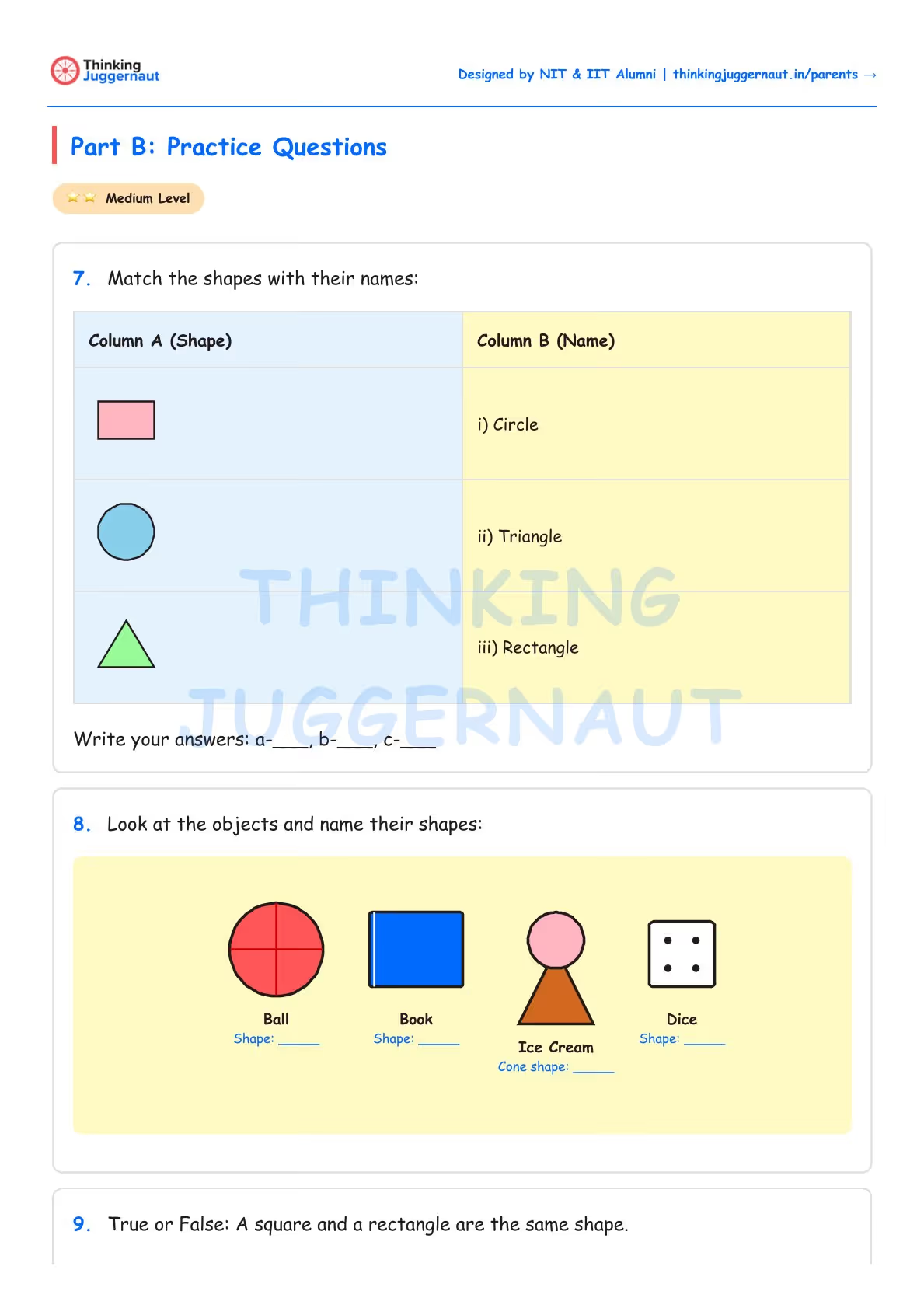
A circle is a round shape with no corners. A square has 4 equal sides and 4 corners. A rectangle has 4 sides — 2 long and 2 short — and 4 corners. A triangle has 3 sides and 3 corners.
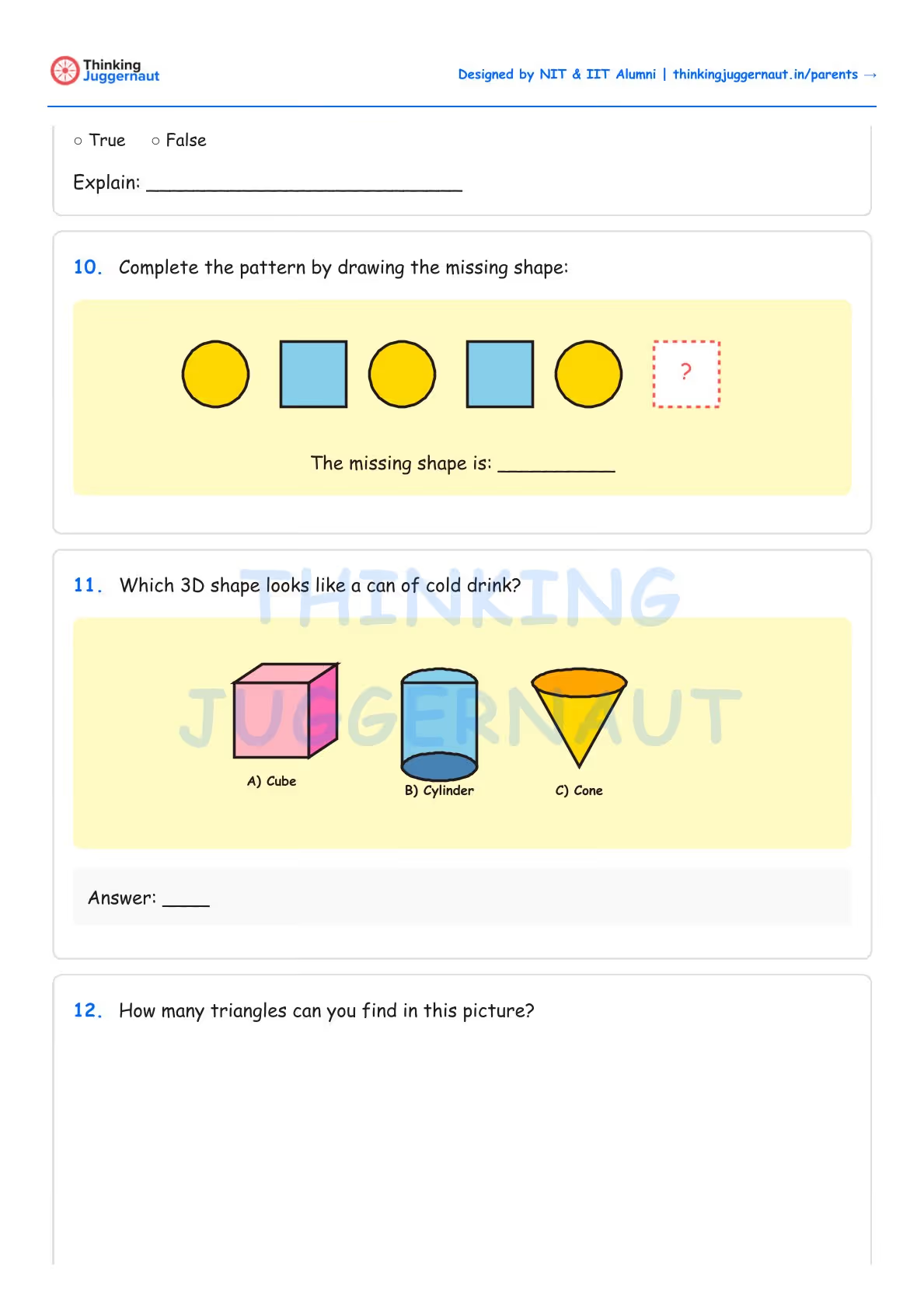
A sphere is round like a ball. A cube is a box with all equal sides, like a dice. A cuboid is a box shape, like a book. A cylinder is round with flat ends, like a can. A cone has a pointed top with a round bottom, like an ice cream cone.
Problem: How many sides does a square have?
A square has 4 sides, all equal in length. A square also has 4 corners, which are also called vertices.
Answer: A square has 4 sides.
Learn the properties – Count the sides and corners for each shape to remember them.
Go shape hunting – Find shapes around your house. Plates are circles, books are rectangles, and roofs are triangles.
Draw daily – Practice drawing each shape 3 to 5 times every day to build accuracy.
Learn 3D shapes with real objects – Hold a ball to feel a sphere, a box to feel a cube or cuboid, and a can to feel a cylinder.
Use shape toys – Play with shape sorters, building blocks, and tangrams to make learning fun.
Make it creative – Try drawing pictures using only shapes, like a robot, a house, or a car, and label each shape you use.
Worksheets build practice. The Applied Maths Project Kit builds understanding — 30 real-world math activities covering the same concepts your child is practising here, from multiplication and grouping to measurement and data.
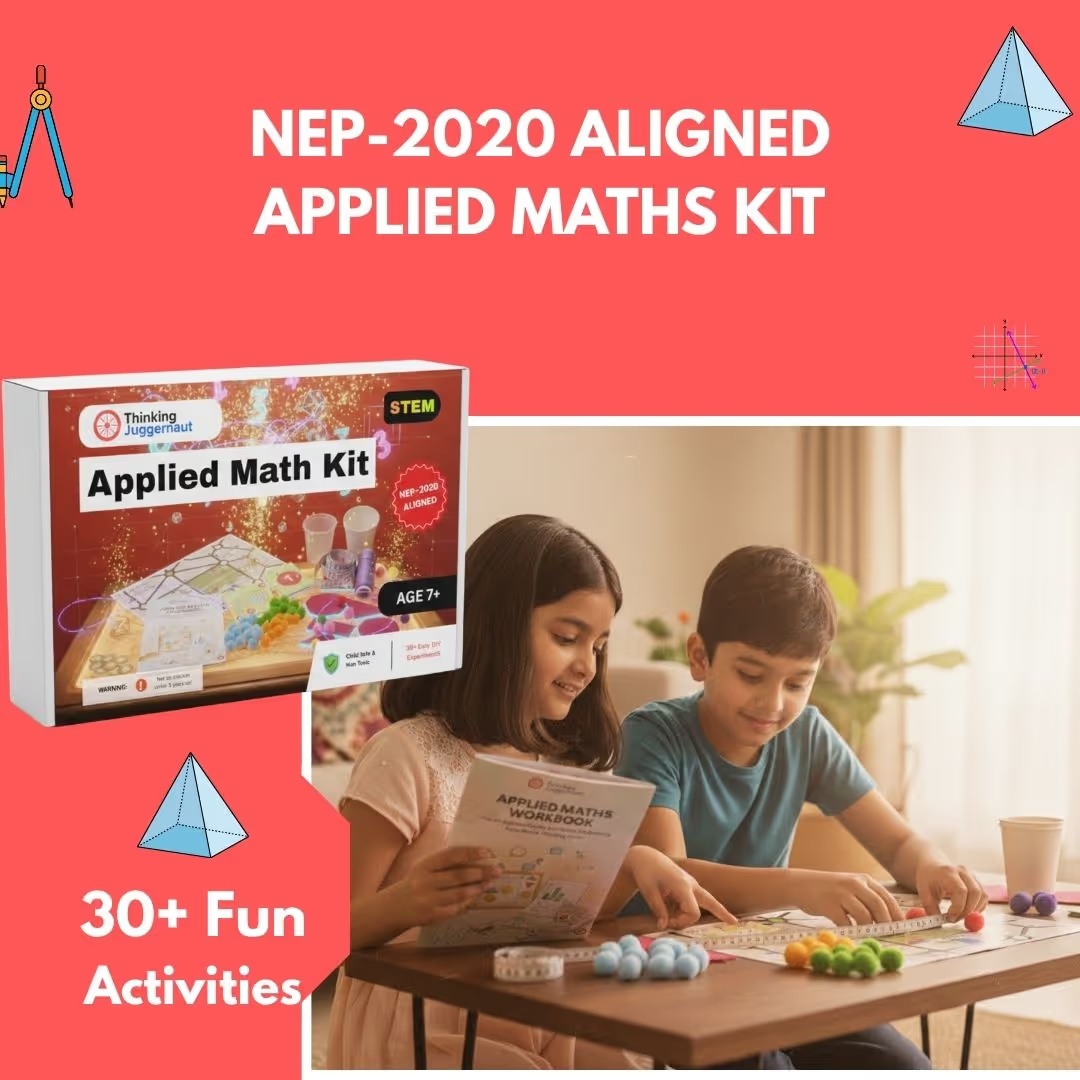
Designed by IIT & NIT Alumni · NEP-2020 aligned · Trusted by parents across India
Class 2 Addition and Subtraction
Class 2 Addition and Subtraction Word Problems
Class 2 Data Handling
Class 2 Multiplication
Class 2 Place Value
Class 2 Shapes
Not in Class 2?
Visit our Main Math Worksheet Hub to explore all printable worksheets from Class 2 to Class 8.
Almost there!
We will confirm your order on WhatsApp
Order placed!
Thank you! You will receive a WhatsApp confirmation shortly.