Practice Class 3 division word problems with step-by-step solutions. Free PDF worksheet with 15 questions covering sharing, grouping, and multi-step division problems for Class 3 students.
Division word problems are real-life situations where things need to be shared equally or grouped into equal parts. The challenge is not the arithmetic — it is reading the problem carefully enough to know what is being divided, and into how many parts.
There are two types of division situations, and Class 3 students encounter both:
Sharing: A total is divided among a fixed number of people or groups. Meera has 12 gulab jamuns to share equally among 3 friends. Here the number of groups is known, and the question asks how many go in each.
Grouping: A total is split into groups of a fixed size. A shopkeeper bundles 35 pencils into groups of 5. Here the group size is known, and the question asks how many groups can be made.
Both look similar on paper but require different reading. This worksheet covers both types across all three difficulty levels.
Step 1: Read the problem carefully
Step 2: Find the total number (Dividend)
Step 3: Find how many groups or parts (Divisor)
Step 4: Divide to find the answer (Quotient)
Step 5: Write the answer with the correct unit
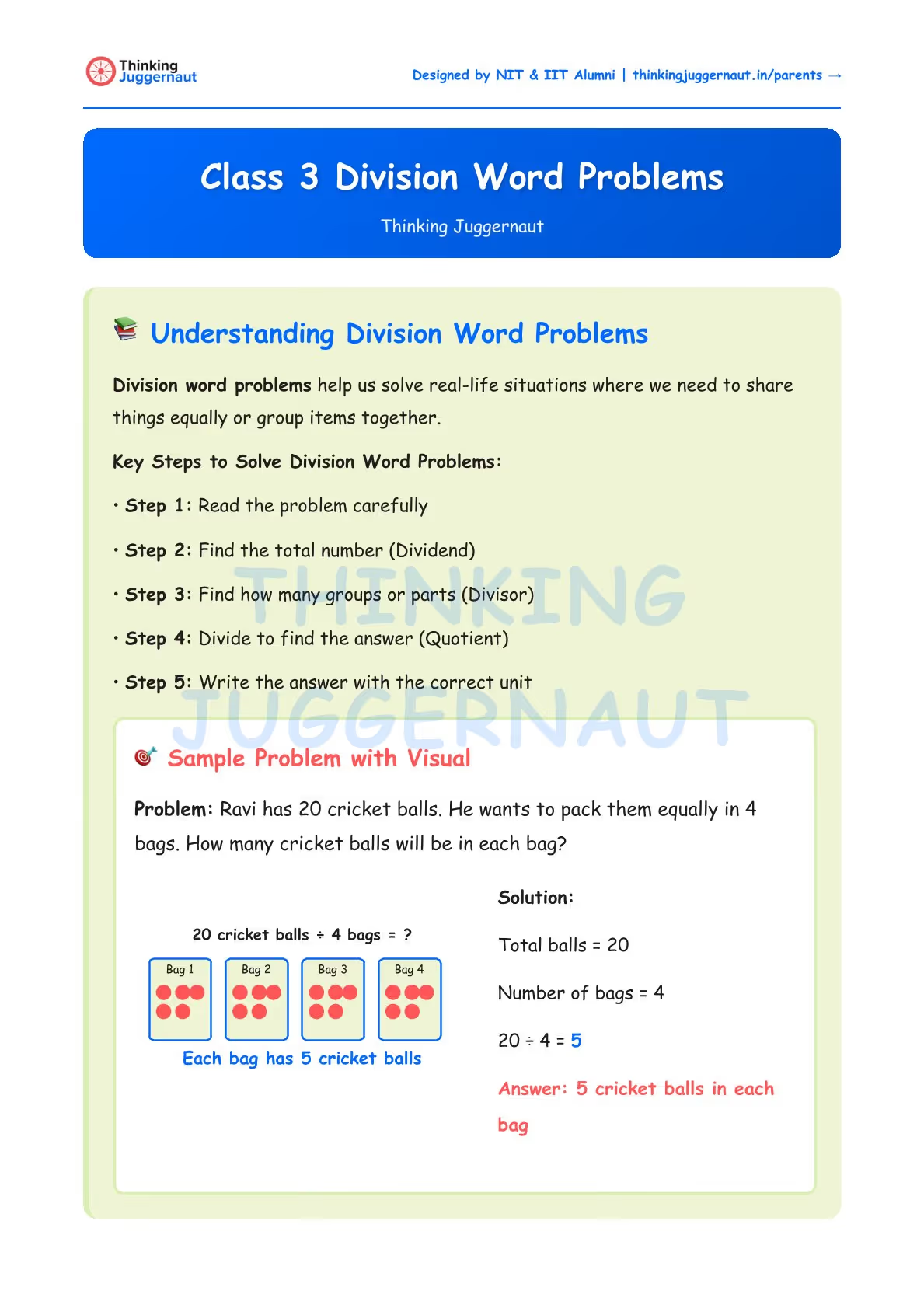
Problem: Ravi has 20 cricket balls. He wants to pack them equally in 4 bags. How many cricket balls will be in each bag?
Solution:
Total balls = 20
Number of bags = 420 ÷ 4 = 5
Answer: 5 cricket balls in each bag
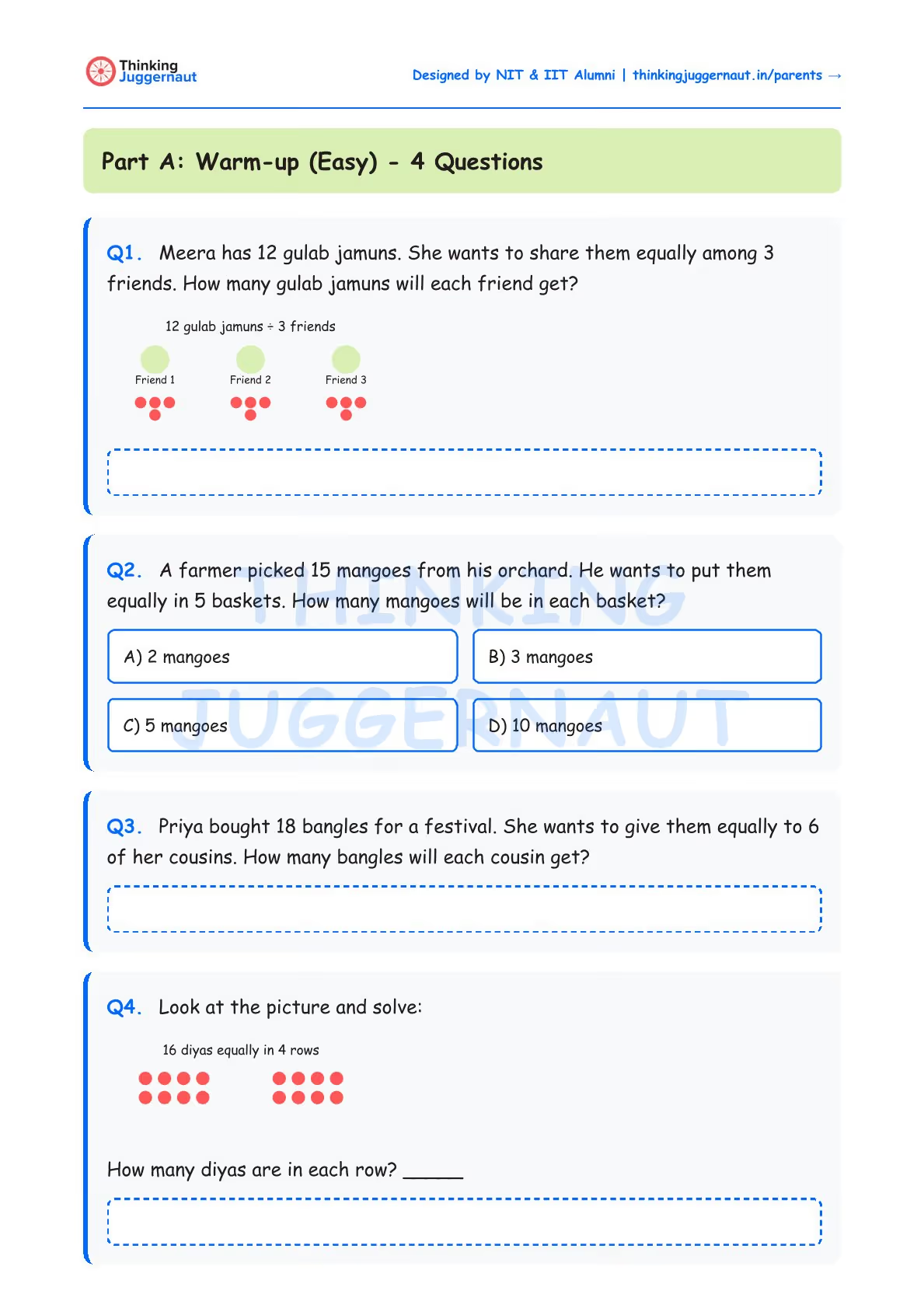
Q1. Meera has 12 gulab jamuns. She wants to share them equally among 3 friends. How many gulab jamuns will each friend get?
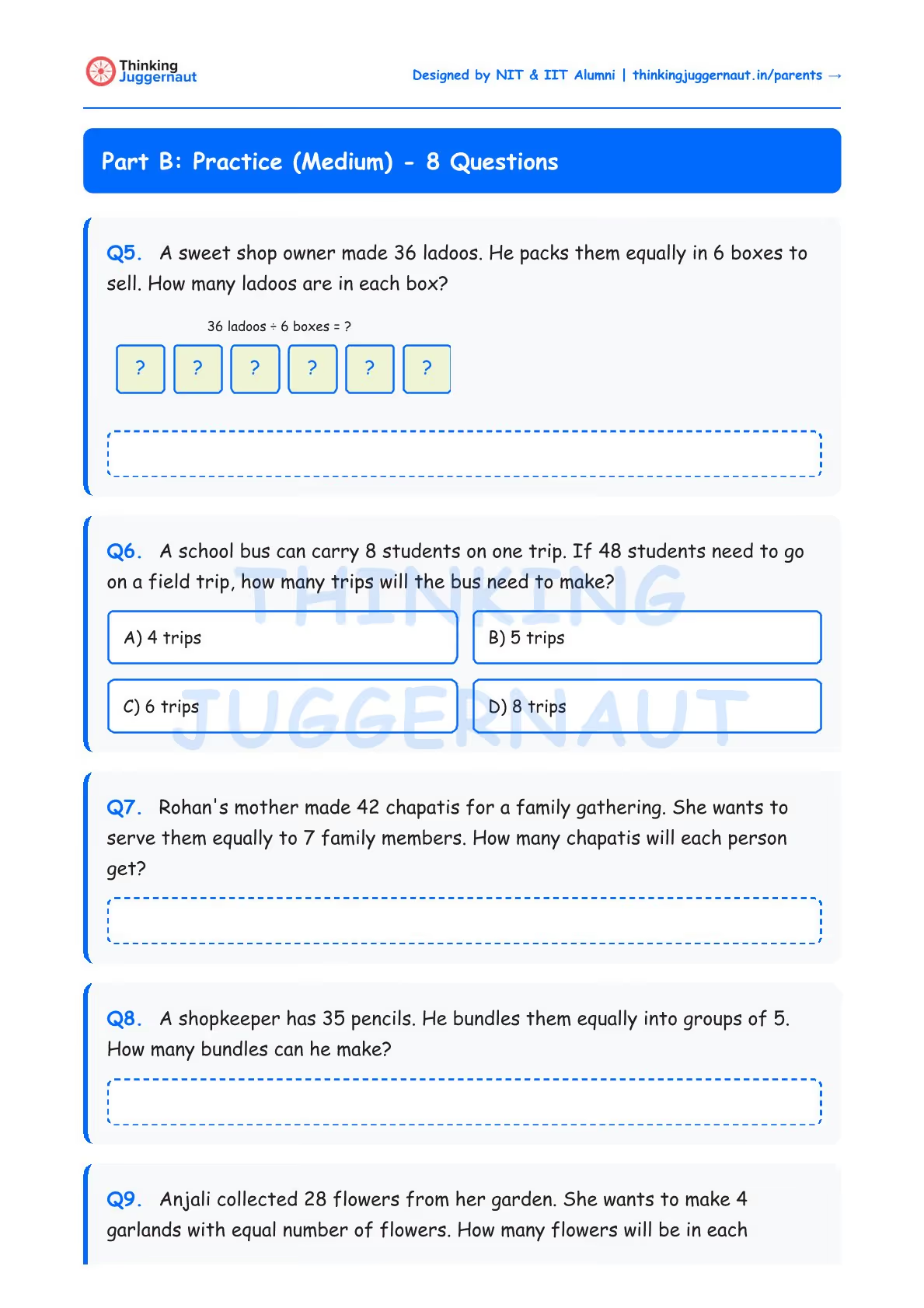
Q5. A sweet shop owner made 36 ladoos. He packs them equally in 6 boxes to sell. How many ladoos are in each box?
Q9. Anjali collected 28 flowers from her garden. She wants to make 4 garlands with equal number of flowers. How many flowers will be in each garland?
Q13. A library has 72 books on science. The librarian wants to arrange them equally on 8 shelves. After arranging, she adds 3 more books to each shelf. How many books are now on each shelf?
Q14. Ramesh bought 80 samosas for his birthday party. He gave 20 samosas to his neighbors and divided the remaining samosas equally among 6 friends. How many samosas did each friend get?
Q15. A vegetable vendor has 96 tomatoes. He sells half of them in the morning. He then packs the remaining tomatoes equally in 8 bags. How many tomatoes are in each bag?
The 5-step method gives children a structure. What builds genuine problem-solving instinct is encountering real situations where equal sharing actually happens — and figuring out the maths themselves.
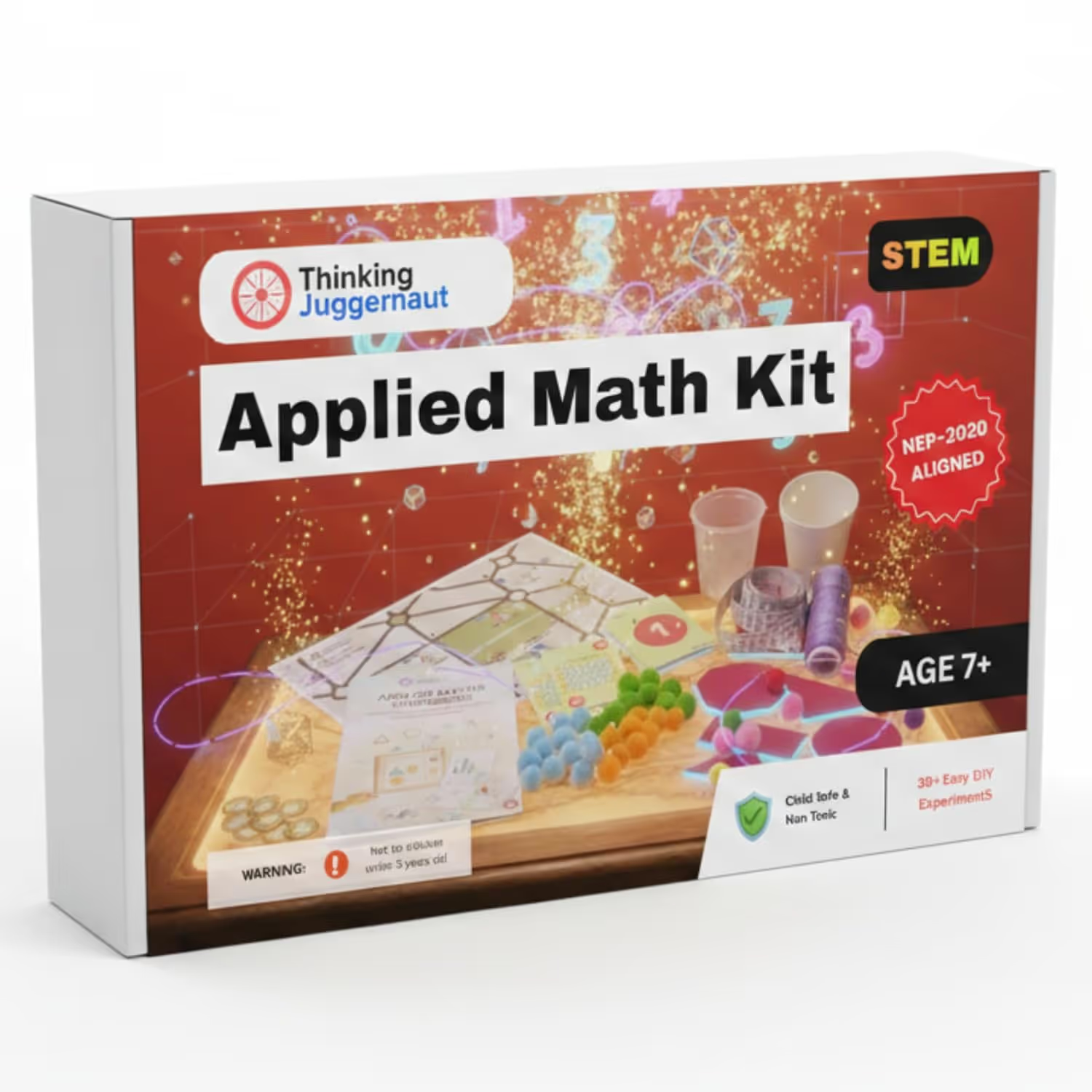
The Applied Maths Project Kit (Age 7+) by Thinking Juggernaut includes 30 hands-on activities where children distribute, measure, and group real objects to solve practical challenges.

Using the wrong operation: The most common error — adding or subtracting when the problem calls for division. Keywords like equally, each, share, distribute, and per signal division. Train children to underline these before writing anything.
Reversing dividend and divisor: 48 ÷ 8 and 8 ÷ 48 are completely different. In Class 3 word problems, the larger number is always the dividend. If a child writes 8 ÷ 48, they have misread which quantity is the total.
Skipping steps in multi-step problems: In Part C, every problem requires at least two operations. Children who jump straight to division without completing the first step consistently get wrong answers. Writing each step separately — even if it feels slow — is the habit that prevents this.
Forgetting units in the answer: Writing "10" instead of "10 samosas" or "6" instead of "6 trips" is marked incorrect in school assessments. Units are part of the answer, not optional.
13-15 correct: Excellent! You've mastered division word problems. Challenge yourself with harder multi-step problems.
10-12 correct: Very Good! Review Part C questions. Practice identifying if you need to subtract first before dividing.
7-9 correct: Good Start! Focus on reading problems twice, underlining key numbers, and drawing pictures to visualize.
Below 7: Keep Practicing! Go back to Part A. Practice your division tables (2-10). Ask an adult to explain word problems step-by-step.
For multi-step problems, write down each step separately before solving!
Draw pictures or diagrams to visualize the problem when needed.
Always check if you need to perform other operations (like subtraction) before dividing.
Practice your division tables from 2 to 10 to solve problems faster.
Download the complete worksheet here. The PDF includes all 15 problems across 3 difficulty levels, visual diagrams for sharing and grouping problems, MCQ format questions, and a full answer key with step-by-step working for every multi-step problem.
What is the difference between sharing and grouping in division?
Sharing means dividing a total among a known number of groups and finding how many go in each group — 12 gulab jamuns shared among 3 friends. Grouping means dividing a total into groups of a known size and finding how many groups can be made — 35 pencils bundled into groups of 5. Both are division, but the reading is different. This worksheet covers both types, and Part B specifically includes problems of each kind so children learn to distinguish between them.
Why do children struggle with division word problems more than multiplication word problems?
Multiplication word problems almost always follow the same pattern: groups × items per group = total. Division word problems come in two forms (sharing and grouping), the dividend and divisor can be confused, and multi-step problems require identifying the right operation at each stage. The 5-step method in this worksheet addresses all three of these issues by forcing children to identify the total and the divisor separately before writing any division.
What keywords signal division in word problems?
The most common keywords are equally, each, share, divide, distribute, per, split, and how many groups. The word remaining or rest in a problem usually signals that a subtraction step must happen before dividing. Half signals that division by 2 happens first. Children who learn to underline these words before calculating rarely confuse the operations.
Is this worksheet suitable for CBSE Class 3 students?
Yes. The problems are within the Class 3 maths syllabus — single-step and two-step division word problems using numbers within multiplication tables 2 to 10, including money and everyday contexts. The worksheet format also prepares children for the question styles used in CBSE school assessments.
How long does this worksheet take to complete?
Part A takes 10–15 minutes. Part B takes 15–20 minutes given the larger numbers and mix of sharing and grouping problems. Part C requires careful reading and multi-step working — allow 15 minutes. Total: 40–50 minutes. For children who find word problems challenging, Part A and B can be completed in one session with Part C attempted separately.
Worksheets build practice. The Applied Maths Project Kit builds understanding — 30 real-world math activities covering the same concepts your child is practising here, from multiplication and grouping to measurement and data.
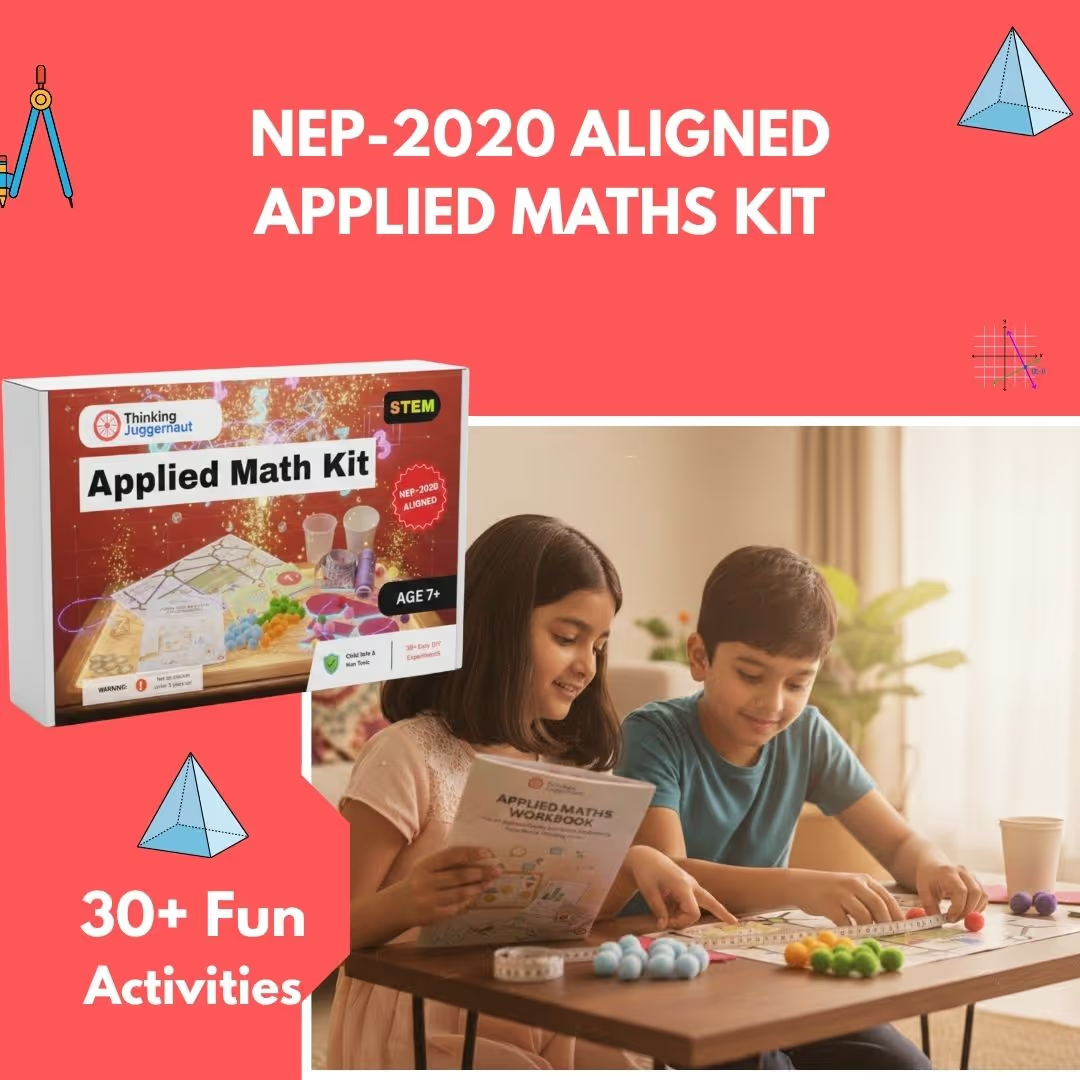
Designed by IIT & NIT Alumni · NEP-2020 aligned · Trusted by parents across India
Class 3 Multiplication Word Problems
Class 3 Division Word Problems
Not in Class 3?
Visit our Main Math Worksheet Hub to explore all printable worksheets from Class 2 to Class 8.
Almost there!
We will confirm your order on WhatsApp
Order placed!
Thank you! You will receive a WhatsApp confirmation shortly.