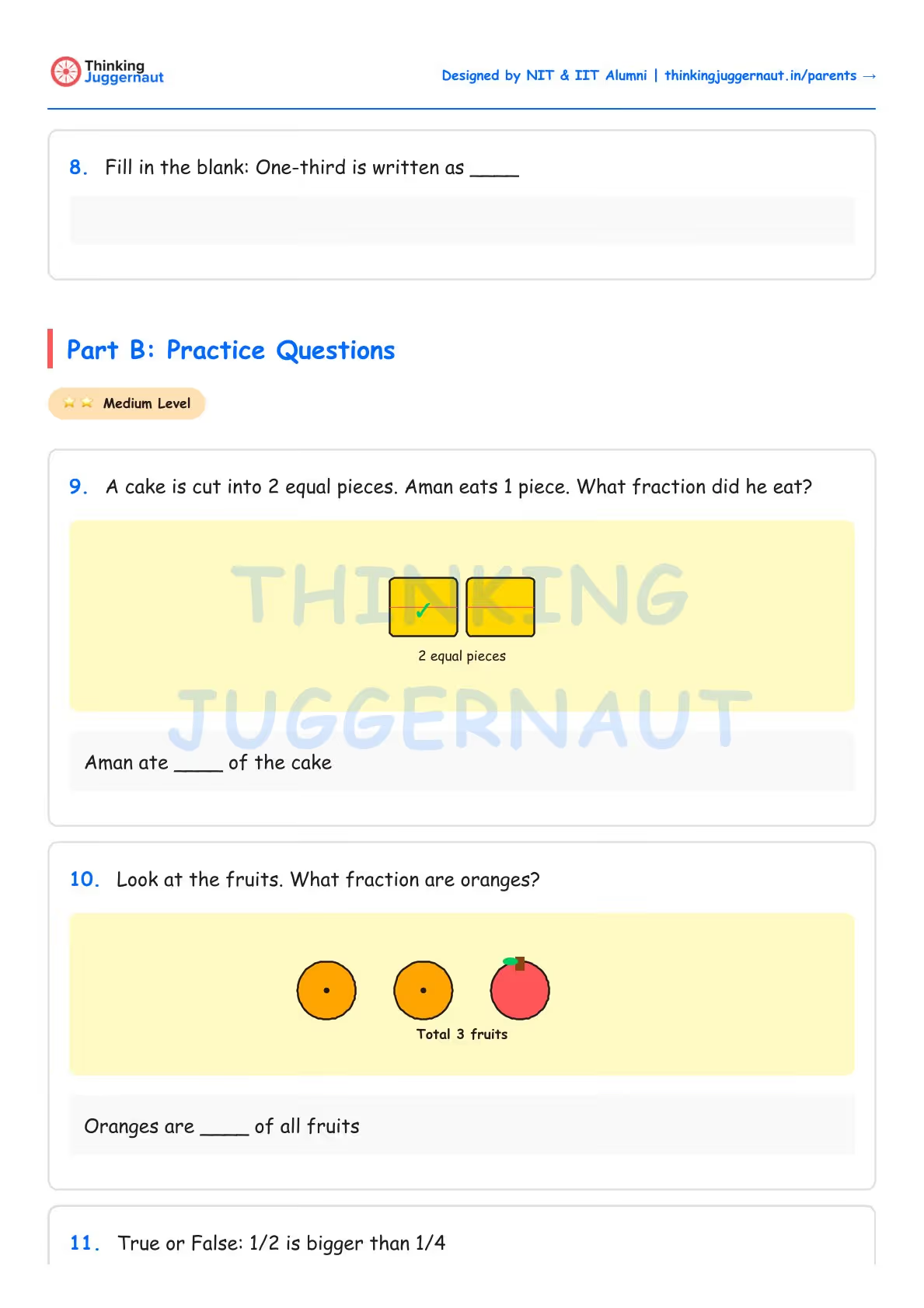
Help your Class 3 child understand fractions with this worksheet - 24 visual problems covering 1/2, 1/3, 1/4. Includes real-life examples, pizza and cake models, complete answer key, and personalized learning path.
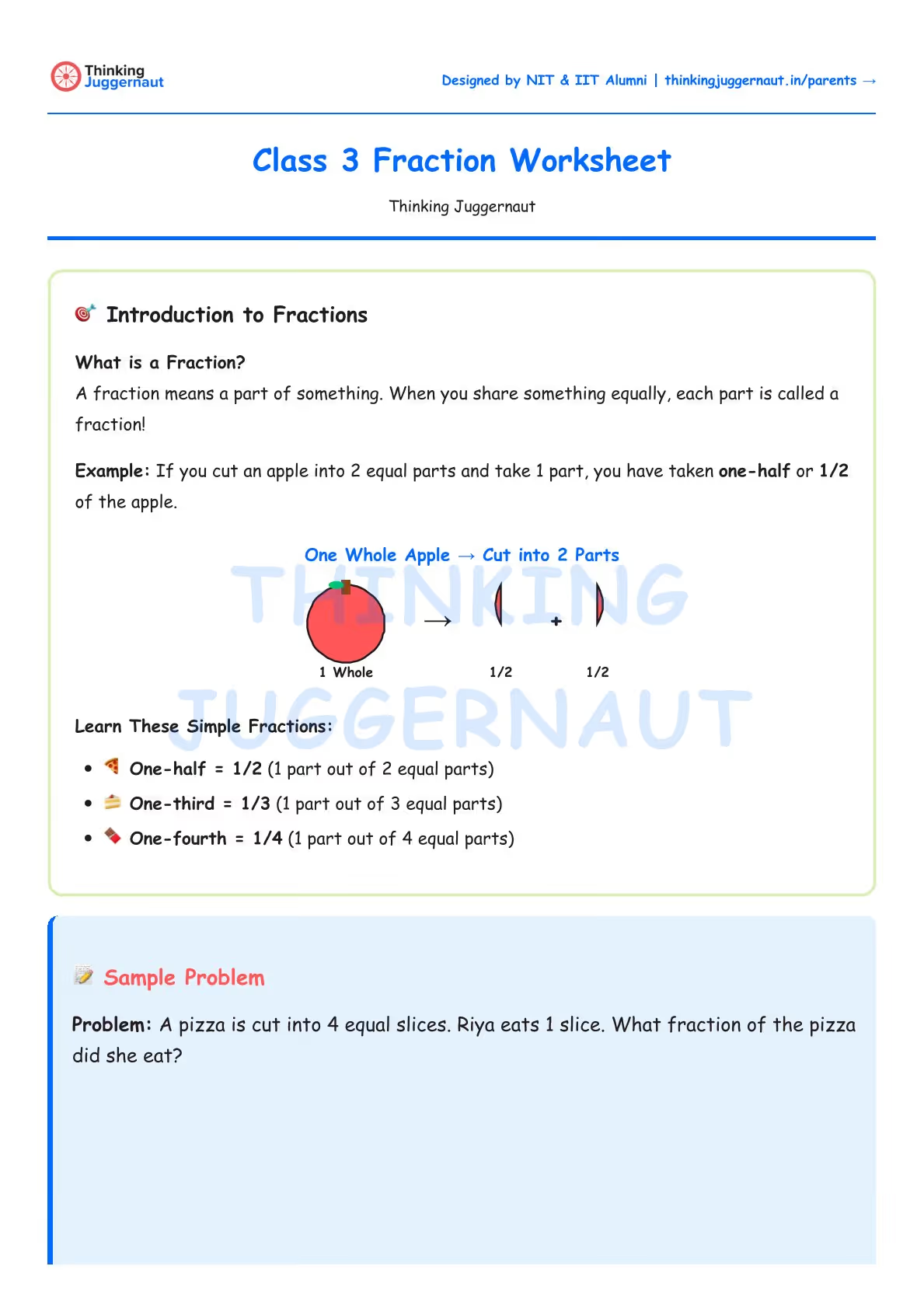
A fraction means a part of something. When you share something equally, each part is called a fraction!
The key word is equal. If an apple is cut into two unequal pieces, neither piece is one-half — because one-half means one out of two equal parts. This distinction is where many Class 3 children first go wrong, and it is why this worksheet begins with visual problems before moving to numbers.
A fraction has two parts:
Example: If you cut an apple into 2 equal parts and take 1 part, you have taken one-half or 1/2 of the apple.
One-half = 1/2 (1 part out of 2 equal parts)
One-third = 1/3 (1 part out of 3 equal parts)
One-fourth = 1/4 (1 part out of 4 equal parts)
Fractions appear constantly in daily life — sharing food, dividing time, splitting objects. Children who recognise fractions as equal sharing rather than abstract notation find them significantly easier to work with
Problem: A pizza is cut into 4 equal slices. Riya eats 1 slice. What fraction of the pizza did she eat?
Solution:
Total slices = 4
Slices Riya ate = 1
Answer: Riya ate 1/4 (one-fourth) of the pizza
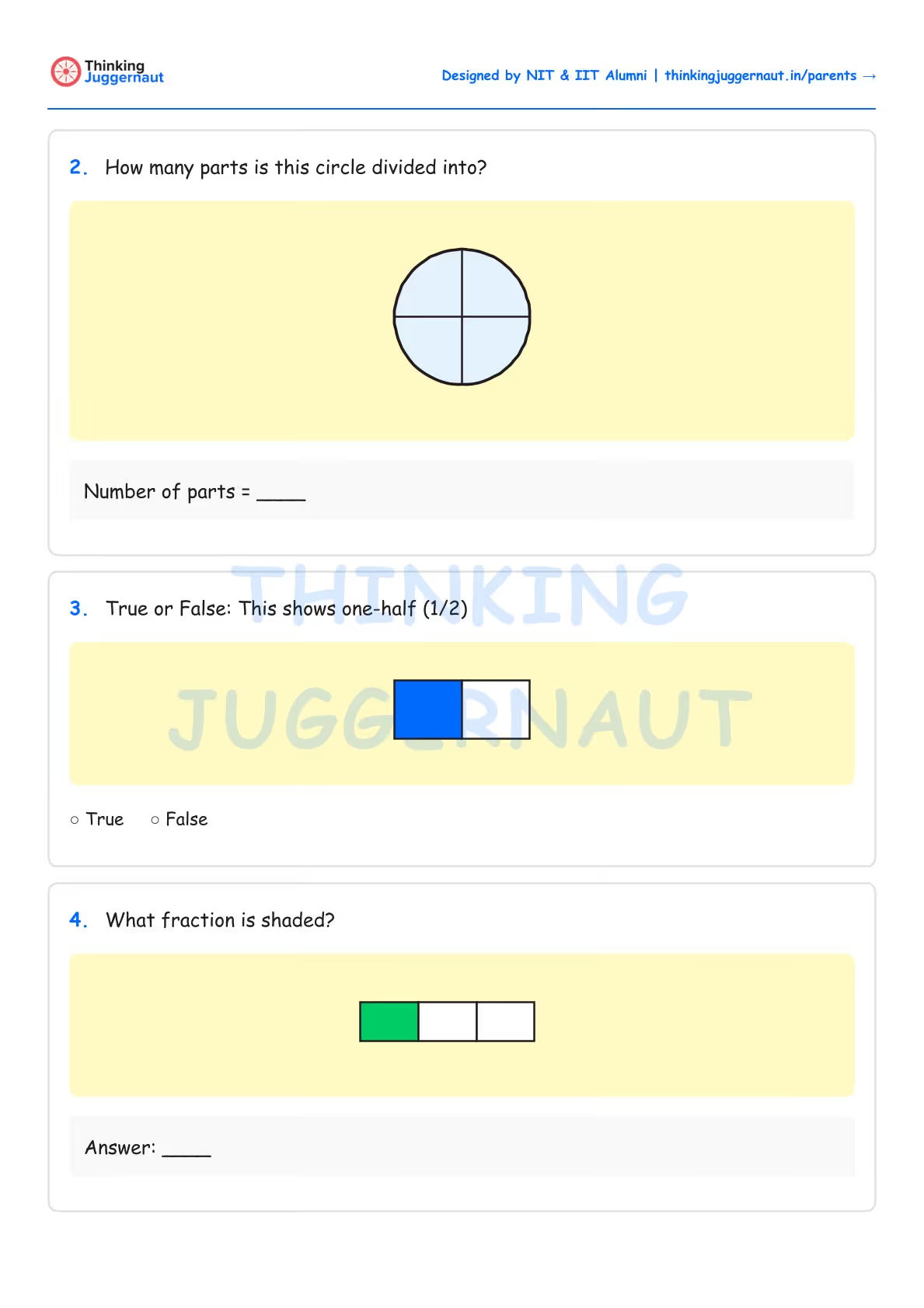
8 questions building foundational recognition: colour half a circle, count how many parts a shape is divided into, identify whether a shape shows 1/2, recognise a shaded fraction from a picture, draw a line to divide a rectangle equally, match shapes to fractions (1/2, 1/3, 1/4), colour one-fourth of a shape, and write one-third in numeric form.
All questions in Part A are purely visual — no word problems, no numbers beyond the fraction itself. The goal is for children to see what 1/2, 1/3, and 1/4 look like before they are asked to apply them in context.
Sample: Look at the circle divided into 3 parts with 1 part shaded. What fraction is shaded?
10 questions applying fractions to simple situations — a cake cut in half, a set of fruits where some are oranges, a chocolate bar where 2 of 4 pieces are eaten, a ribbon that is half red, and a watermelon cut into quarters. Also includes a comparison question (is 1/2 bigger than 1/4?), a draw-your-own question, and fill-in-the-blank fraction recognition.
The key jump from Part A to Part B is fractions of a set — instead of shading part of a shape, children must identify what fraction of a group of objects a subset represents (e.g., 2 oranges out of 3 total fruits = 2/3). This is where the numerator first becomes something other than 1.
Sample: A chocolate bar has 4 pieces. Neha ate 2 pieces. What fraction did she eat? → 2/4, which also equals 1/2
6 questions requiring children to apply fractions to find actual quantities, work with sets of 6 and 8, identify fractions that are NOT a given colour, write two fractions from the same situation, connect fractions to division (1/3 of 6 metres = 6 ÷ 3 = 2), and work with a multi-part fraction problem where the same total is divided into three different-sized fractions.
Sample: Sara has 6 balloons. Half of them are red. How many red balloons does she have? → 1/2 of 6 = 3
Sample: There are 8 crayons — 4 red, 2 blue, 2 green. What fraction are red? What fraction are blue? → 4/8 = 1/2 red; 2/8 = 1/4 blue
20-24 correct: Excellent! You're ready for learning about halves of bigger numbers, comparing more fractions, drawing your own fraction pictures, and Class 4 fraction worksheets.
15-19 correct: Very Good! Practice recognizing 1/2, 1/3, 1/4 in different shapes. Draw pictures showing these fractions on paper. Find things at home to divide. Do 5 easy fraction problems every day.
10-14 correct: Good Effort! Start with only 1/2 (halves) for 3-4 days. Draw circles and rectangles, divide them into 2 parts. Color half of different shapes every day. Then learn 1/3 and 1/4 one by one.
0-9 correct: Keep Trying! Learn what "equal parts" means by cutting paper into same size pieces. Practice only "half" for one full week. Color half of 10 different pictures at home. Share things equally with family members.
Take 5 pieces of paper and draw circles, squares, rectangles on each
Cut each shape into 2 equal parts with a parent's help
Color one part and practice saying "This is one-half"
Ask parents to cut fruits into halves to see fractions in real life
Practice writing 1/2, 1/3, 1/4 ten times every day
Draw 3 pictures every day showing different fractions
Use real objects like pencils, balloons, or candies to practice
Read word problems aloud slowly and act them out with toys
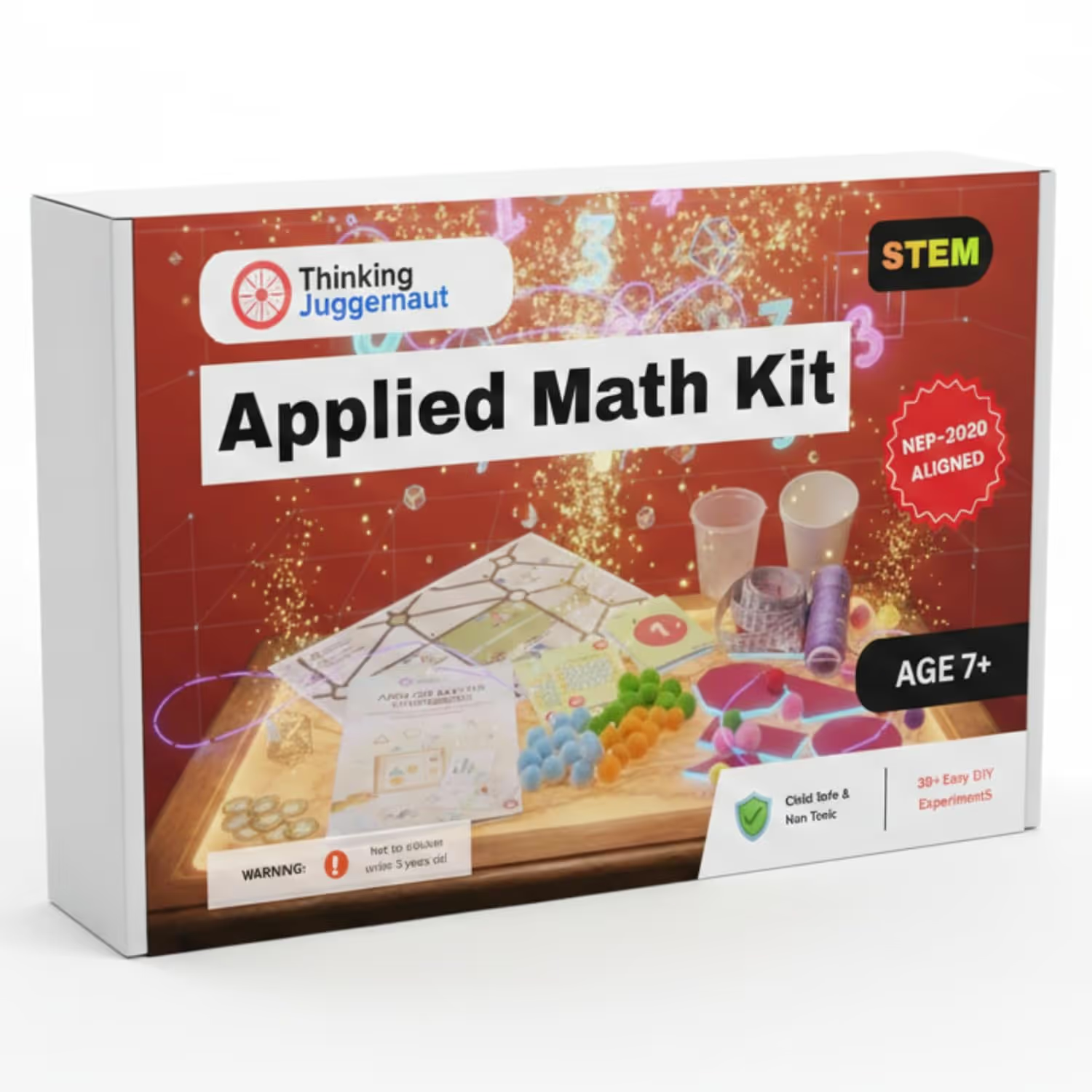
Fractions make the most sense when children actually divide physical objects — cut paper, share counters, split a length of string. The Applied Maths Project Kit by Thinking Juggernaut includes hands-on activities where children measure, compare, and divide real quantities, building the same understanding this worksheet introduces through pictures and numbers.
Download the complete worksheet here. The PDF includes all 24 questions across 3 difficulty levels, visual fraction models for every problem in Parts A and B, draw-your-own questions, and a full answer key with a detailed learning path by topic based on which questions were missed.
What fractions are taught in Class 3?
Class 3 introduces unit fractions — fractions with 1 as the numerator: 1/2, 1/3, and 1/4. Children learn to identify these fractions in shapes, recognise them in sets of objects, compare them (understanding that 1/2 is larger than 1/4), and apply them to find fractions of quantities (1/2 of 6 = 3). This worksheet covers all of these concepts progressively across three difficulty levels.
Why do children think 1/4 is bigger than 1/2?
This is the most common fraction misconception at Class 3 level. Children see that 4 is larger than 2 and conclude that 1/4 must be the bigger fraction. The fix is visual — draw a circle divided into 2 equal parts and another divided into 4 equal parts, shade one section in each, and compare. The 1/2 section is visibly larger. This worksheet includes a true/false comparison question (Q11) specifically to surface and address this misconception.
What is the difference between a fraction of a shape and a fraction of a set?
A fraction of a shape — like 1/3 of a circle — means one of three equal portions of a single object. A fraction of a set — like 2/3 of 3 fruits being oranges — means a part of a group of separate objects. Both use the same notation but look completely different. Class 3 introduces fractions of sets in the medium level questions, and children who have only practised fractions with shapes often struggle here. Using physical objects (pencils, buttons, counters) to practise fractions of sets is the most effective preparation.
How is finding a fraction of a quantity different from identifying a fraction?I
dentifying a fraction means reading a picture or situation and writing the fraction notation — 1/3, 1/4, 1/2. Finding a fraction of a quantity means calculating an actual number — 1/2 of 6 balloons = 3 balloons. The second skill requires connecting fractions to division: 1/3 of 6 = 6 ÷ 3 = 2. This connection is introduced in Part C of this worksheet and is a key concept that bridges Class 3 fractions to Class 4.
Is this worksheet suitable for CBSE Class 3 students?
Yes. The content covers the Class 3 fractions syllabus followed by CBSE and most boards — unit fractions 1/2, 1/3, 1/4, fractions of shapes, fractions of sets, simple comparison of fractions, and introductory fraction-of-a-quantity problems. The visual approach also aligns with NEP-2020's emphasis on conceptual understanding over notation-first teaching.
Worksheets build practice. The Applied Maths Project Kit builds understanding — 30 real-world math activities covering the same concepts your child is practising here, from multiplication and grouping to measurement and data.
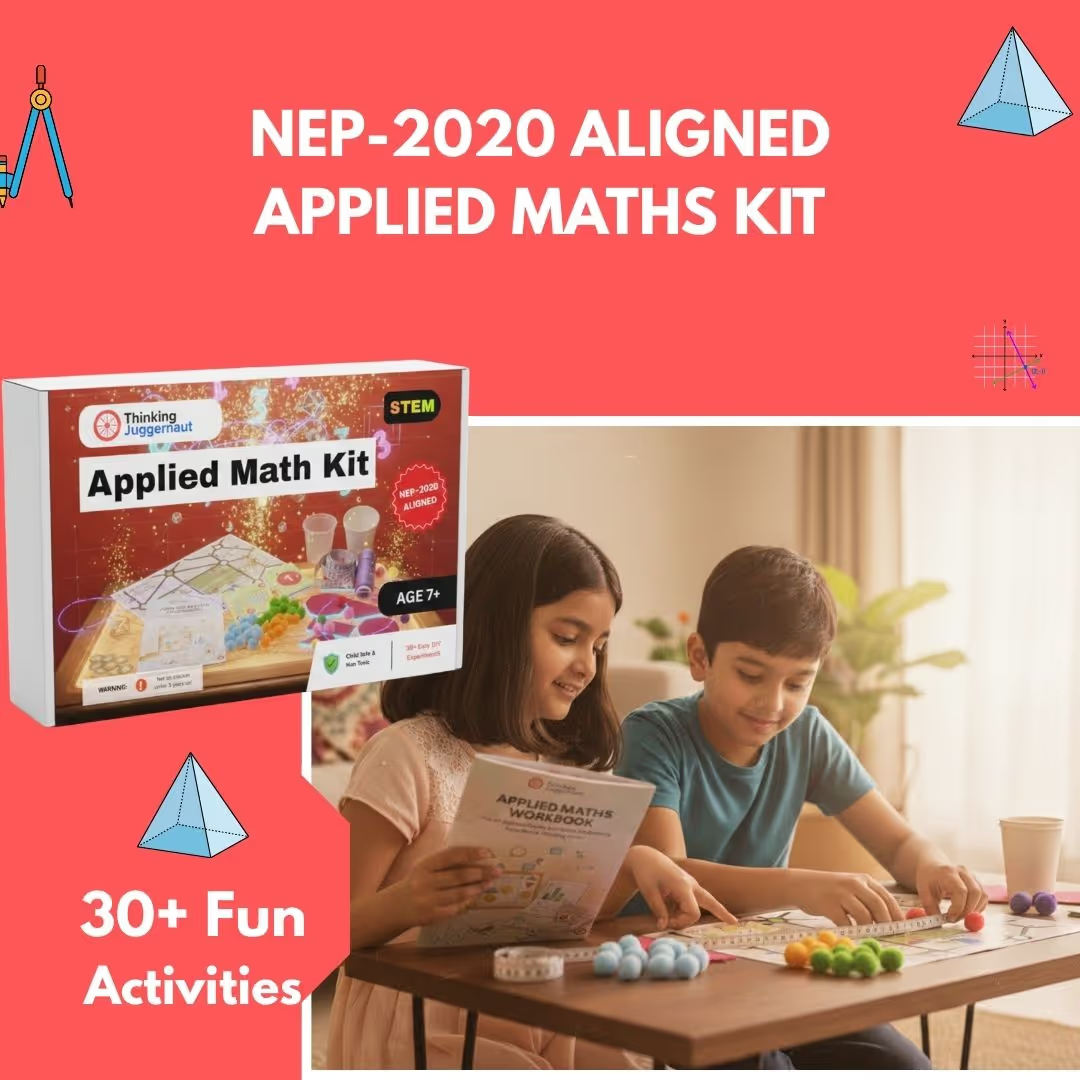
Designed by IIT & NIT Alumni · NEP-2020 aligned · Trusted by parents across India
Class 3 Multiplication Word Problems
Class 3 Division Word Problems
Not in Class 3?
Visit our Main Math Worksheet Hub to explore all printable worksheets from Class 2 to Class 8.
Almost there!
We will confirm your order on WhatsApp
Order placed!
Thank you! You will receive a WhatsApp confirmation shortly.