Division means splitting or sharing a number into equal groups. It's the opposite operation of multiplication and one of the four basic math operations.
It answers one of two questions: how many in each group? or how many groups can be made?
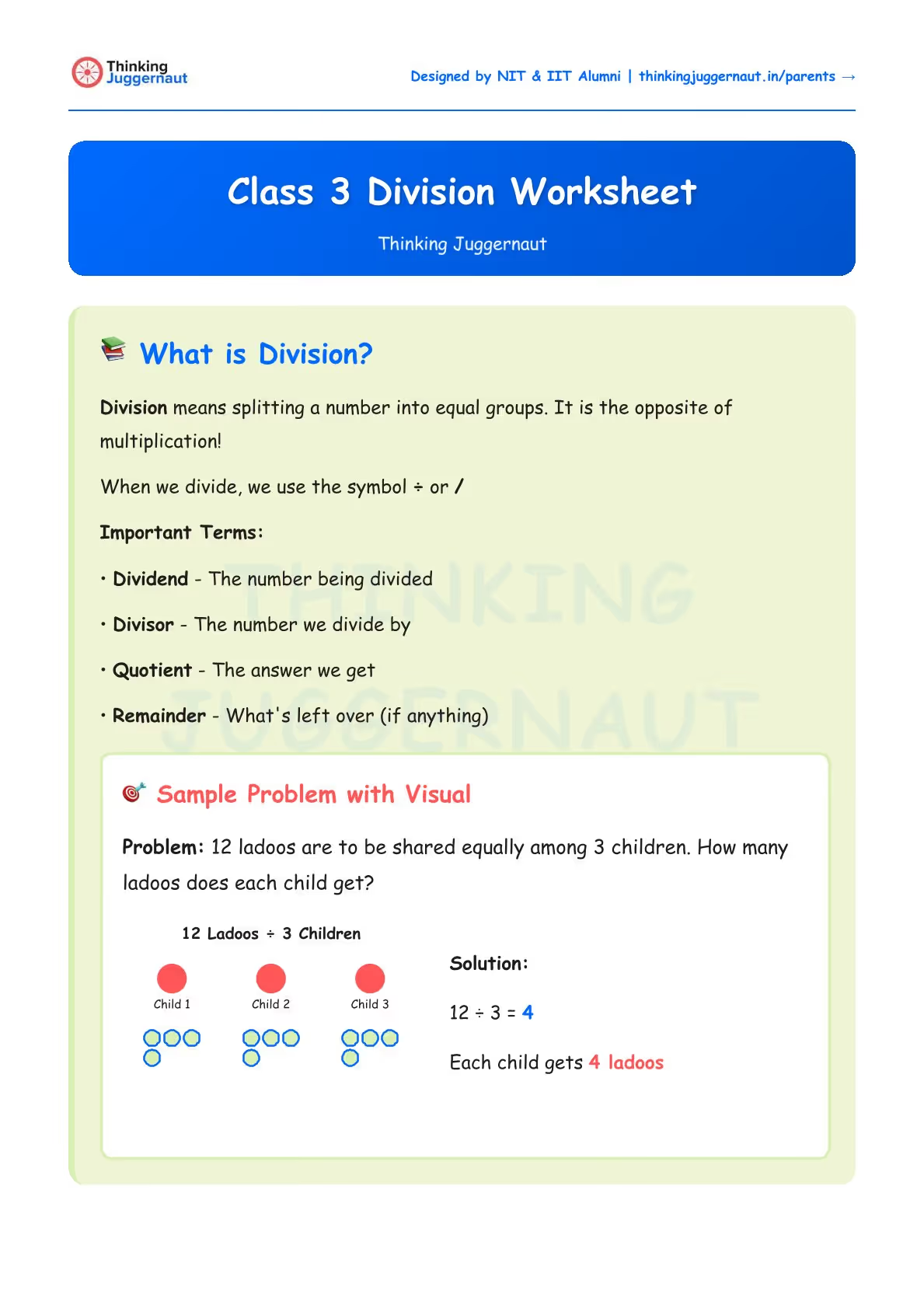
We use the symbol ÷ or / to show division.
Example: In 12 ÷ 3 = 4
Division answers the question: "If we share this equally, how much does each group get?"
Example: 15 candies shared equally among 3 friends means 15 ÷ 3 = 5 candies for each friend.
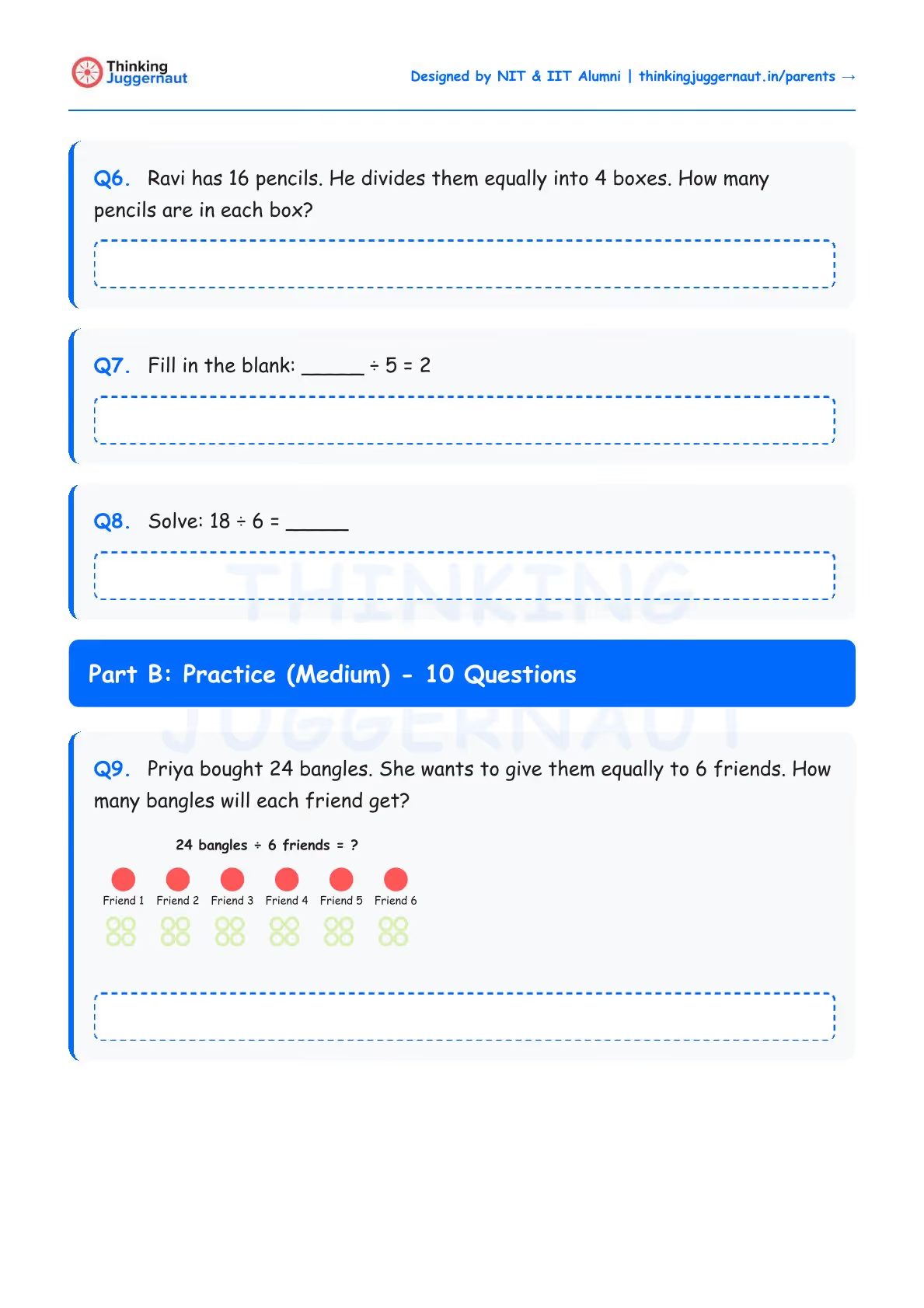
Division shows up in daily life constantly. 24 bangles shared equally among 6 friends. 30 students split into 5 autos. 28 eggs packed into 4 trays. Once children recognise division as equal sharing, it stops feeling abstract and starts feeling obvious.
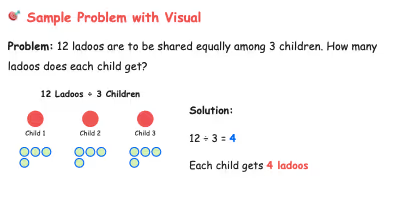
Problem: 12 ladoos are to be shared equally among 3 children. How many ladoos does each child get?
Solution:
Method 1 - Visual Sharing:
Method 2 - Division:
Answer: Each child gets 4 ladoos.
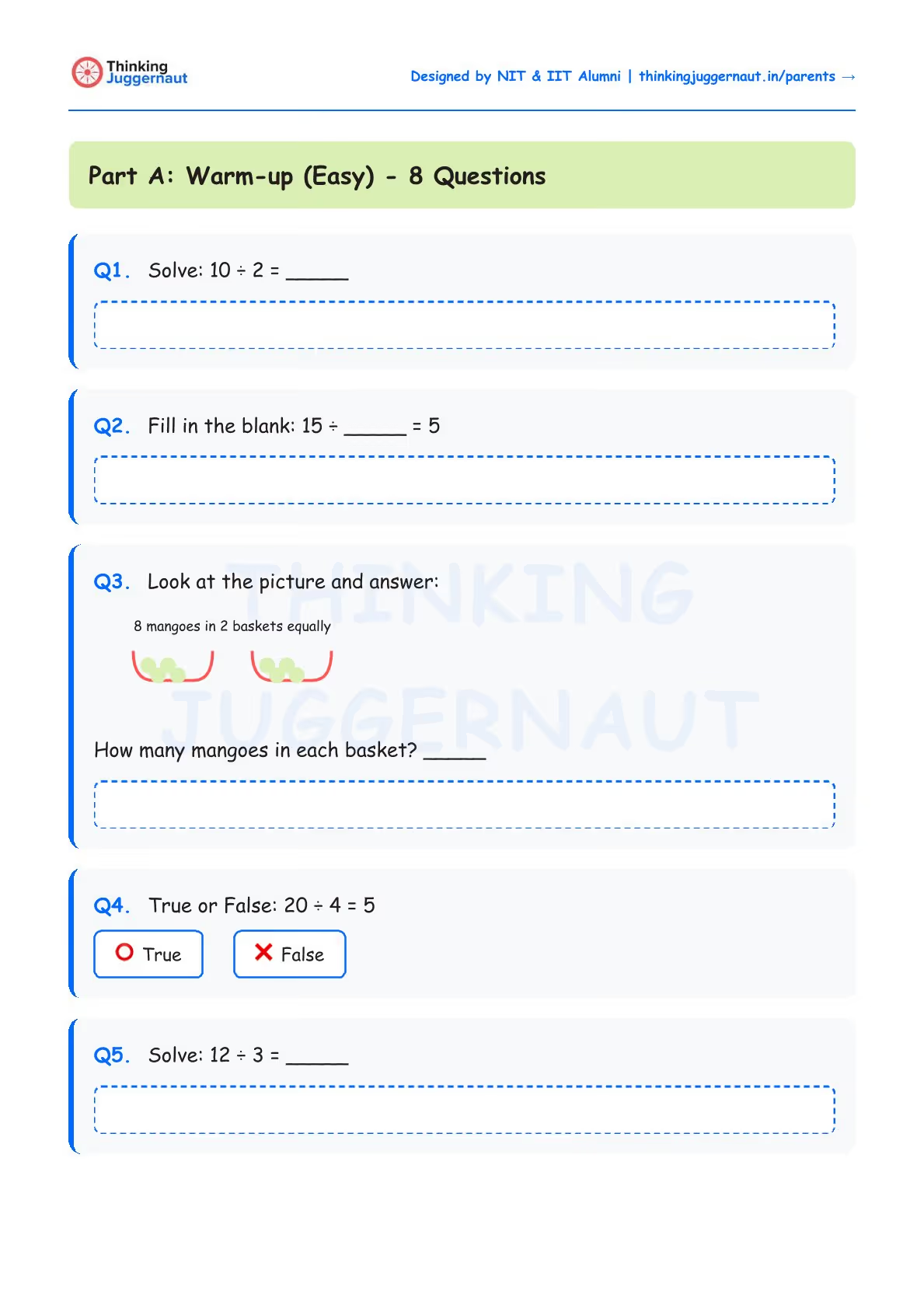
This PDF includes varied question formats:
Division on paper is one thing. Understanding what equal sharing actually looks like — physically distributing objects, splitting quantities, checking what's left — is what makes the concept stick.
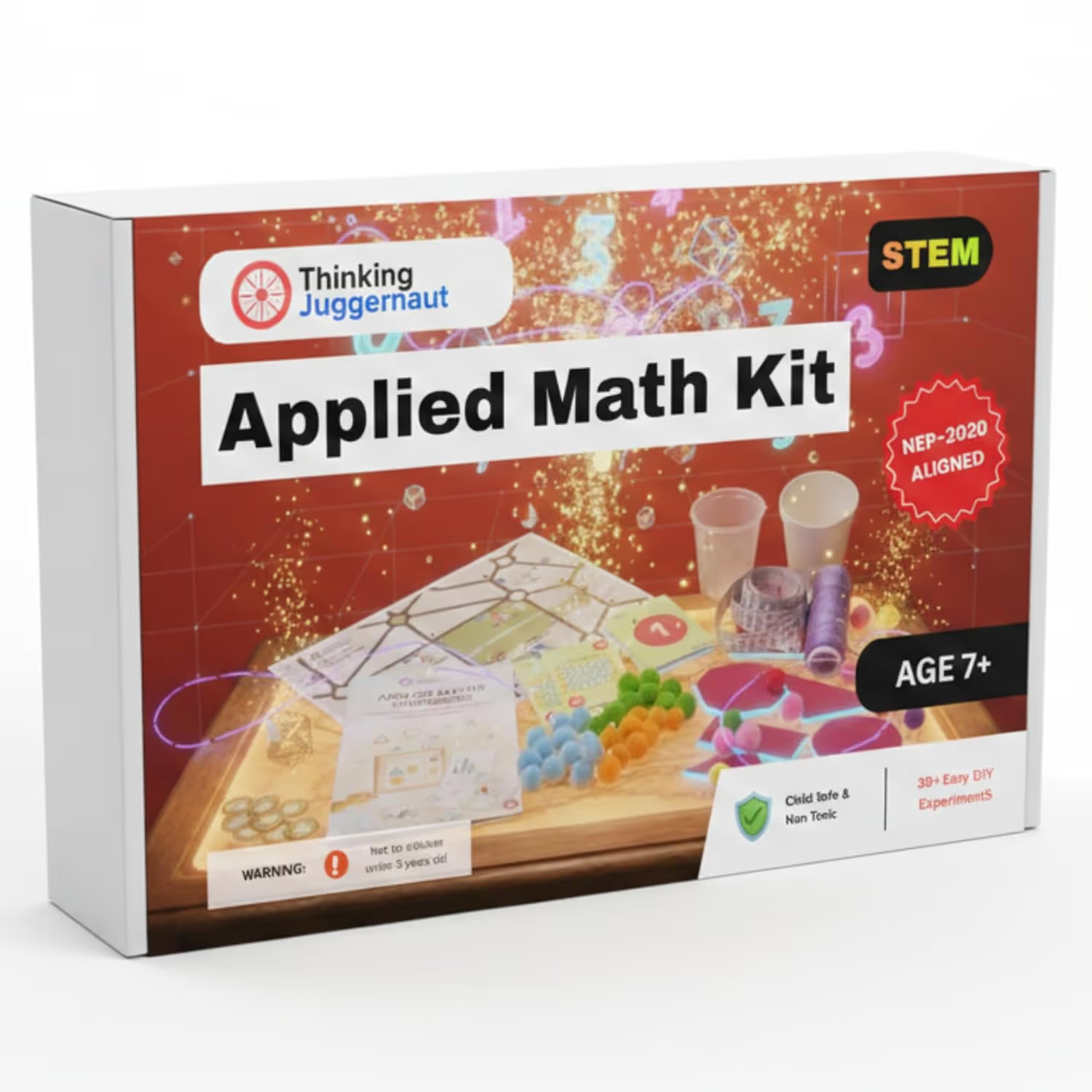
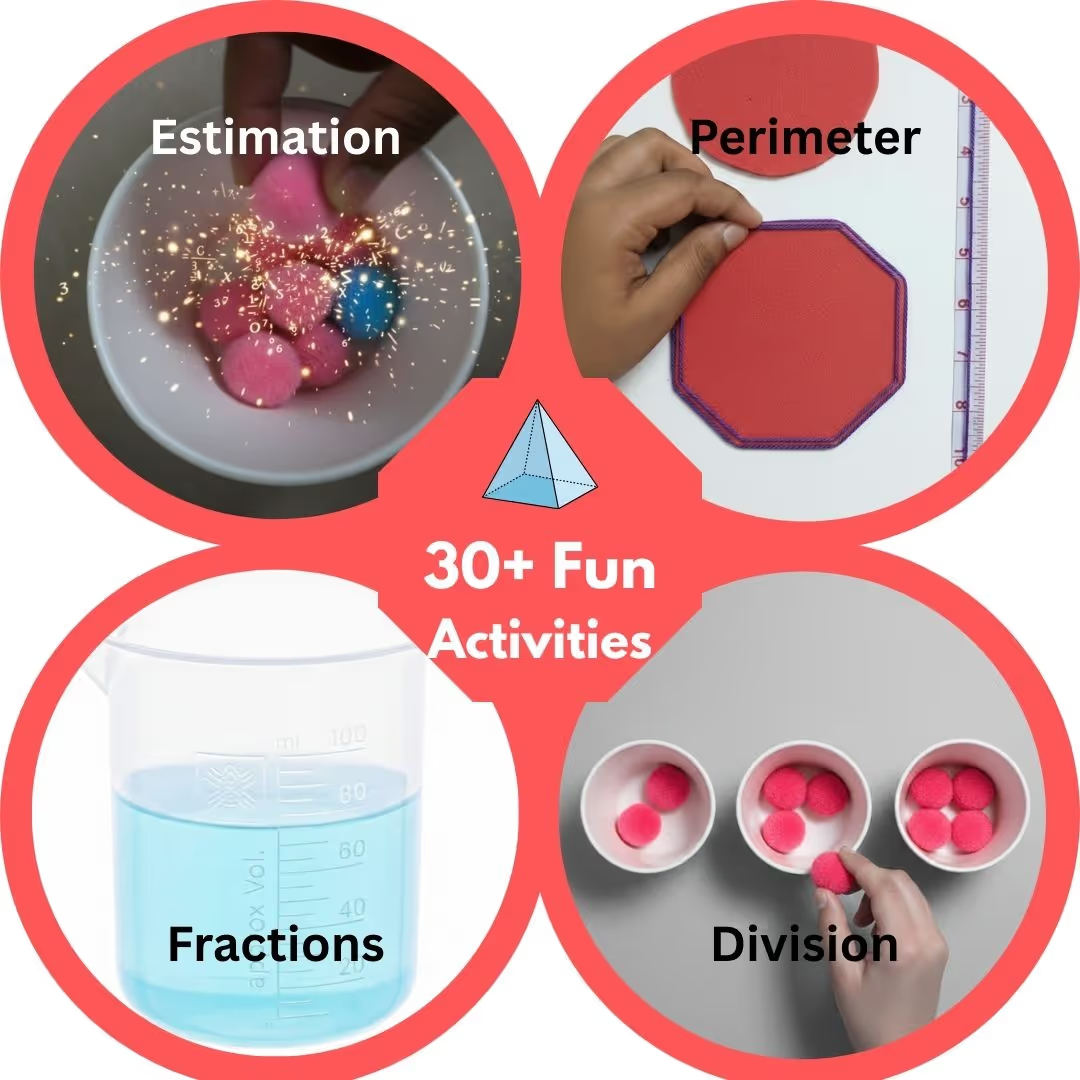
The Applied Maths Project Kit (Age 7+) by Thinking Juggernaut brings this to life with 30 hands-on activities. The same concepts your child is practising in this worksheet — equal groups, sharing, multiplication-division relationships — are explored through physical materials.
Frequent Errors to Avoid:
5 Essential Tips for Mastery:
Total Questions: 24 | Total Marks: 24
Score: 20–24 (Excellent! ⭐⭐⭐)
Score: 15–19 (Very Good! ⭐⭐)
Score: 10–14 (Good Effort! ⭐)
Score: Below 10 (Keep Trying! 💪)
Download the complete Class 3 Division worksheet here. The PDF includes all 24 questions across 3 difficulty levels, visual diagrams for equal sharing problems, full answer key with working shown for all multi-step problems, and a scoring rubric.
What is division and how is it taught in Class 3?
Division in Class 3 is introduced as equal sharing — splitting a total into equal groups and finding how many go in each group. Children first learn to visualise this using objects or drawings, then move to the ÷ symbol and formal division facts. By the end of Class 3, students are expected to handle basic division with and without remainders, using numbers within the multiplication tables they have learned.
How is division related to multiplication?
Division is the inverse of multiplication — they undo each other. If 4 × 6 = 24, then 24 ÷ 6 = 4 and 24 ÷ 4 = 6. This relationship means children who know their multiplication tables well have already learned most of their division facts without realising it. This worksheet is designed to make that connection explicit, particularly in Part C where missing-number problems require children to think in both directions.
What is a remainder in division?
A remainder is what's left over when a number cannot be divided into exactly equal groups. For example, 17 ÷ 5 = 3 remainder 2, because 3 groups of 5 make 15, and 2 are left over. Understanding remainders is a key Class 3 milestone — this worksheet introduces them in Part B once basic division facts are established in Part A.
What types of questions are in this Class 3 division worksheet?
The worksheet includes basic division facts, fill-in-the-blanks, true/false, picture-based equal sharing problems, column matching, division with remainders, single-step word problems, and multi-step challenge problems that combine division with subtraction or addition — 24 questions across 8 different formats.
Is this worksheet suitable for CBSE Class 3 students?
Yes. The content covers division as equal sharing, basic division facts within multiplication tables 1 to 10, remainders, and word problems — all within the Class 3 maths syllabus followed by CBSE and most boards. The progressive structure also makes it useful for early Class 4 revision or remedial support.
How long should this worksheet take to complete?
Part A typically takes 10–15 minutes. Part B takes 15–20 minutes given the remainder problems and larger numbers. Part C requires careful reading and multi-step working — allow 15 minutes. Total: 40–50 minutes for a full sitting. Parts A and B can be completed in one session, with Part C attempted separately once the child is comfortable.
Worksheets build practice. The Applied Maths Project Kit builds understanding covering the same concepts your child is practising here. A hands-on math kit inspired by NEP 2020’s vision of learning mathematics as thinking, connecting, and applying, not just solving equations.
Designed by IIT & NIT Alumni · NEP-2020 aligned · Trusted by parents across India
Class 3 Multiplication Word Problems
Class 3 Division Word Problems
Not in Class 3?
Visit our Main Math Worksheet Hub to explore all printable worksheets from Class 2 to Class 8.
Almost there!
We will confirm your order on WhatsApp
Order placed!
Thank you! You will receive a WhatsApp confirmation shortly.