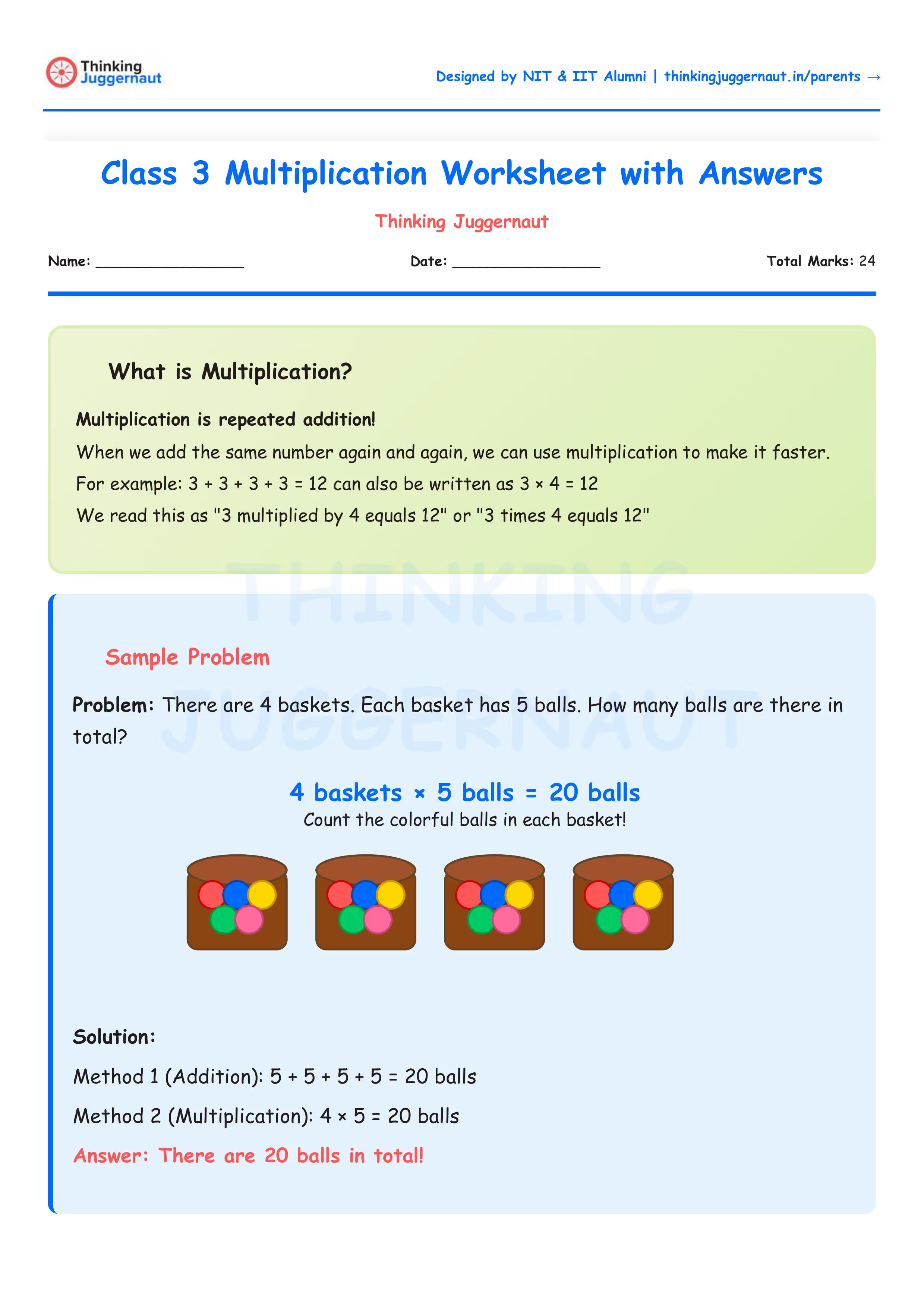
Multiplication is repeated addition!
When we add the same number again and again, we can use multiplication to make it faster.
For example: 3 + 3 + 3 + 3 = 12 can also be written as 3 × 4 = 12
We read this as "3 multiplied by 4 equals 12" or "3 times 4 equals 12"
Multiplication shows up everywhere in daily life. A carton holds 6 eggs in 2 rows — that's 2 × 6 = 12. A chair has 4 legs — 5 chairs have 5 × 4 = 20 legs. A bicycle has 2 wheels — 7 bicycles have 7 × 2 = 14 wheels. Once children recognise multiplication in everyday situations, tables stop feeling like something to memorise and start feeling like a tool they actually use.
Problem: There are 4 baskets. Each basket has 5 balls. How many balls are there in total?
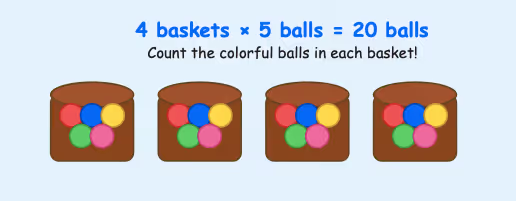
Solution:
Method 1 (Addition): 5 + 5 + 5 + 5 = 20 balls
Method 2 (Multiplication): 4 × 5 = 20 balls
Answer: There are 20 balls in total!
This worksheet is structured in three parts, each stepping up in difficulty. Children are not thrown into hard problems before they are ready — each section builds on the one before it.
8 questions covering the basics: fill-in-the-blanks, true/false, and picture-based problems. This section focuses on direct recall — a child who knows tables 1 to 5 can attempt it independently. The goal here is to build confidence before complexity arrives. Getting these right matters more than getting through them fast.
Sample question: Count the rows of stars and write the multiplication. 2 rows × 4 stars = ____ stars
10 questions that apply multiplication to simple real-life situations. Children move from recall to reasoning — they must read a word problem, identify the groups, and set up the multiplication themselves. This section includes word problems, column matching, pattern completion, and writing a partial multiplication table, all using numbers from tables 2 to 9.
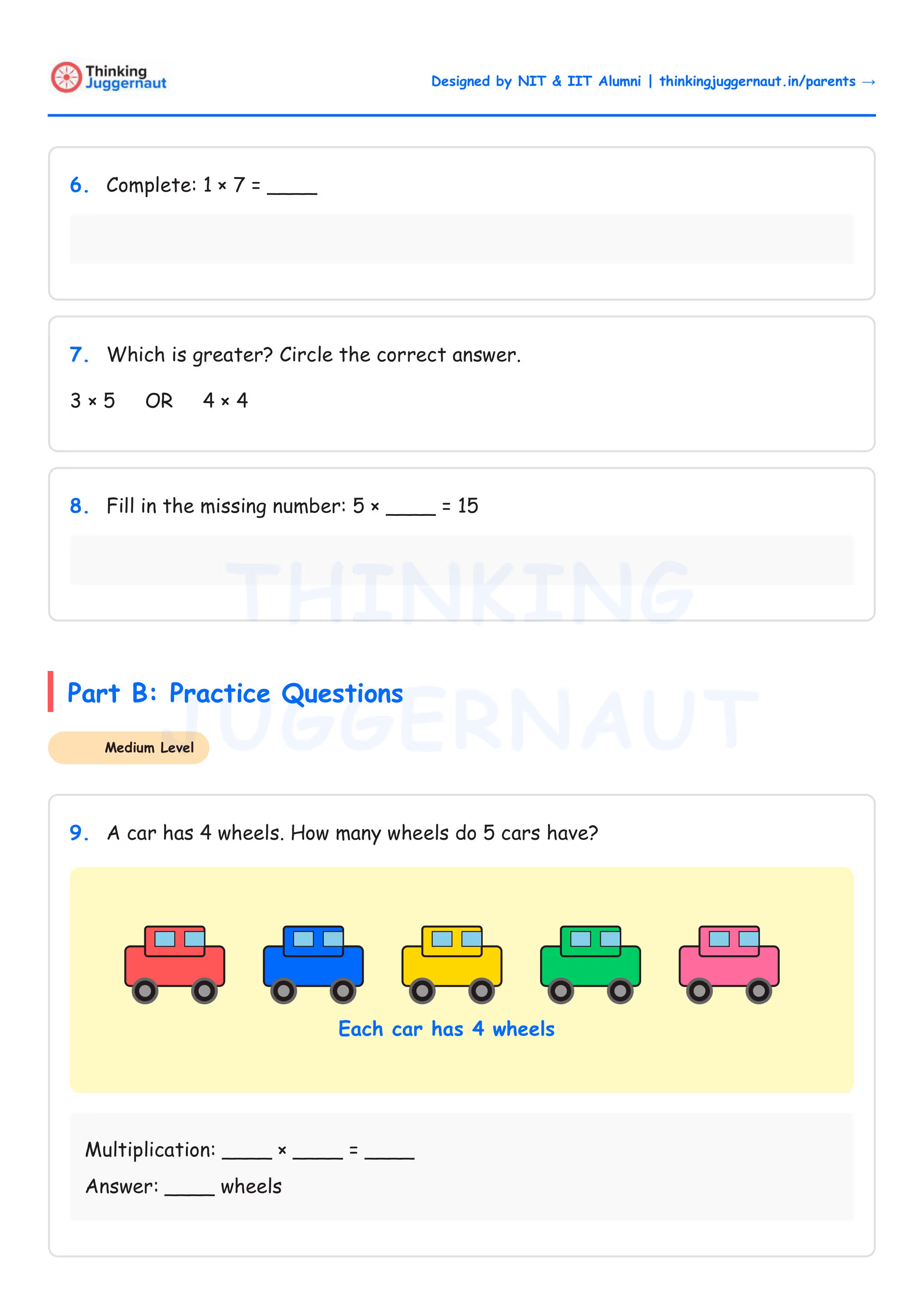
Sample question: A car has 4 wheels. How many wheels do 5 cars have? ____ × ____ = ____
6 questions requiring two or more steps to solve. Children must combine multiplication with subtraction, work backwards to find a missing number, and in one question, create their own word problem using 5 × 4. This section tests whether a child truly understands multiplication or has only memorised answers — a key distinction that NEP-2020 assessment guidelines emphasise.
Sample question: A baker makes 8 trays of cupcakes. Each tray has 6 cupcakes. He sells 25. How many are left?
These are worked examples of the types of problems in the worksheet, with the thinking shown at each step.
Problem 1 (Medium): Wheels on cars
A car has 4 wheels. How many wheels do 5 cars have?
Answer: 20 wheels
Concept tested: Translating a real-world situation into a multiplication sentence. Common mistake: children reverse the numbers and write 4 × 5 — which gives the same answer here, but understanding why both work (commutative property) is the deeper learning.
Problem 2 (Medium): Crayons in boxes
There are 6 boxes of crayons. Each box has 8 crayons. How many crayons in total?
Answer: 48 crayons
Concept tested: Single-step word problem using a larger table (8s). Common mistake: children add instead of multiply when numbers get bigger — 6 + 8 = 14 is a frequent wrong answer at this level.
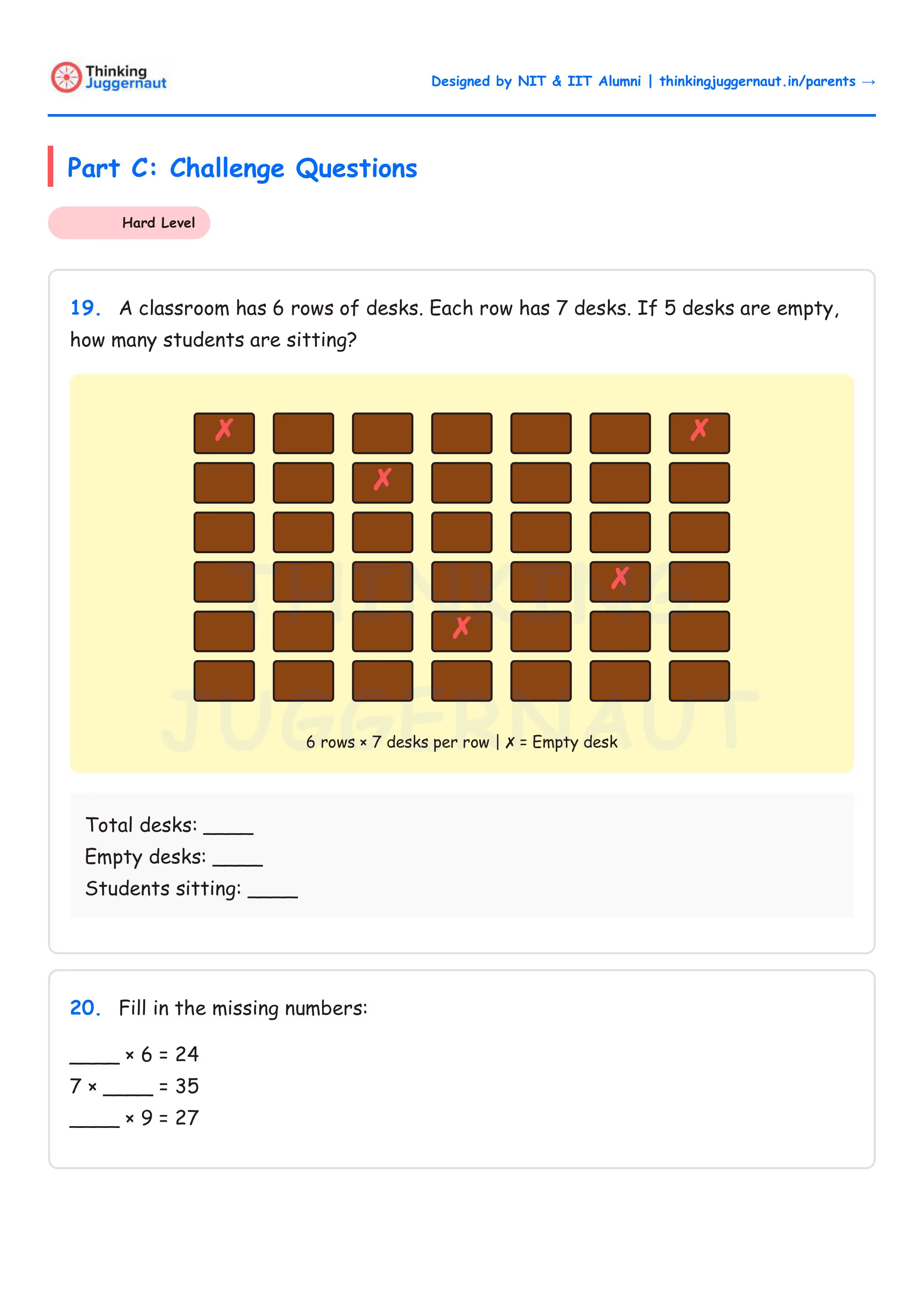
Problem 3 (Hard): Classroom desks
A classroom has 6 rows of desks. Each row has 7 desks. If 5 desks are empty, how many students are sitting?
Answer: 37 students
Concept tested: Two-operation problem — multiply first, then subtract. Common mistake: children subtract before multiplying, getting 6 × 2 = 12, because they process the numbers in the order they appear.
Worksheets build recall. But for Class 3, the bigger challenge is getting children to see multiplication — not just solve it.

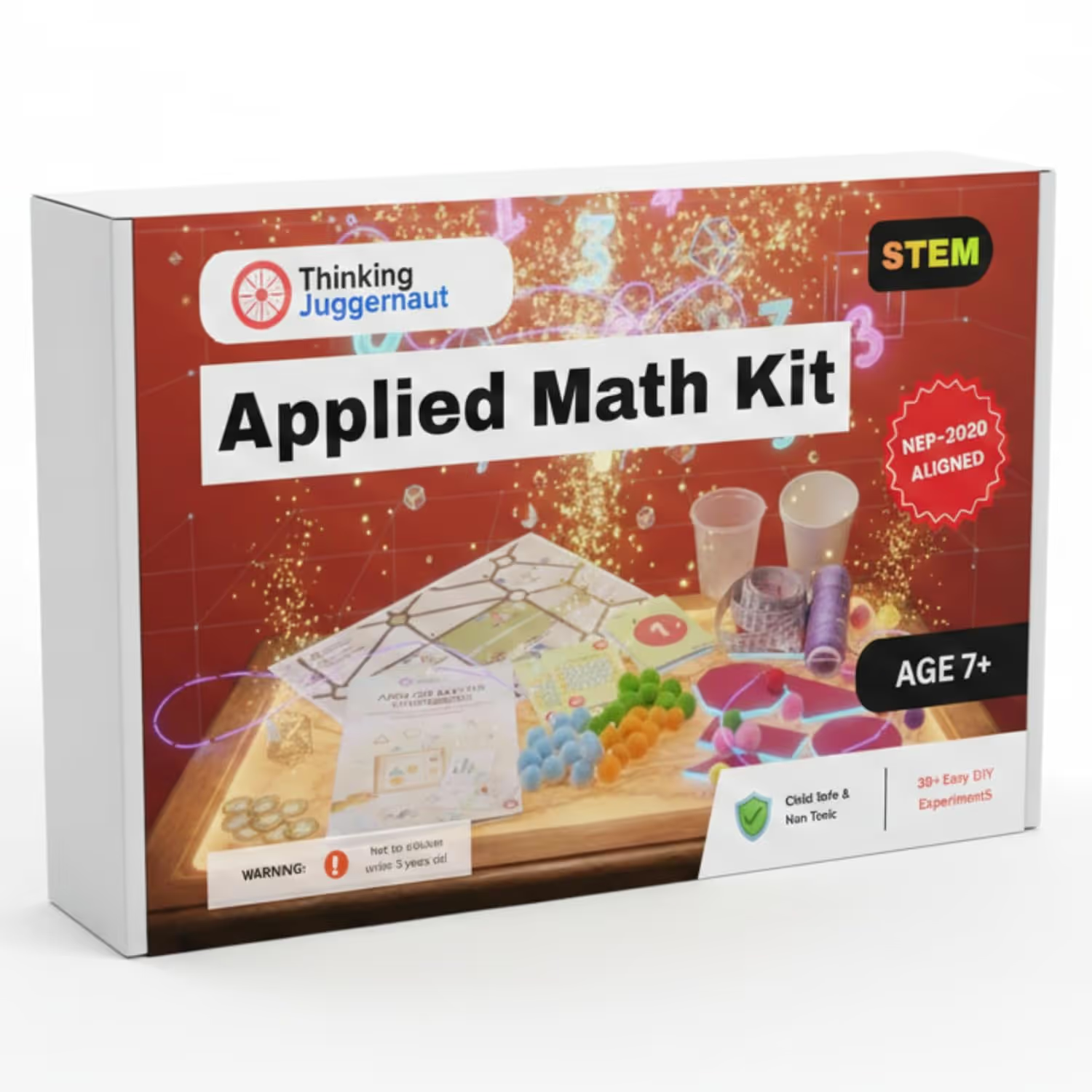
30 hands-on math activities. NEP-2020 aligned. Designed by IIT & NIT alumni.
This kit takes the same concepts your child is practising on this worksheet and brings them into the real world:
Explore Thinking Juggernaut math kit here
The "Zero" Confusion: Many students think 7 × 0 = 7. Remind them that multiplying by zero always "wipes out" the number — the answer is always 0.
Forgetting to Regroup: When solving "Hard" problems like 15 × 3, students often forget to add the "carried" number after multiplying the tens place.
Avoid Rushing: Accuracy matters more than speed at this stage. Speed develops naturally with practice.
Total Questions: 24 | Total Marks: 24
Score: 20 – 24 (Excellent! ⭐⭐⭐)
Score: 15 – 19 (Very Good! ⭐⭐)
Score: 10 – 14 (Good Effort! ⭐)
Score: 0 – 9 (Keep Trying!)
Download the complete Class 3 Multiplication worksheet here. The PDF includes all 24 questions across 3 difficulty levels, illustrated examples, a full answer key with working shown for multi-step problems, and a scoring rubric.
Which multiplication tables should Class 3 students know?
Class 3 students are expected to know tables 1 to 10 by the end of the academic year. This worksheet covers tables 2 through 9 across its three sections. In Parts A and B, children apply tables they already know. In Part C, they are expected to work backwards — given a product, they must identify the missing factor — which tests whether understanding is solid or just surface-level recall.
What types of questions are in this Class 3 multiplication worksheet?
The worksheet includes fill-in-the-blanks, true/false, picture-based questions, column matching, skip-counting patterns, single-step word problems, multi-step word problems, missing number problems, and one open-ended creative question where children write their own problem using 5 × 4. That's 24 questions in total across 8 different question formats.
Is this worksheet suitable for CBSE?
Yes. The content is aligned with the Class 3 maths syllabus followed by CBSE and most boards. The concepts covered — multiplication as repeated addition, tables 1 to 10, and word problems — are common across curricula. The progressive structure also makes it useful for remedial practice at Class 4 level or early introduction at a strong Class 2 level.
How long should a Class 3 student take to complete this worksheet?
Part A typically takes 10–15 minutes for a child familiar with basic tables. Parts B and C together take another 20–25 minutes. The full worksheet is designed as a 30–40 minute practice session. If a child finishes Part A quickly and accurately, they are ready for Parts B and C in the same sitting. If Part A takes more than 20 minutes, it is worth pausing and practising tables separately before attempting the rest.
What does the answer key include?
The answer key covers all 24 questions with complete answers. For multi-step problems, the working is shown step by step so children and parents can identify exactly where a mistake was made — not just whether the final answer was right or wrong. The scoring guide at the end maps the total score to a performance level with a suggested next step.
How is the difficulty level determined?
Part A (Easy) tests direct recall of tables with no real-world context required. Part B (Medium) applies multiplication to one-step real-world problems where the child must set up the equation themselves. Part C (Hard) requires two or more operations, reverse thinking to find missing numbers, and logical reasoning — consistent with NEP-2020's emphasis on problem-solving and conceptual understanding over rote practice.
Worksheets build practice. The Applied Maths Project Kit builds understanding covering the same concepts your child is practising here. A hands-on math kit inspired by NEP 2020’s vision of learning mathematics as thinking, connecting, and applying, not just solving equations.
Designed by IIT & NIT Alumni · NEP-2020 aligned · Trusted by parents across India
Class 3 Multiplication Word Problems
Class 3 Division Word Problems
Not in Class 3?
Visit our Main Math Worksheet Hub to explore all printable worksheets from Class 2 to Class 8.
Almost there!
We will confirm your order on WhatsApp
Order placed!
Thank you! You will receive a WhatsApp confirmation shortly.