Word Problems worksheet for Class 3 students - when to add, subtract, multiply, or divide with 16 word problems. Learn keyword identification, multi-step problem solving, and operation selection with complete solutions.
Every word problem in Class 3 involves two separate skills. The first is arithmetic — the actual calculation. The second is operation selection — deciding which calculation to do in the first place.
Most children who get word problems wrong are not making arithmetic errors. They are selecting the wrong operation. A child who reads "how many in total" and adds when they should multiply, or reads "how many left" and subtracts when they should divide, will get the arithmetic right and the answer wrong every time.
This worksheet is built specifically around the second skill. Every problem requires a child to read, identify the situation, and consciously choose an operation — before writing anything down.
By Part C, problems require two or three operations in sequence. Getting these right depends entirely on whether operation selection has been practised deliberately in Parts A and B.
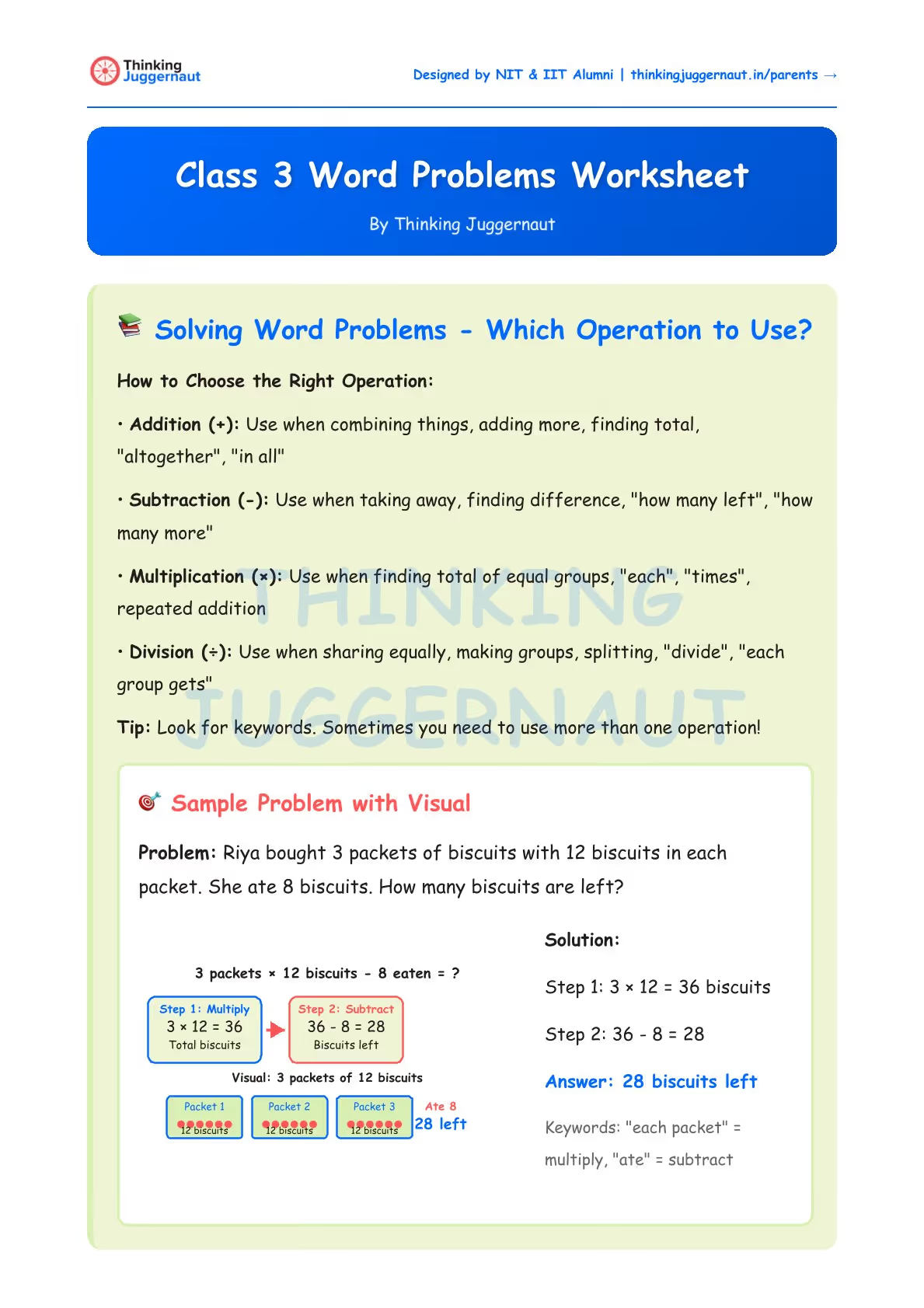
Addition: Use when combining things, adding more, finding total, "altogether", "in all"
Subtraction: Use when taking away, finding difference, "how many left", "how many more"
Multiplication: Use when finding total of equal groups, "each", "times", repeated addition
Division: Use when sharing equally, making groups, splitting, "divide", "each group gets"
Tip: Look for keywords. Sometimes you need to use more than one operation!
Problem: Riya bought 3 packets of biscuits with 12 biscuits in each packet. She ate 8 biscuits. How many biscuits are left?
Solution:
Step 1: 3 × 12 = 36 biscuits (multiply to find total)
Step 2: 36 - 8 = 28 (subtract biscuits eaten)
Answer: 28 biscuits left
Keywords: "each packet" = multiply, "ate" = subtract
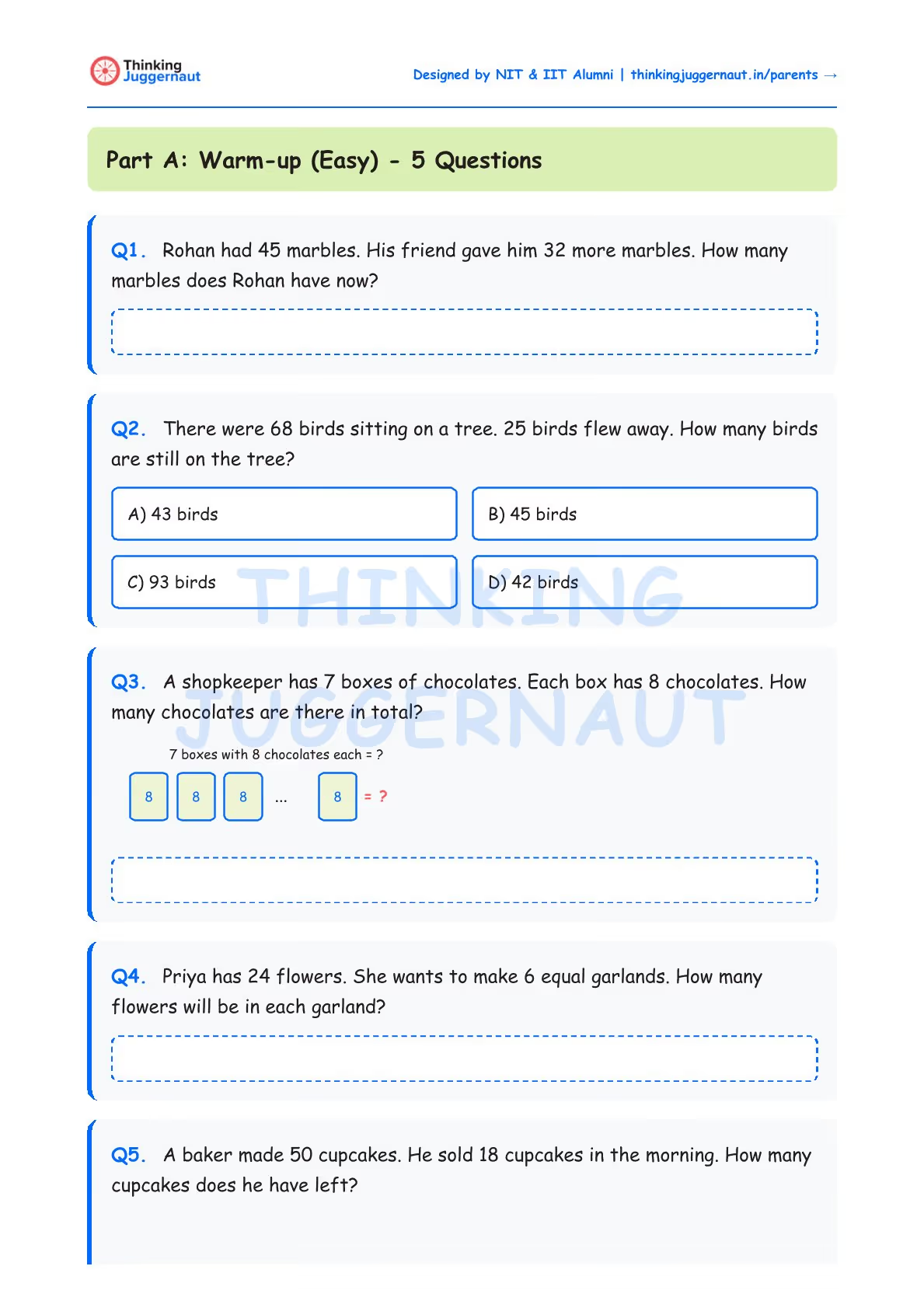
Rohan had 45 marbles. His friend gave him 32 more marbles. How many marbles does Rohan have now?
A shopkeeper has 7 boxes of chocolates. Each box has 8 chocolates. How many chocolates are there in total?
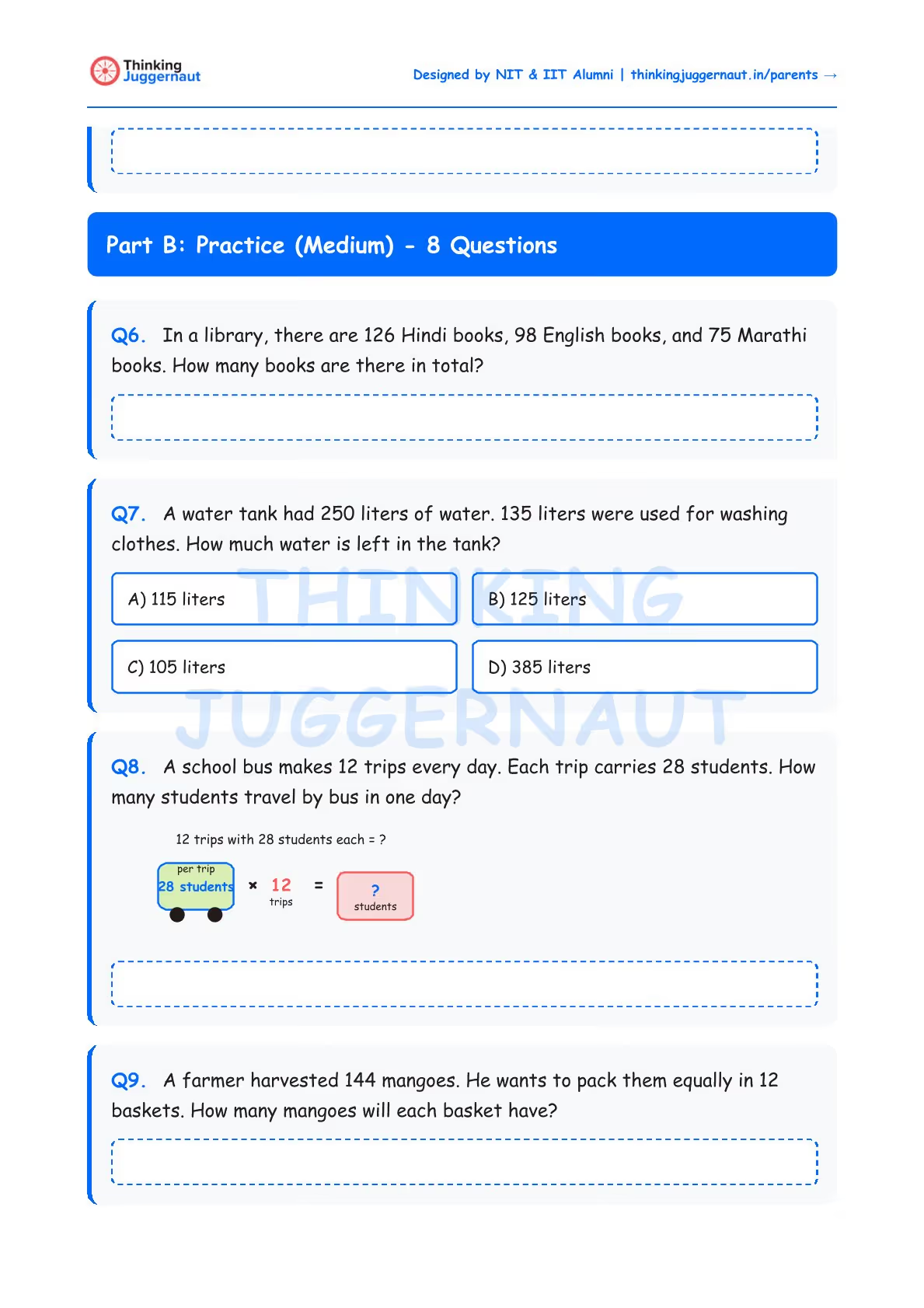
A school bus makes 12 trips every day. Each trip carries 28 students. How many students travel by bus in one day?
There are 36 students in Class 3A and 42 students in Class 3B. The school wants to divide all students equally into 6 groups for sports. How many students will be in each group?
A school organized a picnic. There are 8 buses and each bus can carry 45 students. If 324 students have already boarded the buses, how many more students can still get on the buses?
A fruit vendor had 245 apples. He sold 128 apples in the morning. In the afternoon, a customer bought 9 bags with 8 apples in each bag. How many apples does the vendor have left now?
14-16 correct: Excellent! You know when to use each operation. Try harder multi-step problems.
11-13 correct: Very Good! Review Part C questions. Practice identifying keywords: "each" = multiply, "left" = subtract, "total" = add, "equally" = divide.
7-10 correct: Good Start! Focus on: Underline keywords in questions, decide which operation first, write the calculation clearly.
Below 7: Keep Practicing! Review one operation at a time. Make a list of keywords for each operation. Practice simpler word problems first.
Look for keywords: "Total/altogether" = add, "Left/remaining" = subtract, "Each/times" = multiply, "Share/divide" = divide
Underline important numbers and keywords in each question
For multi-step problems, solve one operation at a time
Draw pictures or diagrams to visualize the problem
Write down each step separately before solving
Check if your answer makes sense in the context of the problem
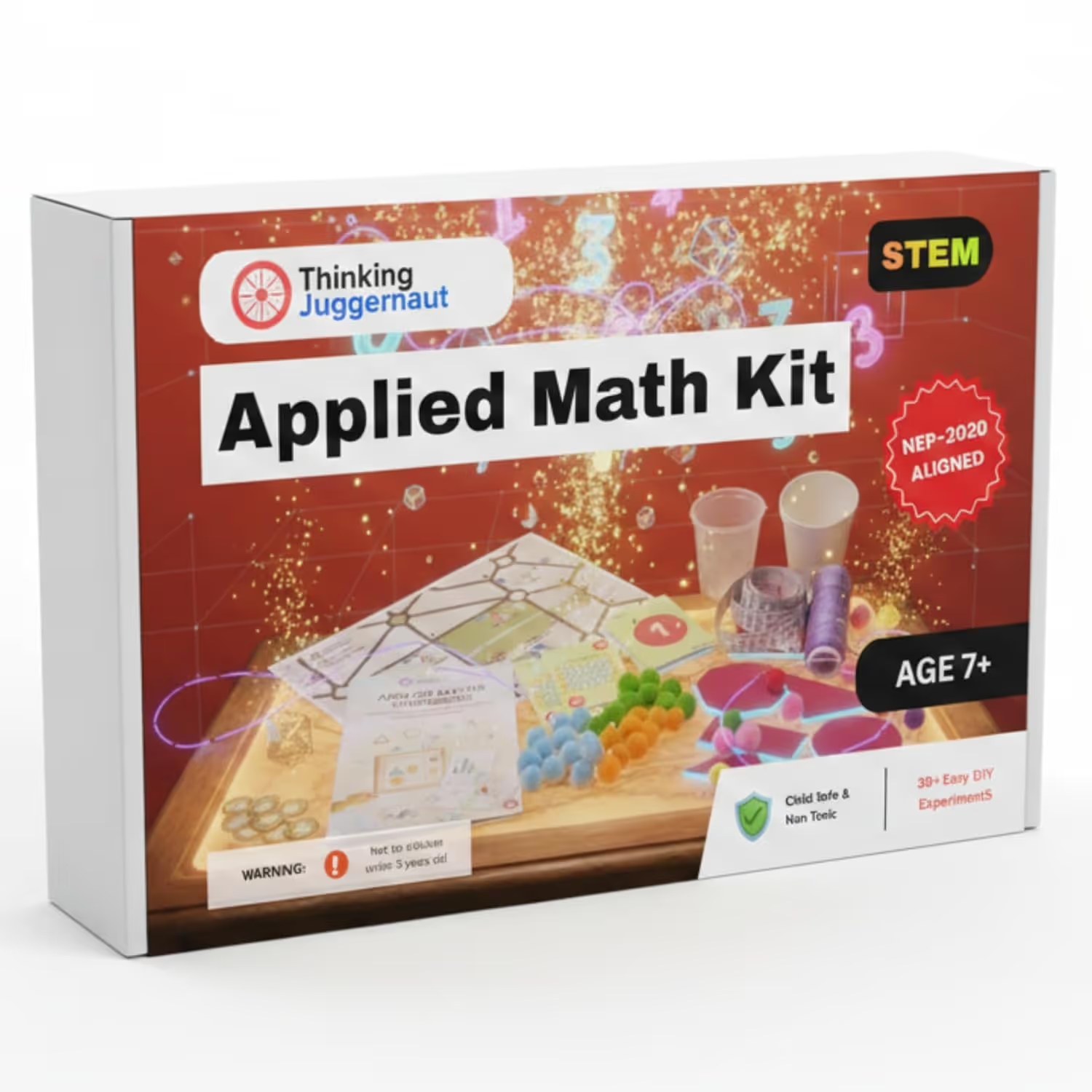
Word problems are the bridge between arithmetic and real life. The Applied Maths Project Kit by Thinking Juggernaut takes this further — children plan routes, calculate costs, measure distances, and make actual decisions using maths, with real materials.
Download the complete worksheet here. The PDF includes all 16 problems across 3 difficulty levels, visual step diagrams for multi-step problems, MCQ format questions, and a full answer key with the operation type labelled for every question.
What makes Class 3 word problems harder than Class 2?
In Class 2, most word problems involve a single operation and explicit instruction — "add these numbers" or "how many in total?" In Class 3, the operation is not stated. Children must read the situation, identify the keyword, select the correct operation, and then calculate. Part C of this worksheet also introduces multi-step problems where two or three operations are needed in sequence — a skill that underpins all of Class 4 maths and beyond.
How is this worksheet different from the multiplication and division word problems worksheets?
The multiplication word problems worksheet focuses exclusively on identifying multiplication situations and applying a 5-step method. The division word problems worksheet focuses on the sharing vs. grouping distinction. This worksheet covers all four operations and specifically builds the skill of choosing between them — including problems where the wrong operation gives a plausible but incorrect answer. It is the most integrative worksheet in the Class 3 series.
What are the keywords that signal each operation?
Addition: total, altogether, in all, combined, more, added, joined.
Subtraction: left, remaining, spent, used, flew away, difference, how many more, how many fewer.
Multiplication: each, every, per, times, groups of, rows of.
Division: equally, share, divide, split, each group gets, how many each.
These keywords are reliable signals but not absolute rules — the problem context always takes precedence over a single word.
What is a multi-step word problem?
A multi-step word problem requires two or more calculations in sequence, where the answer to the first step is used in the second. For example, finding total bus capacity (multiply) before calculating remaining space (subtract). This worksheet introduces multi-step problems in Part B and makes them the focus of Part C. The key skill is reading the full problem before starting, so that all operations are identified before any calculation begins.
Is this worksheet suitable for CBSE Class 3 students?
Yes. Mixed operation word problems — including two-step problems combining addition, subtraction, multiplication, and division — are within the Class 3 maths syllabus followed by CBSE and most boards.
How long does this worksheet take to complete?
Part A takes 10–15 minutes. Part B takes 20–25 minutes given the larger numbers and two-step problems. Part C requires careful reading and multi-step working — allow 15–20 minutes. Total: 45–60 minutes. Children who find multi-step problems challenging can complete Part A and B in one session and return to Part C separately.
Worksheets build practice. The Applied Maths Project Kit builds understanding — 30 real-world math activities covering the same concepts your child is practising here, from multiplication and grouping to measurement and data.
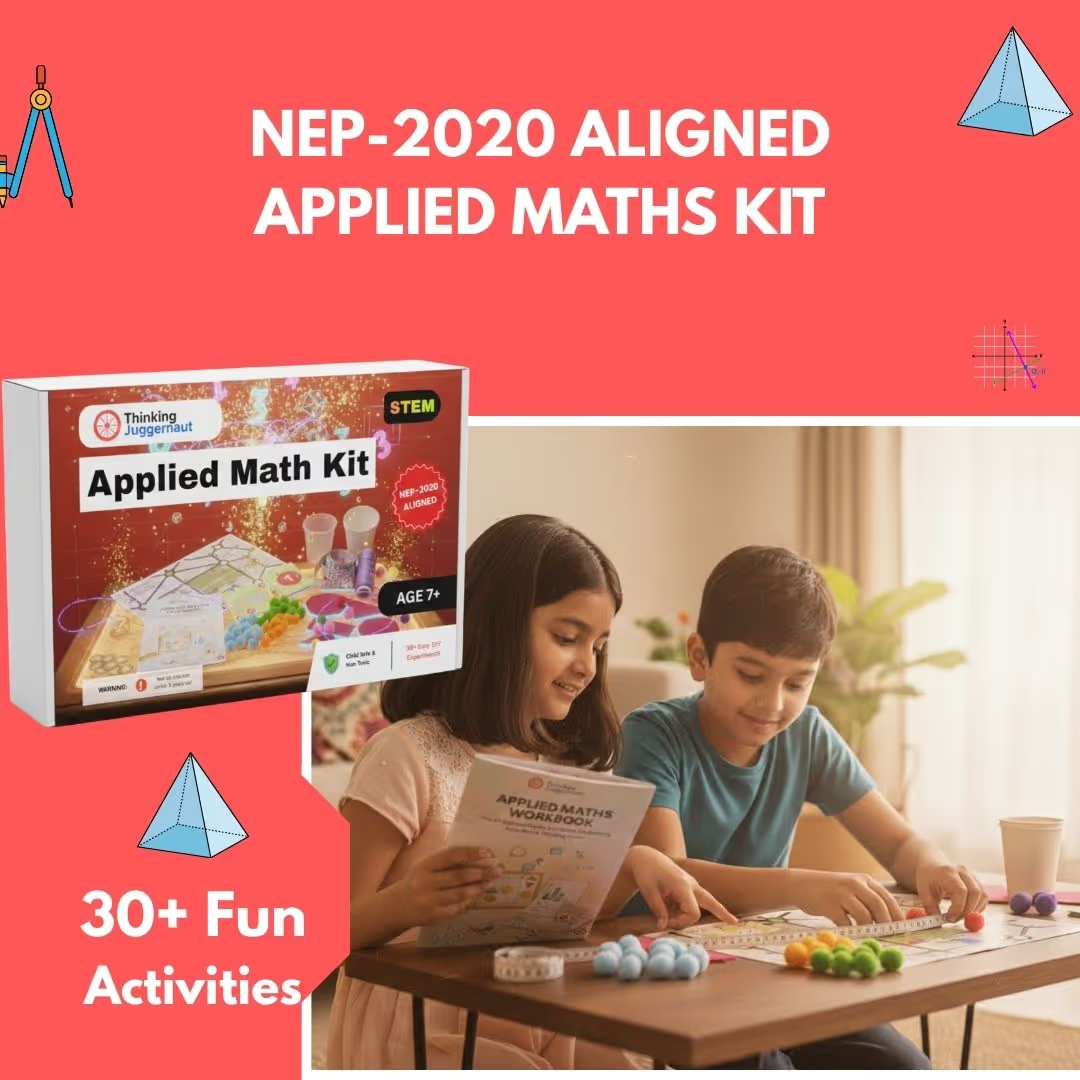
Designed by IIT & NIT Alumni · NEP-2020 aligned · Trusted by parents across India
Class 3 Multiplication Word Problems
Class 3 Division Word Problems
Not in Class 3?
Visit our Main Math Worksheet Hub to explore all printable worksheets from Class 2 to Class 8.
Almost there!
We will confirm your order on WhatsApp
Order placed!
Thank you! You will receive a WhatsApp confirmation shortly.